Toucanet
A toucanet is any of approximately 12 species of small, relatively short-billed birds belonging to the toucan family, Ramphastidae. These birds, which fall…
What is Toucanet?
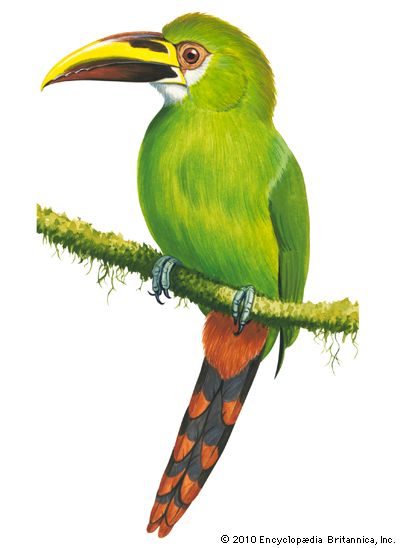
A toucanet is any of approximately 12 species of small, relatively short-billed birds belonging to the toucan family, Ramphastidae. These birds, which fall under the genera Aulacorhynchus and Selenidera, typically measure between 25 and 35 cm (10 to 14 inches) in length.1
Physically, toucanets are characterized by their predominantly green plumage, often accented with bold colors. They inhabit regions ranging from the lowlands of southern Mexico and Brazil to the high Andes. Like other members of the Ramphastidae family, they are piciforms, meaning they possess two forward-pointing and two rearward-pointing toes. While they are smaller than the larger, more well-known toucans, they share similar family traits, such as nesting in tree cavities and playing a role in maintaining tropical forest diversity by dispersing seeds. The emerald toucanet (A. prasinus) is notable for having the widest range among these species.123
How do toucanets differ from larger toucans?
Toucanets and larger toucans both belong to the family Ramphastidae, but they differ primarily in size and physical proportions.
- Size: Toucanets are significantly smaller, typically measuring between 25 and 35 cm (10 to 14 inches) in length. In contrast, the largest toucans, such as those in the Ramphastos genus, can reach lengths of up to 60 cm (24 inches).34
- Bill Proportions: While all members of the family are known for their bills, toucanets are characterized as having relatively short bills compared to their larger relatives. Larger toucans possess bills that can be one-third of the bird’s total length.43
- Plumage: Toucanets are generally distinguished by their predominantly green plumage, often accented with bold colors. Larger toucans often exhibit a different color scheme, typically appearing mainly black with bold breast colors.43
Despite these differences, both groups share key family traits, including being piciforms with two forward- and two rearward-pointing toes, nesting in tree cavities, and playing an important role in dispersing seeds within tropical forests.314
What is the purpose of a toucan’s large, lightweight bill?
The large, lightweight bill of a toucan is a specialized structure composed of thin, crisscrossing bony fibers covered in keratin, which provides significant strength despite its low weight. While its exact evolutionary purpose remains a subject of study, researchers have identified several likely functions:73
- Feeding: The serrated edges of the bill may assist in tearing open fruit, securing insects, or plucking nestlings from the nests of other birds.73
- Species Recognition and Display: The vibrant, multicolored patterns on the bill are believed to serve as signals for species recognition, helping birds identify one another in the forest canopy.73
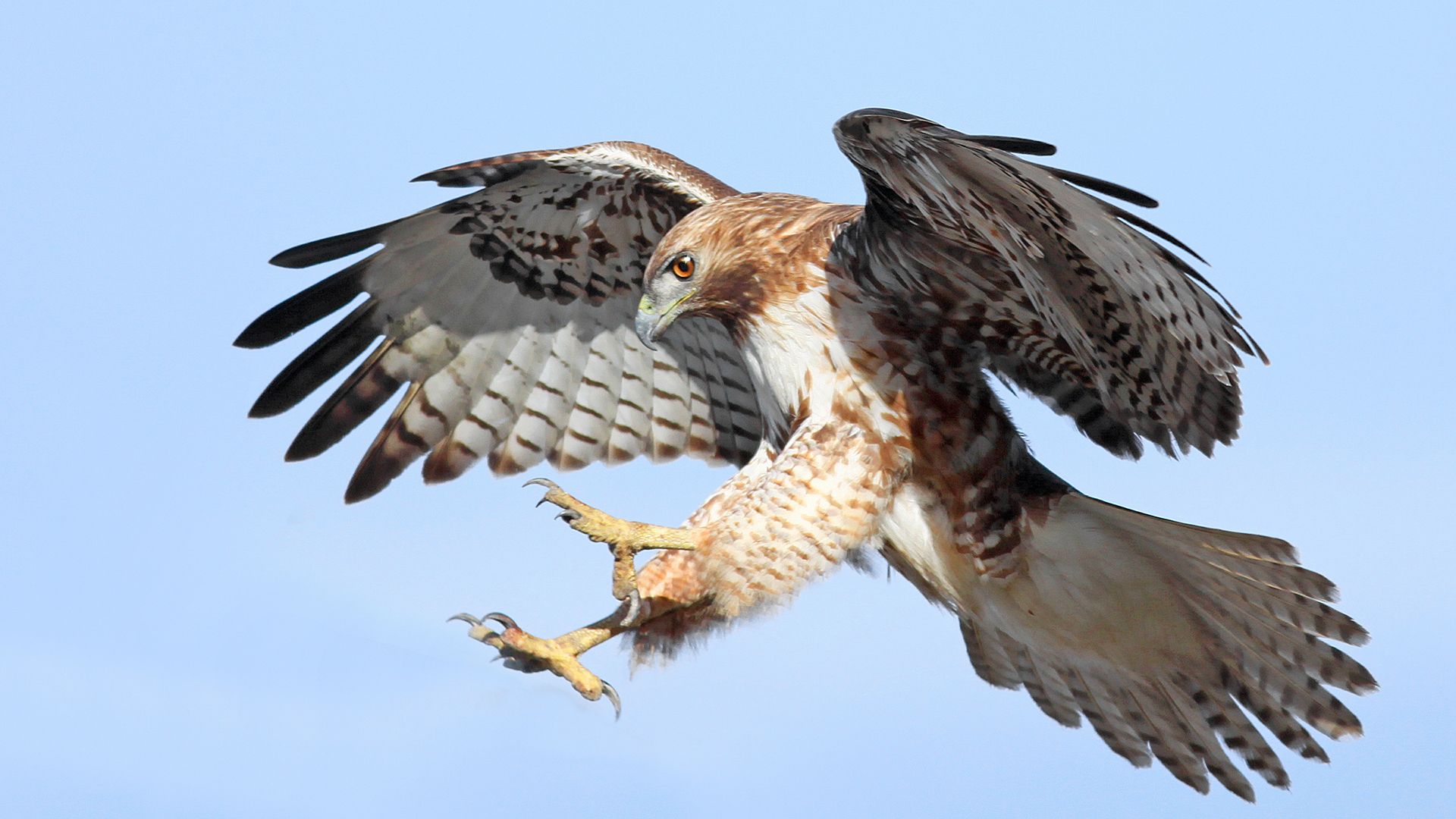
- Defense: The imposing size of the bill is thought to have a deterrent or frightening effect on potential threats, including hawks.3
- Communication: During vocal displays, the bill is often moved in ritualized patterns to accompany the bird’s loud calls, which serve as rallying signals to attract others to foraging sites.3
Although the bill is highly functional, its size often appears greater than what is strictly required for these tasks alone.7
What other birds belong to the Ramphastidae family?
The family Ramphastidae consists of approximately 35 species of tropical American forest birds. While the term “toucan” is often used to refer specifically to the larger species within the Ramphastos and Andigena genera, the family also includes several other groups of similar birds:
- Aracaris: These are smaller, closely related birds within the same family that share many physical and behavioral traits with larger toucans.3
- Toucanets: These are also smaller members of the Ramphastidae family, often distinguished by their predominantly green plumage.3
- New World Barbets: Recent DNA evidence suggests that these birds should also be classified within the Ramphastidae family.3
All these birds are piciforms, a group characterized by having two forward-pointing and two rearward-pointing toes. They are closely related to woodpeckers, though they are distinct from the unrelated hornbills of the Old World.3
Sources
- Toucanet — Encyclopædia Britannica
- toucanet — Merriam-Webster
- Toucan — Encyclopædia Britannica
- Piciform - Annotated classification — Encyclopædia Britannica
- Rhamphastidae — Merriam-Webster
- Ramphastides — Merriam-Webster
- Piciform - Form and function — Encyclopædia Britannica
- Ramphastidae — Merriam-Webster
Published on · 3 min read