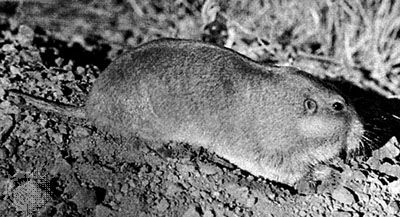
Tuco-tuco
Tuco-tucos (genus Ctenomys) are South American burrowing rodents that exhibit several distinct physical adaptations suited to their fossorial (burrowing)…
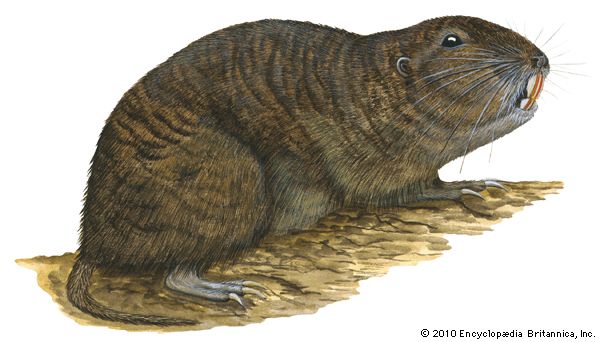
What are the unique physical characteristics of tuco-tucos?
Tuco-tucos (genus Ctenomys) are South American burrowing rodents that exhibit several distinct physical adaptations suited to their fossorial (burrowing) lifestyle. Their primary characteristics include:
- Body Shape: They possess stout, cylindrical bodies that can grow up to 25 cm (10 inches) in length, complemented by a tail measuring up to 11 cm.1
- Sensory Features: These rodents have small eyes and tiny ears, which are common traits among animals that spend most of their time underground.1
- Limbs and Digging Tools: They have short, muscular legs equipped with strong claws on their digits, which facilitate the construction of extensive burrows.1
- Coat: Their dense fur varies in length depending on the species and ranges in color from solid gray to various shades of brown or almost black, with lighter underparts.1
- Distinguishing Features: While they resemble the North American pocket gopher, tuco-tucos are distinguished by their lack of cheek pouches.2
How do tuco-tucos communicate and what is the origin of their name?
The name “tuco-tuco” is derived from the distinct sound these rodents make, which is imitative of their cry.12
Regarding their communication, while the provided search results confirm that their name originates from the vocalizations they produce, they do not offer further details on the specific methods or social functions of their communication beyond this auditory behavior.12
What kind of habitat do tuco-tucos prefer and how do they adapt to their environment?
Tuco-tucos are highly adaptable rodents found across the southern half of South America, ranging from southern Peru and eastern Brazil to Tierra del Fuego. They thrive in diverse environments, including grasslands, tropical forests, and the high-altitude Altiplano, at elevations spanning from sea level to 4,000 meters. They are also known to inhabit human-altered landscapes such as agricultural fields, pastures, and vacant city lots.1
To adapt to these varied habitats, tuco-tucos rely on a fossorial (burrowing) lifestyle. They construct extensive burrows that provide essential protection and include specialized chambers for nesting and storing food, such as stems, roots, and grasses. Their physical traits—including stout, cylindrical bodies, short muscular legs, and strong claws—are specifically evolved for digging. These sedentary rodents typically remain near their burrows, emerging primarily in the early morning or late afternoon to forage, though they may occasionally venture out at night.1
Are there any species of tuco-tucos that are considered endangered?
The provided information does not specify the conservation status of individual tuco-tuco species. While the genus Ctenomys contains a large and diverse array of 39 to 56 species, the current knowledge base does not detail which of these are considered endangered.1
Sources
- tuco-tuco — Encyclopædia Britannica
- tuco-tuco — Merriam-Webster
- African pouched rat — Encyclopædia Britannica
- rodent - Form and function — Encyclopædia Britannica
- rodent - General features — Encyclopædia Britannica
Published on · 2 min read