Viscacha
Viscachas are South American rodents belonging to the family Chinchillidae, with habitat and dietary preferences that vary significantly between the mountain…
What are the typical habitat and dietary preferences of viscachas?
Viscachas are South American rodents belonging to the family Chinchillidae, with habitat and dietary preferences that vary significantly between the mountain and plains species.1
Mountain Viscachas (Lagidium)
- Habitat: These rodents inhabit dry, rocky cliffs, outcrops, and slopes within the Andes Mountains. They are typically found at high altitudes ranging from 4,000 to 5,000 meters, where they shelter in deep rock crevices and stony tunnels.1
- Diet: They are agile on rocky terrain, where they forage for grasses, mosses, and lichens.1
Plains Viscacha (Lagostomus maximus)
- Habitat: Found in Argentina, Paraguay, and southeastern Bolivia, this species lives on sparse grasslands, known as the Pampas. Unlike their mountain relatives, they are nocturnal and dig elaborate underground burrow systems called vizcacheras.1
- Diet: While they will consume any available vegetation, they show a preference for seeds and grasses. Their foraging habits can make them a nuisance to ranchers, as their extensive burrowing can pose hazards to livestock and humans.1
What are the different species of viscachas?
There are four recognized species of viscachas, which are large South American rodents belonging to the family Chinchillidae. They are categorized into two distinct groups based on their genus and habitat:
Mountain Viscachas (Genus Lagidium)
There are three species of mountain viscachas. These rodents are closely related to chinchillas and share the following characteristics:
- Habitat: They live in the Andes Mountains at high altitudes, typically between 4,000 and 5,000 meters, inhabiting rocky cliffs and slopes.
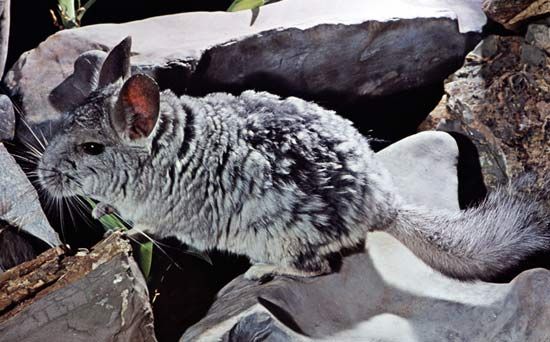
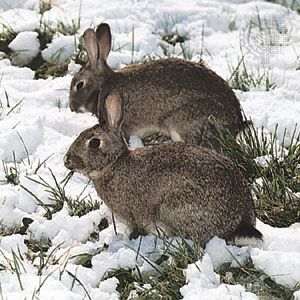
- Appearance: They have long ears, long bushy tails, and soft, dense fur. They resemble long-tailed rabbits and are agile climbers on rocky terrain.
- Behavior: They are gregarious, nonaggressive, and diurnal, spending their days among rocks and ledges while sheltering in crevices at night.13
Plains Viscacha (Lagostomus maximus)
The plains viscacha is the only species in its subfamily (Lagostominae) and differs significantly from its mountain relatives:
- Habitat: They inhabit the Pampas and other sparse grasslands in Argentina, Paraguay, and Bolivia.
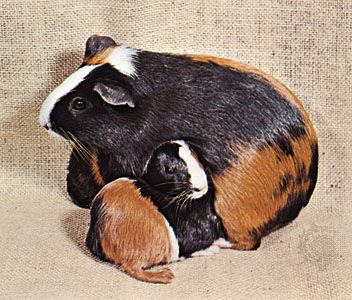
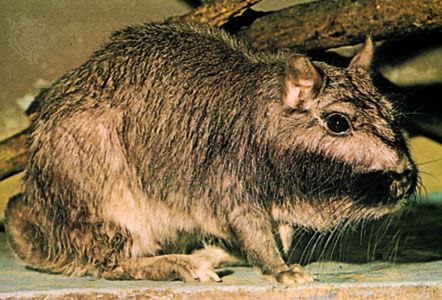
- Appearance: They resemble large guinea pigs with blunt heads and distinctive black and white facial markings.
- Behavior: They are nocturnal and colonial, known for digging elaborate underground burrow systems called vizcacheras.14
How do viscachas adapt to their environment, particularly in mountainous regions?
Mountain viscachas (Lagidium) have evolved specialized traits to thrive in the harsh, high-altitude environments of the Andes Mountains. Their physical and behavioral adaptations include:
- Physical Morphology: They possess long, dense fur that provides essential insulation against the cold temperatures found at altitudes between 4,000 and 5,000 meters. Their feet are equipped with fleshy pads, which assist them in navigating steep, rocky terrain with agility.1
- Locomotion and Shelter: While they are poor diggers, they are highly adapted to rocky outcrops and cliffs. They utilize deep rock crevices and narrow stony tunnels as natural protection from the elements and predators at night.1
- Behavioral Strategies: To survive in sparsely vegetated areas, they are gregarious, often forming large colonies. This social structure aids in predator detection; they communicate the presence of threats using loud, abrupt, birdlike whistles. Their diurnal activity pattern allows them to forage for available grasses, mosses, and lichens during the daylight hours when temperatures are more favorable.1
How do viscachas differ in appearance from other rodents like rabbits or chinchillas?
Viscachas are distinct South American rodents that exhibit different physical traits depending on their species, often leading to comparisons with other animals.1
Mountain Viscachas (Lagidium)
These species are closely related to chinchillas and share their soft, dense fur. However, they are physically distinguished by their very long ears and long, bushy tails, which give them a resemblance to long-tailed rabbits. They are slender, weigh up to 3 kg, and possess fleshy pads on their feet that aid in climbing rocky terrain.1
Plains Viscacha (Lagostomus maximus)
In contrast, the plains viscacha is more robust and bears a stronger resemblance to a large guinea pig. Key differences include:
- Head and Body: They have a large, blunt head and a much heavier build, with males weighing up to 8 kg.1
- Tail: Unlike the long-tailed mountain species, the plains viscacha has a relatively short tail (15 to 20 cm).1
- Markings: Their faces are uniquely marked with broad black and white stripes, including a distinctive moustache.1
- Feet: They possess four strong digits on their front feet but only three on their hindfeet, an adaptation for their burrowing lifestyle.1
Sources
- viscacha — Encyclopædia Britannica
- viscacha — Merriam-Webster
- plains vizcacha — Merriam-Webster
- chinchilla — Encyclopædia Britannica
- chinchilla rat — Encyclopædia Britannica
Published on · 3 min read