What Is the Difference Between South America and Latin America?
The terms South America and Latin America refer to different ways of categorizing the Western Hemisphere, with one based on geography and the other on…
What Is the Difference Between South America and Latin America?
The terms South America and Latin America refer to different ways of categorizing the Western Hemisphere, with one based on geography and the other on cultural and linguistic history.1
South America
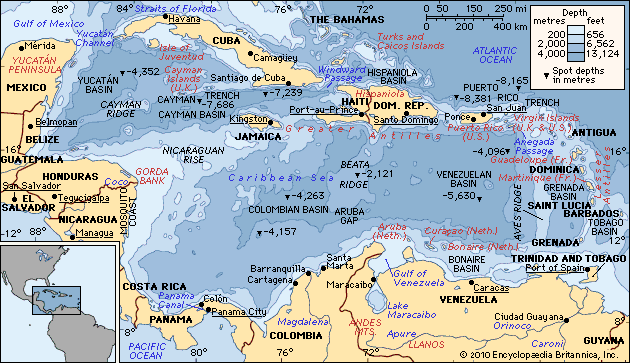
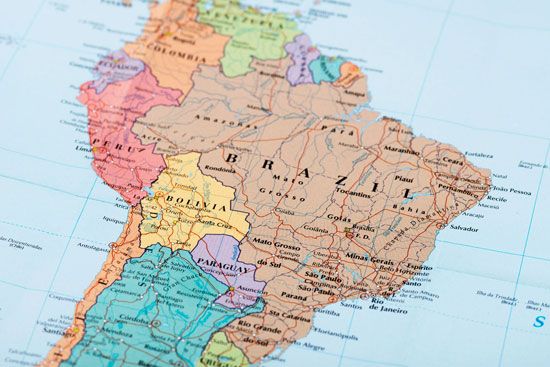
South America is a continent defined by its physical geography. It encompasses the landmass that broadens south of the Isthmus of Panama. It is bounded by the Caribbean Sea to the north, the Atlantic Ocean to the east, and the Pacific Ocean to the west.12
Latin America
Latin America is a cultural and historical region rather than a single continent. It generally includes the entire continent of South America, as well as Mexico, Central America, and islands in the Caribbean where inhabitants speak a Romance language. This grouping reflects a shared history of conquest and colonization by the Spanish and Portuguese from the 15th through the 18th centuries.13
While South America is a fixed geographical entity, Latin America is a broader designation that highlights the shared colonial heritage and linguistic roots of these nations.1
What are the Romance languages spoken in Latin America?
The primary Romance languages spoken in Latin America are Spanish and Portuguese.67
- Spanish: This is the dominant language across the majority of countries in Latin America, reflecting the region’s history of colonization by Spain.68
- Portuguese: This is the official language of Brazil, which was colonized by Portugal.98
While these are the two major national languages, the region also features various creole languages—simplified or pidgin forms of languages that have become native to specific communities—particularly in the West Indies. For instance, French creoles are spoken in parts of the Caribbean, and Spanish creoles, such as Palenquero and Papiamentu (which is based on Portuguese but heavily influenced by Spanish), are also present in the region.10
Why is the term Anglo-America used for the United States and Canada?
The term Anglo-America is used to designate the cultural entity of North America where the primary spoken language is English and the customs and folkways are historically rooted in northern Europe.15
This designation primarily encompasses the United States and Canada, serving as a cultural and geographical distinction from Latin America—which comprises regions with strong Hispanic, Portuguese, or other Romance-language traditions. While the term highlights the English-speaking heritage of these nations, it is important to note that French-speaking Canada remains a notable exception within this cultural grouping.1516
The expression is used to differentiate these countries from those in Middle and South America that share a history of conquest and colonization by Spain and Portugal. Consequently, “Anglo-America” functions as a tool for cultural classification rather than a strictly physical or political one.1516
What is the significance of the Isthmus of Panama in geography?
The Isthmus of Panama is a narrow land bridge that serves as a critical geographical link between North America and South America, while simultaneously separating the Atlantic Ocean from the Pacific Ocean.1920
Its significance is defined by several key factors:
- Biological and Evolutionary Impact: As a land bridge, the isthmus has historically facilitated the migration of species between the two continents. During the Pliocene Epoch, its elevation allowed for the exchange of fauna that had previously evolved in isolation.21
- Strategic Interoceanic Passage: The isthmus has long been recognized as a vital transit point. This strategic importance culminated in the construction of the Panama Canal, which revolutionized global trade by allowing vessels to bypass the lengthy and hazardous journey around South America, reducing a 13,000-mile trip to approximately 5,200 miles.1922
- Historical and Economic Role: Beyond the canal, the region has served as a corridor for human migration since prehistoric times and remains a hub for modern transportation, including railways and pipelines.23
Sources
- What Is the Difference Between South America and Latin America? — Encyclopædia Britannica
- list of countries in Latin America — Encyclopædia Britannica
- South America — Merriam-Webster
- Map of South America — Encyclopædia Britannica
- What’s the Difference Between Hispanic and Latino? — Encyclopædia Britannica
- Portuguese language — Encyclopædia Britannica
- Romance languages — Encyclopædia Britannica
- Romance languages - Origins and distribution — Encyclopædia Britannica
- Brazil: Top Questions — Encyclopædia Britannica
- Romance languages - The language of religion and culture — Encyclopædia Britannica
- Latin American literature — Encyclopædia Britannica
- South American Indian languages — Encyclopædia Britannica
- Argentina: Country Facts — Encyclopædia Britannica
- Romance languages: Top Questions — Encyclopædia Britannica
- Anglo-America — Encyclopædia Britannica
- Anglo-American — Merriam-Webster
- United States - The European background — Encyclopædia Britannica
- American colonies - Colonization and early self-government — Encyclopædia Britannica
- Isthmus of Panama — Encyclopædia Britannica
- Panama Canal: Top Questions — Encyclopædia Britannica
- canals and inland waterways - The Panama Canal — Encyclopædia Britannica
- Timeline and Map of the Panama Canal — Encyclopædia Britannica
- Panama, Isthmus of — Merriam-Webster
- Panama - Transportation and telecommunications — Encyclopædia Britannica
- land bridge — Encyclopædia Britannica
- Panama - Climate of Panama — Encyclopædia Britannica
Published on · 3 min read