Carambola
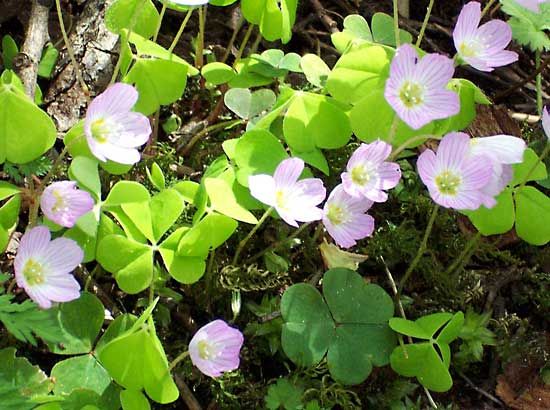
The carambola (Averrhoa carambola), often called star fruit, is a woody plant in the wood sorrel family (Oxalidaceae) native to tropical Asia. It is distinct…
What is a carambola fruit?
The carambola (Averrhoa carambola), often called star fruit, is a woody plant in the wood sorrel family (Oxalidaceae) native to tropical Asia. It is distinct from the star apple, a different tropical tree in the sapodilla family.12
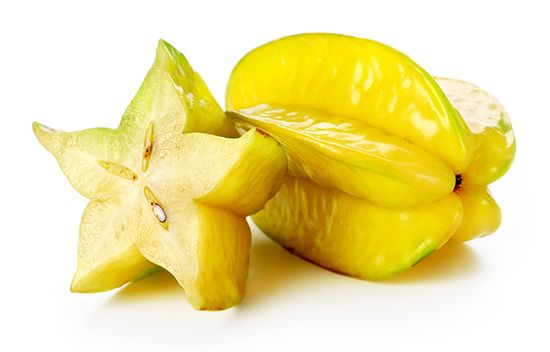
The carambola tree produces waxy, yellow-to-orange fruits that are five-angled; when sliced in cross section, they reveal a decorative star shape. The flavor ranges from sharp when unripe to a lightly sweet and sour blend of pear, melon, and gooseberry as it matures.1
Rich in vitamins A and C, the fruit is consumed raw, as juice, or candied. While it has a history of medicinal use, individuals with kidney disease should avoid it due to its oxalic acids, which can exacerbate uremiaacid), which can exacerbate uremia.1
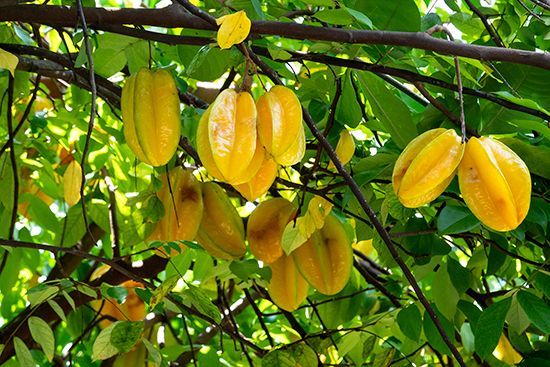
What does a carambola look like?
The carambola, also known as star fruit, is a tropical fruit characterized by its distinct waxy, oblong to ellipsoidal shape. It features five prominent angles along its length, which give it a unique appearance.31
The fruit typically ranges in color from yellow to orange as it matures. Its most notable visual feature is revealed when the fruit is sliced in cross section; the five-angled structure creates a decorative, five-pointed star shape, which is why it is frequently used by pastry chefs for garnishes.31
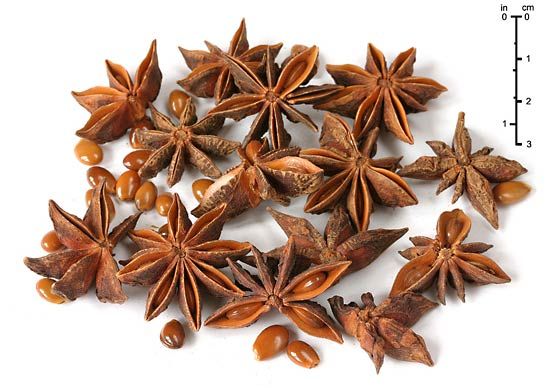
It is important not to confuse the carambola with the star apple, which is shaped like an apple, or the star anise, which has a small, woody, starlike arrangement of carpels.345
Why is carambola sometimes called ‘star fruit’?
The carambola is commonly referred to as “star fruit” because of its unique physical structure. The fruit is naturally five-angled, and when it is sliced in cross section, the resulting pieces reveal a distinct, decorative five-pointed star shape. This visual characteristic is frequently utilized by pastry chefs for garnishes and is the primary reason for its popular name.31
Where is carambola commonly grown?
The carambola (Averrhoa carambola) is native to tropical Asia and is now extensively cultivated in various tropical and subtropical regions around the world.1
Beyond its native range, the plant is commonly grown in the following areas:
While young plants are sensitive to cold, mature trees are capable of tolerating temperatures slightly below freezing, which allows for cultivation in these diverse climates.1
Sources
- Carambola — Encyclopædia Britannica
- star apple — Encyclopædia Britannica
- star fruit — Merriam-Webster
- carambola — Merriam-Webster
- star anise: Top Questions — Encyclopædia Britannica
- star apple — Merriam-Webster
Published on · 2 min read