Yellow Sea
The Yellow Sea is a large, shallow marine embayment located between mainland China and the Korean peninsula. Excluding the Bo Hai, the sea covers an area of…
What is the average depth and size of the Yellow Sea?
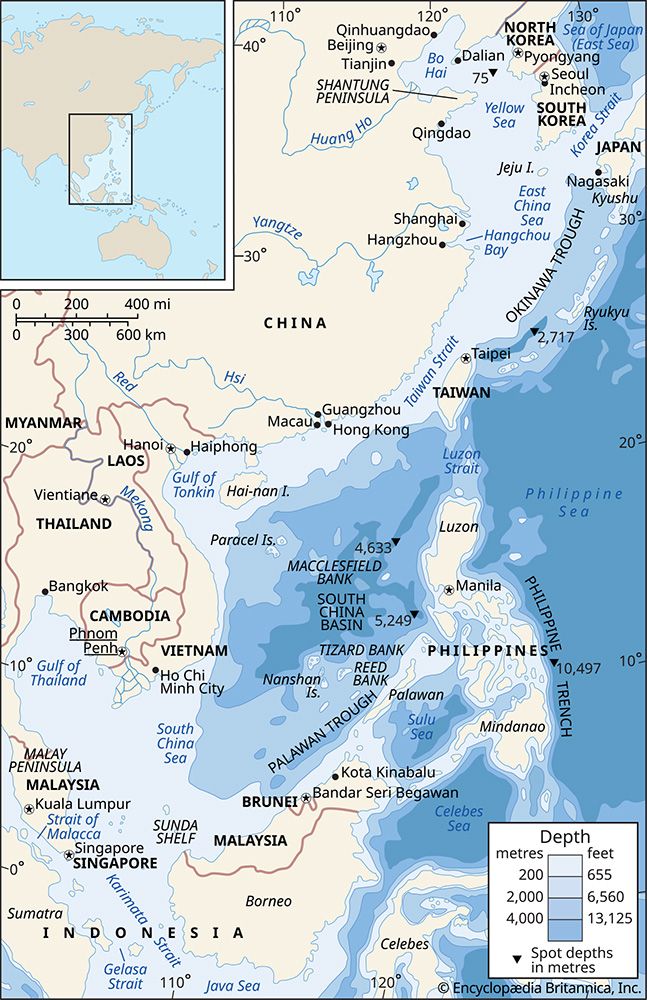
The Yellow Sea is a large, shallow marine embayment located between mainland China and the Korean peninsula. Excluding the Bo Hai, the sea covers an area of approximately 146,700 square miles (380,000 square km).1
Regarding its depth, the Yellow Sea has a mean depth of 144 feet (44 metres), with a maximum depth reaching about 500 feet (152 metres). Much of the sea consists of an oval-shaped basin with depths typically ranging between 200 and 260 feet (60 to 80 metres). The seafloor itself is a geologically unique portion of the continental shelf that was submerged following the last ice age.1
How do tides and currents in the Yellow Sea influence navigation and fishing?
Tides and currents in the Yellow Sea play a significant role in both maritime navigation and the region’s productive fishing grounds.
Navigation
Navigation is directly impacted by the sea’s tidal and ice conditions:
- Tidal Currents: While tidal currents in the middle of the sea are generally slow (less than 1 mile per hour), they can exceed 3.5 miles per hour in straits, channels, and near the coasts, requiring careful navigation.
- Tidal Range: The west coast of the Korean peninsula experiences high tidal ranges of 13 to 26 feet, with spring tides reaching nearly 27 feet. These dramatic fluctuations necessitate precise timing for vessels entering or leaving ports.
- Ice Hazards: During winter, the innermost coastal sections of the Bo Hai freeze. The presence of drift ice and ice fields can significantly hinder or obstruct navigation in parts of the Yellow Sea.
Fishing
Hydrological patterns create favorable conditions for the region’s famous commercial fisheries:
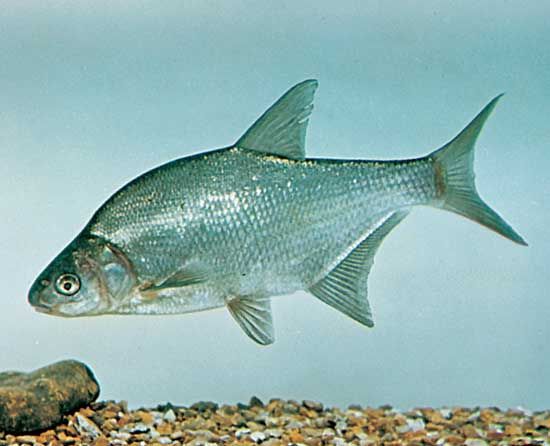
- Cold-Water Masses: In spring and summer, a deep layer of cold, saline water stagnates and moves slowly southward. Commercial bottom-dwelling fishes, such as sea bream, croakers, and flounders, are found concentrated around this cold water mass, particularly at its southern tip.
- Sedimentation: The sea receives massive quantities of silt from the Huang He and Yangtze River, which influences the seafloor environment and the distribution of demersal species.
Why is it called the Yellow Sea, and what causes its distinctive color?
The Yellow Sea derives its name from the distinctive color of its water, which is caused by the immense quantity of silt-laden sediment discharged into it by major rivers.1
The primary contributor to this coloration is the Huang He (Yellow River), which carries the highest concentration of sediment of any river in the world. This sediment, much of which consists of loess—a loose, easily eroded soil—is transported into the sea via the Bo Hai. Additionally, the Yangtze River contributes significant amounts of silt and mud to the sea’s basin. These sediments are deposited annually, creating large deltas and giving the sea its characteristic turbid, yellowish appearance.15
Where is the Yellow Sea located, and which countries border it?
The Yellow Sea is a large inlet of the western Pacific Ocean situated between mainland China to the west and north, and the Korean peninsula to the east.1
It is bounded to the south by the East China Sea, with the border defined by a line extending from the mouth of the Yangtze River to Cheju Island off the coast of South Korea1. The sea is bordered by three countries:
The region also includes the Bo Hai in the northwest and Korea Bay in the northeast, both of which are arms of the Yellow Sea.16
Sources
- Yellow Sea — Encyclopædia Britannica
- Red Sea - Navigation — Encyclopædia Britannica
- Yellow Sea — Merriam-Webster
- East China Sea — Encyclopædia Britannica
- Yellow River - Hydrology of the Yellow River — Encyclopædia Britannica
- Korea Bay — Encyclopædia Britannica
Published on · 3 min read