Yucca
It is important to clarify that the terms "yucca" and "yuca" are often confused, though they refer to distinct plants.
What is Yucca?
It is important to clarify that the terms “yucca” and “yuca” are often confused, though they refer to distinct plants.
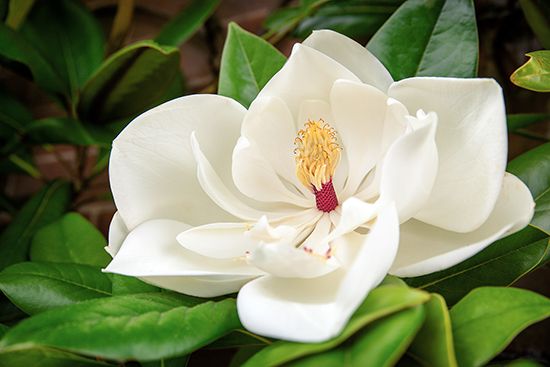
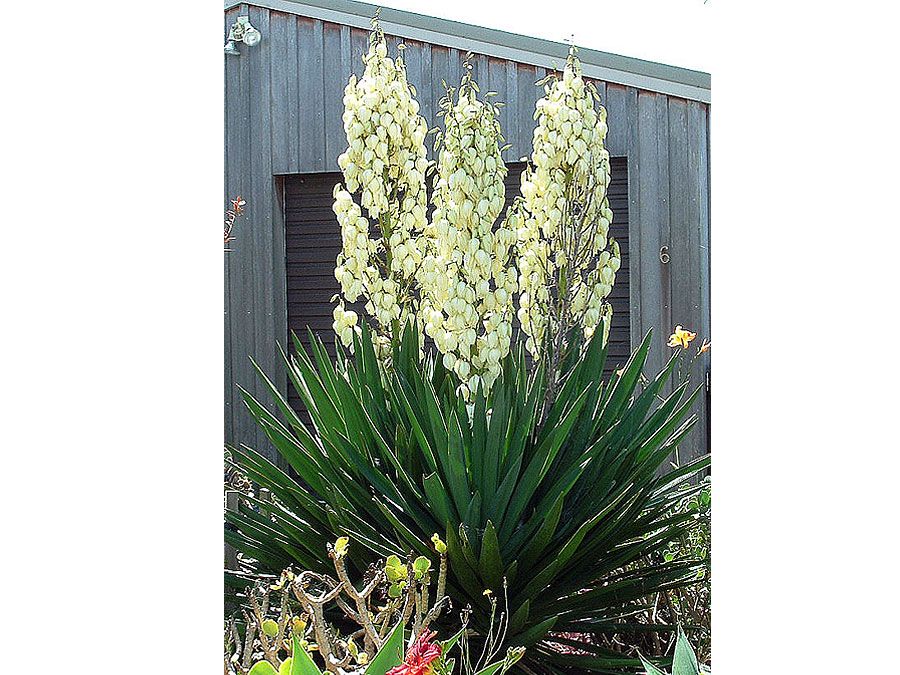
Yucca (genus Yucca) refers to a group of about 40 species of succulent plants in the asparagus family. These plants are native to southern North America and are characterized by rosettes of stiff, sword-shaped leaves and clusters of waxy white flowers. Some species, such as the Joshua tree, can grow quite tall, while others like Adam’s needle are commonly grown as ornamentals.12
In contrast, yuca (also known as cassava) is an entirely different plant, typically grown for its edible starchy root. While the terms are sometimes used interchangeably in casual conversation due to their similar spelling and etymological roots, they represent different botanical categories.32
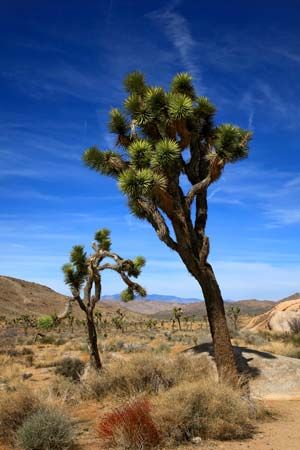
How does the Joshua tree differ from other yucca species?
The Joshua tree (Yucca brevifolia and Yucca jaegeriana) is distinguished from most other yucca species primarily by its arborescent (treelike) growth habit. While the majority of the approximately 40 species in the genus Yucca are stemless plants featuring a basal rosette of sword-shaped leaves, the Joshua tree develops a prominent, branched trunk that can reach heights of over 10 to 15 meters (33 to 50 feet).45
Key differences include:
- Growth Form: Unlike the typical stemless yucca, the Joshua tree is an erect, evergreen, and slow-growing plant that branches in a dichotomous pattern once it reaches a certain height.4
- Habitat: Joshua trees are specifically adapted to the arid, stony grasslands and shrublands of the Mojave Desert, whereas many other yucca species are found in a wider variety of environments and are often cultivated as ornamentals.45
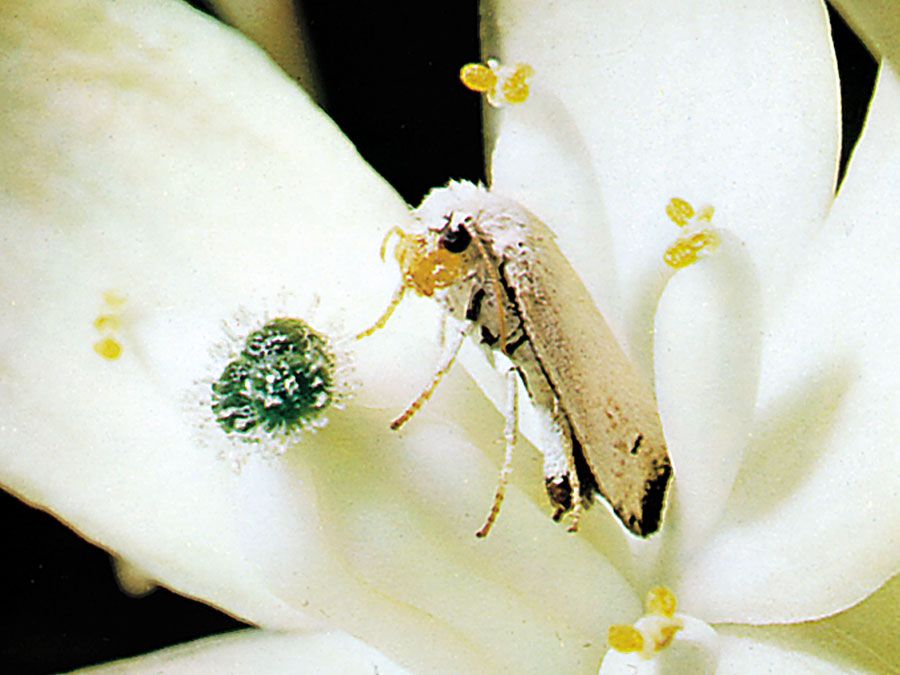
- Pollination: While many yuccas rely on specific yucca moths, the Joshua tree has a highly specialized, exclusive mutualism with specific moth species (Tegeticula synthetica or T. antithetica), which are essential for its reproduction.4
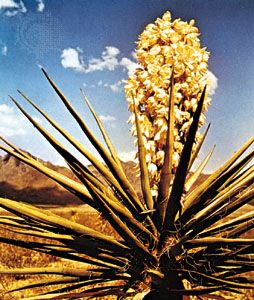
What is the difference between yucca and cassava?
While the terms “yucca” and “yuca” are often confused due to their similar spelling and etymological history, they refer to two entirely different plants with distinct botanical and culinary characteristics.36
Yucca (Genus Yucca)
- Classification: A genus of about 40 species of succulent plants in the asparagus family.2
- Appearance: Most species are stemless with rosettes of stiff, sword-shaped leaves and large clusters of waxy white flowers. Some, like the Joshua tree, grow into treelike forms.2
- Usage: These plants are primarily native to warm regions of North America and are frequently cultivated as ornamentals for their unique appearance.2
Yuca (Cassava)
- Classification: A tuberous, perennial plant (Manihot esculenta) belonging to the spurge family (Euphorbiaceae).1
- Appearance: It features palmate leaves and fleshy, edible roots that resemble dahlia tubers.1
- Usage: It is a vital food crop in the tropics, processed into tapioca, flour, and various traditional dishes. Because many varieties contain cyanogenic glucosides, they require careful preparation—such as peeling, soaking, and cooking—to remove toxins before consumption.1
How do yucca plants survive in desert environments?
Yucca plants are well-adapted to desert environments primarily because they are succulent plants. This classification means they possess specialized tissues designed to store water, allowing them to survive in arid regions where rainfall is infrequent.
Their physical structure further supports this survival: many species feature a rosette of stiff, sword-shaped leaves at the base. This arrangement helps minimize water loss through evaporation and can also serve to funnel limited moisture toward the plant’s root system. Additionally, their waxy, tough exterior acts as a protective barrier against the harsh, drying conditions of the desert.
While the Joshua tree is a notable exception due to its tall, branched stem, it shares these fundamental succulent characteristics that enable it to thrive in the agave subfamily of the asparagus family.
Sources
- yucca — Encyclopædia Britannica
- yuca — Merriam-Webster
- yucca — Merriam-Webster
- Joshua tree — Merriam-Webster
- Joshua tree — Encyclopædia Britannica
- Cassava — Encyclopædia Britannica
Published on · 3 min read