Yucca Moth
The yucca moth (genus Tegeticula) refers to any of four species of insects belonging to the family Prodoxidae. These small, diurnal moths share a remarkable…
What is yucca moth?
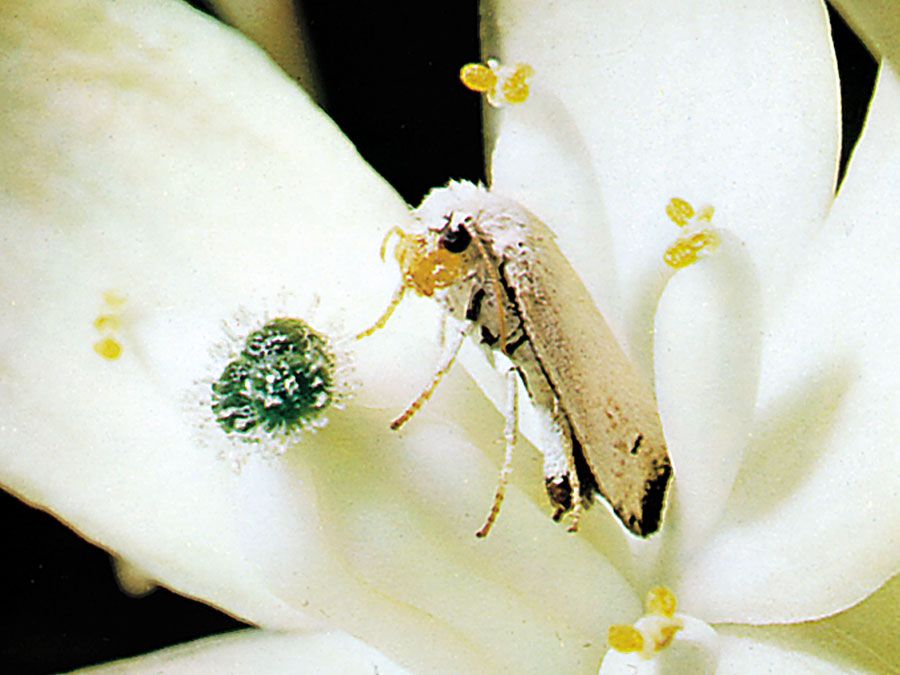
The yucca moth (genus Tegeticula) refers to any of four species of insects belonging to the family Prodoxidae. These small, diurnal moths share a remarkable, obligate mutualistic relationship with the yucca plant.1
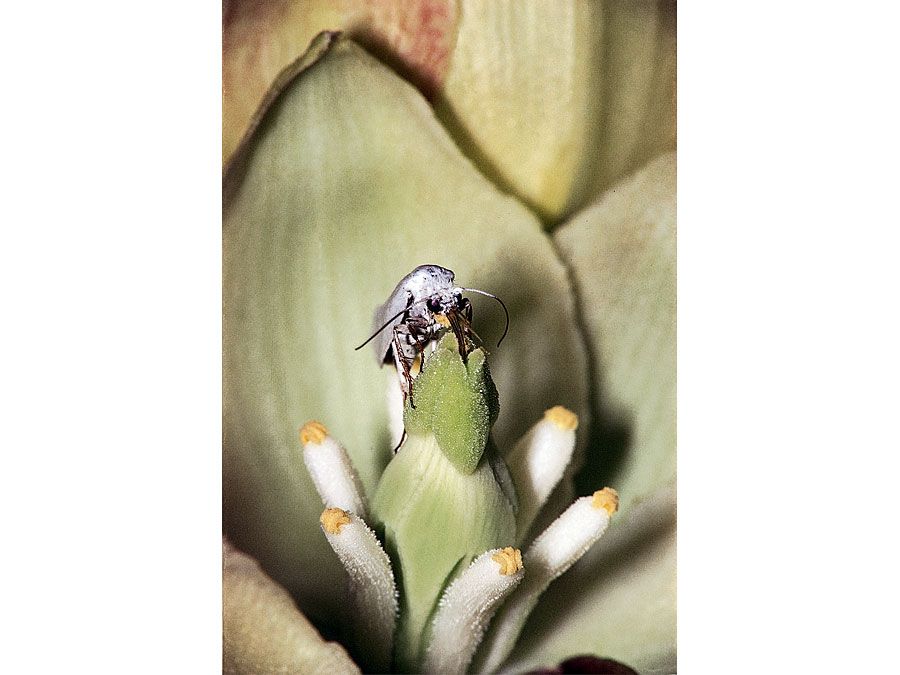
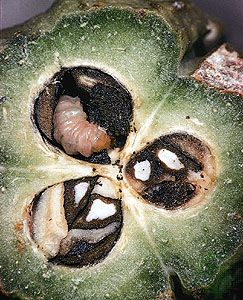
Each moth species is specifically adapted to a particular yucca species. When the flowers open, the female moth collects pollen, rolls it into a ball, and flies to a different flower. There, she lays her eggs and deposits the pollen mass to ensure fertilization. This process is essential, as the yucca cannot be pollinated by any other insect, and the moth cannot survive using any other host plant. The resulting larvae consume approximately half of the seed production, balancing the plant’s reproduction with the moth’s survival.1
Related species, known as bogus yucca moths (Prodoxus), feed within the plant’s stems and seed capsules but do not provide the same pollination service.1
What is an obligate mutualism?
Obligate mutualism is a form of mutualism characterized by a strict interdependency between two different species. In this relationship, the association is essential for the survival of both partners; neither organism can successfully survive or reproduce under natural conditions without the other.2
This type of interaction represents a fundamental element of biological communities. Examples include:
- Termites and Protozoans: Intestinal flagellated protozoans digest the wood ingested by termites, providing necessary nutrients that the termite could not otherwise process.2
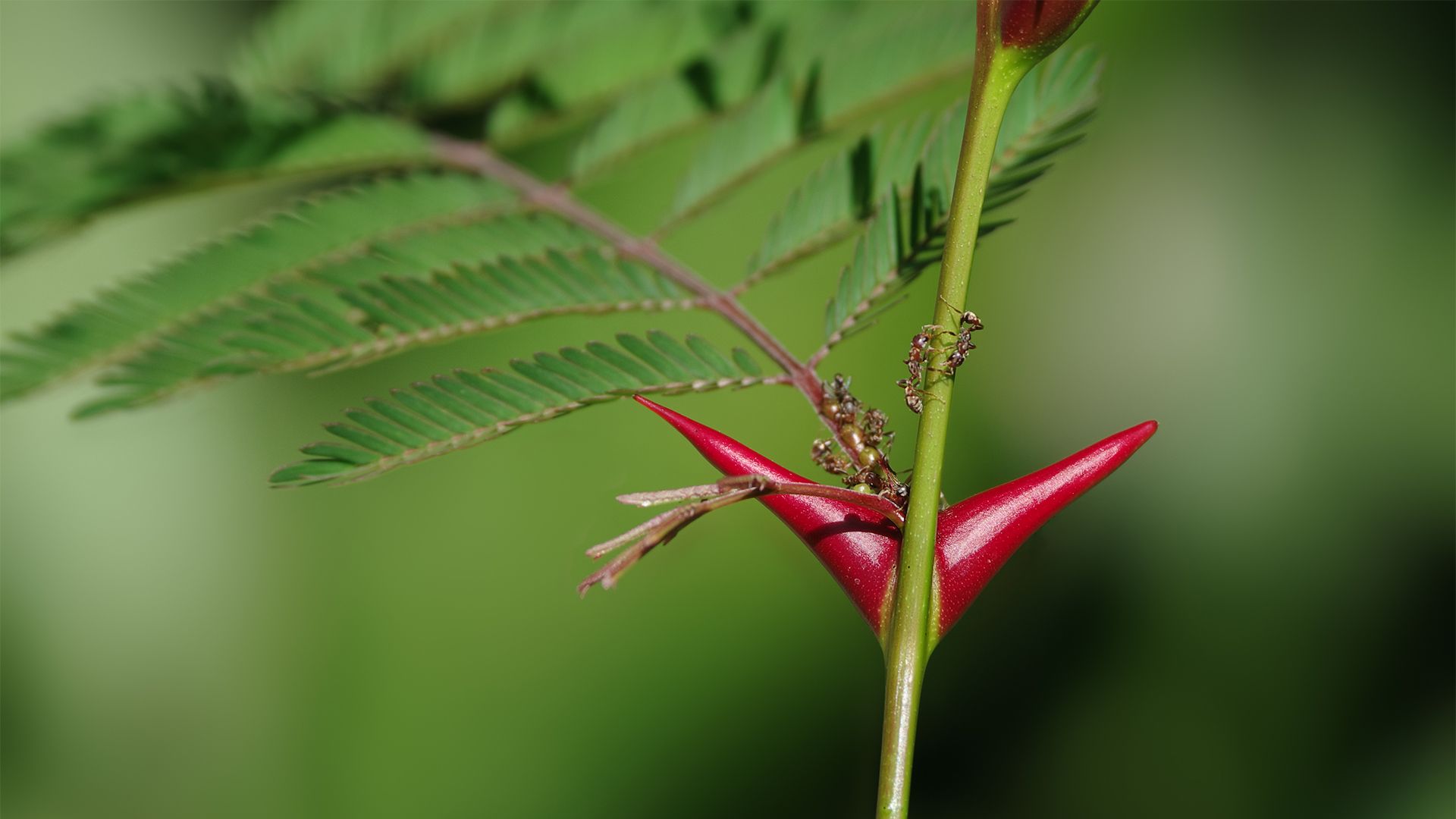
- Acacia Ants and Bullhorn Acacia: The acacia ants receive food and shelter from the acacia tree, while the tree relies on the ants to protect it from browsing animals.2
- Yucca Moths and Yucca Plants: The yucca moth acts as the exclusive pollinator for the yucca plant, while the plant provides a site for the moth to lay its eggs and a food source for its larvae.2
How do other insects pollinate plants?
Insects are the most significant group of animal pollinators, having coevolved with flowering plants over millions of years to facilitate pollination9. While early pollinators like beetles simply fed on pollen or plant tissues, many insects have since developed specialized mouthparts and behaviors to collect nectar, a sugar-rich reward that encourages them to visit multiple flowers.56
Different insect groups utilize distinct strategies:
- Bees: As the most important pollinators, bees possess hairy bodies that trap pollen and specialized structures like pollen baskets. They are often guided by bright colors (yellows and blues) and ultraviolet patterns.75
- Butterflies and Moths: These insects use a specialized, coiled proboscis to reach nectar. Butterflies are typically active during the day and prefer brightly colored flowers with landing platforms, while moths—often active at night—are attracted to white or light-colored, highly fragrant flowers.8
- Flies: Some flies are attracted to carrion flowers, which mimic the scent and appearance of rotting meat to lure them.5
- Wasps: Certain orchids have evolved to mimic female wasps, attracting males through pheromones and visual cues to achieve pollination via pseudocopulation.5
What are the differences between moths and butterflies?
Moths and butterflies are both members of the insect order Lepidoptera, but they exhibit several distinct physical and behavioral differences.1112
Physical Differences
- Antennae: Butterflies typically have simple, club-tipped antennae, whereas most moths possess distinctive thick or feathery antennae.1112
- Body Shape: Butterflies generally have slim or dainty bodies, while moths are typically stout and often fuzzy.11
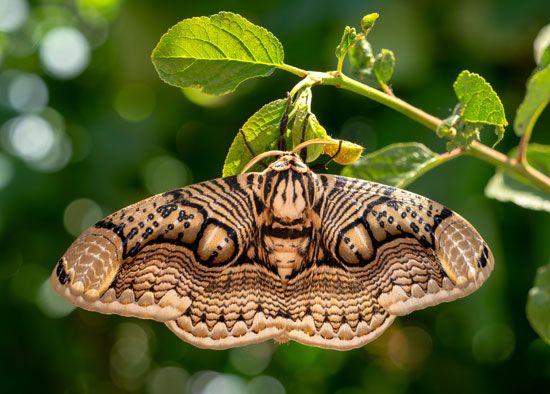
- Coloration: Butterflies are often brightly colored with dramatic patterns. Moths are frequently more drab, though there are notable exceptions like the luna moth or tiger moth.1112
Behavioral and Developmental Differences
- Activity Patterns: Butterflies are typically diurnal (active during the day), while most moths are nocturnal.1112
- Resting Position: When at rest, butterflies usually hold their wings vertically over their backs. Moths typically fold their wings tentlike over the body, wrap them around the body, or hold them extended at the sides.1112
- Metamorphosis: During the pupal stage, butterflies form a chrysalis, whereas most moths construct a fibrous cocoon.11
Both groups are essential pollinators and play vital roles in terrestrial food webs.1112
Sources
- yucca moth — Encyclopædia Britannica
- mutualism — Encyclopædia Britannica
- community ecology - Mutualism — Encyclopædia Britannica
- kleptoparasitism: Top Questions — Encyclopædia Britannica
- Major types of pollinators — Encyclopædia Britannica
- Major types of pollinators - Butterflies and moths — Encyclopædia Britannica
- Angiosperm - Pollination — Encyclopædia Britannica
- Major types of pollinators - Bees — Encyclopædia Britannica
- Pollination — Encyclopædia Britannica
- Pollination - Evolution of insect pollination — Encyclopædia Britannica
- What’s the difference between moths and butterflies? — Encyclopædia Britannica
- Lepidoptera - The pupa , or chrysalis — Encyclopædia Britannica
- butterfly — Encyclopædia Britannica
Published on · 4 min read