Are Bats Really Blind?
Contrary to the common idiom, bats are not blind. In fact, they generally possess eyesight that is quite functional and, in some cases, keener than that of…

Are Bats Really Blind?
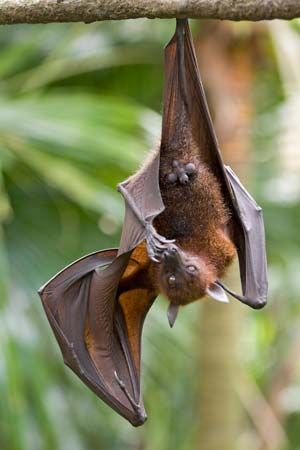
Contrary to the common idiom, bats are not blind. In fact, they generally possess eyesight that is quite functional and, in some cases, keener than that of humans.1
The misconception that bats are blind likely stems from their nocturnal habits and their reliance on echolocation to navigate and hunt in the dark. While many bats use this sophisticated acoustic system—often described as biological sonar—to pinpoint prey and avoid obstacles, this ability is independent of their vision.12
Research indicates that bats use their eyes for a variety of tasks, including long-distance navigation, detecting motion, and distinguishing between day and night to regulate their internal clocks. Among the Megachiroptera, such as flying foxes, the eyes are well-developed and capable of making visual discriminations in light levels lower than those humans can perceive. Far from being useless, a bat’s eyes are specifically attuned to low-light conditions, working in tandem with their highly developed sense of hearing to help them thrive in their environment.31
How does echolocation differ from human sonar technology?
While both echolocation and sonar rely on the principle of sound reflection to detect objects, they differ significantly in their biological versus mechanical implementation.
Biological Echolocation
Bats and other animals use biological echolocation to navigate and hunt in real-time.
- Mechanism: Bats produce high-frequency pulses via the larynx, emitting them through the mouth or nose. They interpret returning echoes to determine the direction, distance, velocity, and size of objects.2
- Adaptability: Bats dynamically adjust their pulse duration and repetition rate based on the phase of their activity (search, approach, or terminal interception), sometimes emitting over 200 pulses per second during final maneuvers.2
- Integration: This process requires complex integration between the vocal and auditory centers of the brain, allowing the animal to filter out background noise and distinguish its own echoes from those of other bats.2
Mechanical Sonar Technology
Human-made sonar is a technical application designed for specific tasks like underwater navigation, mapping, and military surveillance.45
- Mechanism: Sonar systems use acoustic transducers—often made of piezoelectric or magnetostrictive materials—to convert electrical energy into sound waves.4
- System Types: Unlike the singular biological approach, sonar is categorized into active (emitting pulses and measuring reflections) and passive (listening for noise produced by a target, such as a ship or submarine).4
- Environment: Sonar is primarily optimized for underwater use, where sound travels differently than in air. Because sound travels faster in water, aquatic animals like toothed whales must use significantly higher frequencies than bats to achieve comparable object discrimination.6
What are the main differences between Microchiroptera and Megachiroptera?
The order Chiroptera is traditionally divided into two distinct suborders: Megachiroptera and Microchiroptera. While they share the fundamental ability of flight, they differ in several key biological and behavioral aspects.78
Primary Differences
- Orientation: The most significant distinction lies in their primary method of navigation. Megachiroptera (Old World fruit bats) rely primarily on vision to orient themselves. In contrast, Microchiroptera (small bats) are characterized by their use of acoustic orientation, or echolocation, to navigate and hunt. Notably, while almost all Microchiroptera use echolocation, it is absent in most Megachiroptera, with the exception of the genus Rousettus.89
- Dietary Habits: Megachiroptera have largely maintained a specialized diet consisting of fruit and nectar. Microchiroptera exhibit much greater dietary diversity; while the majority are insectivorous, some species have evolved to feed on fish, fruit, nectar, and even small vertebrates, including other bats.10
- Physical Characteristics: As their names suggest, there is a general difference in size, though there is overlap. Megachiroptera include large species like flying foxes, which can have wingspans of up to 1.5 meters. Microchiroptera are generally smaller, though they possess specialized skeletal features and often display complex facial structures, such as nose leaves, which are thought to assist in directing their echolocation calls.78
How do bats use their sense of smell to find food?
Bats utilize their sense of smell as a critical tool for locating food, particularly among species that feed on fruit, nectar, and flowers. Because many of these food sources are nocturnal, bats rely on olfactory cues to navigate toward them in low-light conditions.31112
Olfactory Guidance
- Fruit and Flowers: Many plants that rely on bats for pollination have evolved to produce strong, musky, rancid, or urinelike odors that are easily detectable by bats. These plants often open their flowers after sunset, coinciding with the bats’ emergence from their roosts.21211
- Specialized Foraging: For certain nectar-feeding bats, such as those in the subfamily Macroglossinae, the sense of smell is highly developed and serves as a primary guide to food sources, as some of these species lack the echolocation abilities found in other bats.12
- Other Applications: Beyond finding food, bats use their sense of smell to locate occupied roosts, identify members of their own species, and differentiate individuals by sex. In the case of vampire bats, smell may also assist in locating large vertebrate prey.3
Sources
- Are Bats Really Blind? — Encyclopædia Britannica
- bat - Orientation — Encyclopædia Britannica
- bat - Senses — Encyclopædia Britannica
- sonar — Encyclopædia Britannica
- sound reception - Echolocation in other mammals — Encyclopædia Britannica
- ultrasonics - Ranging and navigating — Encyclopædia Britannica
- bat - General features — Encyclopædia Britannica
- bat - Evolution and paleontology — Encyclopædia Britannica
- Echolocation — Encyclopædia Britannica
- mammal - Food habits — Encyclopædia Britannica
- life - Photosensitivity , audiosensitivity, thermosensitivity, chemosensitivity, and magnetosensitivity — Encyclopædia Britannica
- Bat-loving flowers — Encyclopædia Britannica
- Chemoreception - Finding and recognizing food — Encyclopædia Britannica
- Pollination - Mammals — Encyclopædia Britannica
- bat - Food habits — Encyclopædia Britannica
Published on · 4 min read