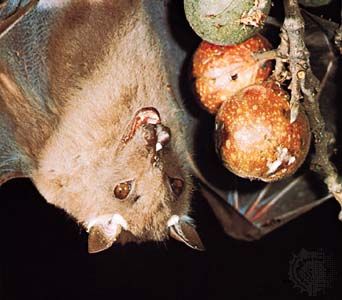
Vampire Bat
Vampire bats are native to the tropical and subtropical regions of the New World. Their habitat preferences vary by species:
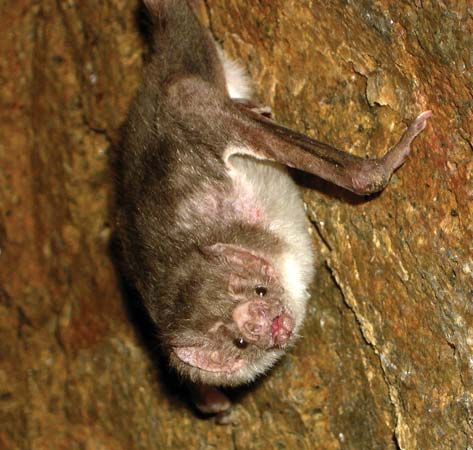
Where are vampire bats found in the wild and what is their habitat like?
Vampire bats are native to the tropical and subtropical regions of the New World. Their habitat preferences vary by species:1
- Common Vampire Bat (Desmodus rotundus): This species is highly adaptable and thrives in agricultural areas, where it frequently feeds on livestock such as cattle, pigs, and chickens.1
- White-winged and Hairy-legged Vampire Bats: These species are primarily restricted to intact forests, where they hunt birds, reptiles, and other forest-dwelling animals.1
Regardless of the specific environment, all vampire bats roost in sheltered locations such as hollow trees or caves. When emerging at night, they utilize echolocation to navigate and specialized heat sensors to locate their prey. While they are fascinating for their unique social structures and blood-feeding habits, it is important to note that they are considered pests in many areas due to their role in transmitting rabies to livestock and humans.1
How do vampire bats use echolocation to navigate and find prey?
Vampire bats use echolocation—a biological form of sonar—primarily for orientation and navigation as they emerge from their roosts at night. By emitting high-frequency sound pulses and interpreting the returning echoes, they can effectively map their surroundings, avoid obstacles, and navigate in the dark.34
While echolocation is essential for their movement, it is not their sole method for finding food. Once they are in the vicinity of a potential meal, vampire bats utilize specialized heat sensors located on their faces to detect the presence of warm-blooded prey. Additionally, they likely use their sense of smell to help locate large vertebrates.41
After navigating to a target using sonar and pinpointing it with their heat sensors, they land near the animal and approach it by hopping or crawling on the ground. This combination of acoustic orientation, thermal sensing, and olfaction allows them to successfully locate and feed on their hosts in low-light conditions.41
How do vampire bats impact the ecosystem and interact with other species?
Vampire bats play a distinct role in their ecosystems as the only mammals that subsist entirely on a diet of blood. Their interactions with other species are primarily defined by their specialized feeding habits and their status as vectors for disease.617
Interactions with Other Species
- Parasitic Relationship: Vampire bats feed on the blood of large mammals, such as cattle, pigs, and horses, as well as birds and reptiles. While the small, razor-sharp incisions they make are typically not serious, they can lead to secondary infections.76
- Disease Transmission: These bats are considered significant pests in many regions because they can transmit rabies and trypanosomiasis to livestock and, occasionally, to humans.76
- Secondary Impacts: The wounds created by vampire bats can serve as entry points for other parasites, which may lay eggs in the affected areas, further impacting the health of the host animals.7
Ecological Impact
Unlike many other bat species that contribute to pollination or seed dispersal, the ecological impact of vampire bats is largely centered on their role as specialized predators. By feeding on livestock, they have become closely linked to agricultural environments, where their presence necessitates management to protect animal health.786
How have vampire bats adapted to their nocturnal lifestyle?
Vampire bats have evolved several specialized adaptations to thrive in their nocturnal environment. Their nocturnal lifestyle offers a significant advantage, allowing them to hunt sleeping prey while avoiding visual predators, high daytime temperatures, and excessive water loss through their thin wing membranes.1
To navigate and hunt in the dark, they rely on a suite of highly developed senses:
- Echolocation: They use echolocation (sonar) for orientation and navigation as they emerge from their roosts, helping them map their surroundings and avoid obstacles.91
- Thermal Sensing: Once near their target, they use specialized heat sensors on their faces to pinpoint warm-blooded prey.9
- Olfaction: Their sense of smell assists in locating large vertebrates and identifying occupied roosts.8
- Physical Agility: Their anatomy is uniquely adapted for ground movement; they possess long, strong thumbs that allow them to hop and creep in an agile, froglike manner. The common vampire bat is even capable of taking off directly from the ground by leaping into the air.9
Sources
- vampire bat — Encyclopædia Britannica
- false vampire bat — Encyclopædia Britannica
- bat - Orientation — Encyclopædia Britannica
- bat - Senses — Encyclopædia Britannica
- Are Bats Really Blind? — Encyclopædia Britannica
- bat - Importance to humans — Encyclopædia Britannica
- 8 Animals That Suck (Blood) — Encyclopædia Britannica
- bat - Food habits — Encyclopædia Britannica
- bat - Activity patterns — Encyclopædia Britannica
Published on · 3 min read