Balloon Flower
The balloon flower (Platycodon grandiflorus) is a perennial flowering plant belonging to the bellflower family. Native to East Asia, it is widely cultivated…
What is Balloon flower?
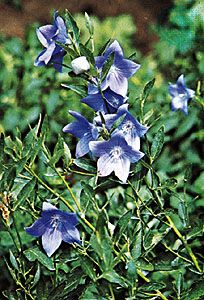
The balloon flower (Platycodon grandiflorus) is a perennial flowering plant belonging to the bellflower family. Native to East Asia, it is widely cultivated as a garden ornamental or ground cover.12
The plant is named for its distinctive, inflated flower buds, which resemble balloons before opening into five-lobed, bell-shaped blossoms. These flowers typically range from lavender-blue to white and have a thick, rubbery texture.12
Physically, the plant is clump-forming and generally grows to a height of less than 0.8 meters (2.5 feet). It features oval leaves that narrow as they ascend the stems, and it produces seeds within a five-valved seedpod.1
What other plants belong to the bellflower family?
The Campanulaceae family, commonly known as the bellflower family, comprises approximately 84 genera and 2,400 species of mostly herbaceous plants. Beyond the well-known balloon flower (Platycodon grandiflorus), the family includes a diverse range of plants, many of which are popular as garden ornamentals.34
Notable genera and species within this family include:
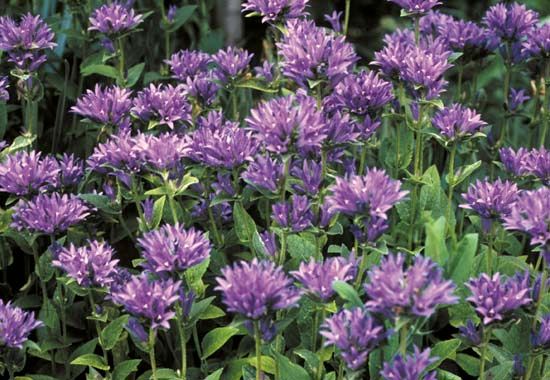
- Campanula: The namesake genus, featuring about 400 species of bellflowers, such as the Canterbury bell (C. medium) and the peach-leaved bellflower (C. persicifolia).35
- Adenophora: Known as the ladybell genus, these plants are similar to Campanula and include 60 species native to cool regions of Europe and Asia.3
- Codonopsis: Often called bonnet bellflower, this genus consists of 30 to 40 species of sprawling perennials with pendent, bell-shaped flowers.3
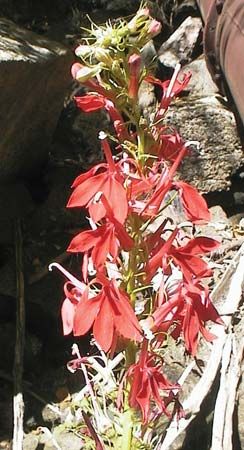
- Lobelia: Formerly classified as its own family, this large genus (including the cardinal flower, L. cardinalis) is now included as a subfamily within Campanulaceae.3
- Cyananthus: A genus of trailing bellflowers consisting of dainty, mat-forming perennials.3
- Edraianthus: The grassy bellflower genus, which includes low-growing perennials native to the Balkans.3
- Michauxia: Known as the dart bellflower, these plants are distinguished by their deep-parted, backward-turning petals.3
- Ostrowskia: Represented by a single species, O. magnifica (the giant bellflower), which can reach heights of up to 2.5 meters.3
- Symphyandra: The ring bellflower genus, which includes perennials and biennials with long-tubed, nodding bells.3
- Canarina: The canarian bellflower, which produces berries rather than capsules.3
How do perennial plants differ from annuals?
The primary difference between annual and perennial plants lies in the duration of their life cycles and their ability to survive from one year to the next.
Annual Plants
An annual is a plant that completes its entire life cycle—germination, growth, flowering, and seed production—within a single growing season. Once the plant has produced seeds, it typically dies, and the species relies on those seeds to carry the next generation forward. Because they do not survive beyond one season, gardeners must replant them annually if they wish to maintain them in their gardens.678
Perennial Plants
A perennial is a plant that lives for an indefinite number of years. These plants are capable of regrowing and reblooming year after year. While the aerial parts of some perennials may die back during winter, the plant survives underground through a perennating part, such as roots or specialized stems, and produces new growth when conditions become favorable again.68
In summary, while annuals are programmed to expire after one season, perennials are adapted to persist, often entering a state of dormancy during unfavorable environmental conditions like winter.68
What are some common garden pests that affect these flowers?
The provided search results do not contain information regarding specific garden pests that affect the bellflower family (Campanulaceae). While the results discuss noninfectious plant diseases caused by environmental factors and identify the red spider mite as a common pest for houseplants and orchard trees, they do not list pests specifically associated with bellflowers.
Sources
- Balloon flower — Encyclopædia Britannica
- balloon flower — Merriam-Webster
- Campanulaceae — Encyclopædia Britannica
- Campanulaceae — Merriam-Webster
- Bellflower — Encyclopædia Britannica
- Is That Plant 'Perennial' or 'Annual'? — Merriam-Webster
- Annual — Encyclopædia Britannica
- Biennial — Encyclopædia Britannica
- Plant development - Senescence in plants — Encyclopædia Britannica
- Plant disease - Adverse environment — Encyclopædia Britannica
- red spider — Encyclopædia Britannica
Published on · 3 min read