Bullfrog
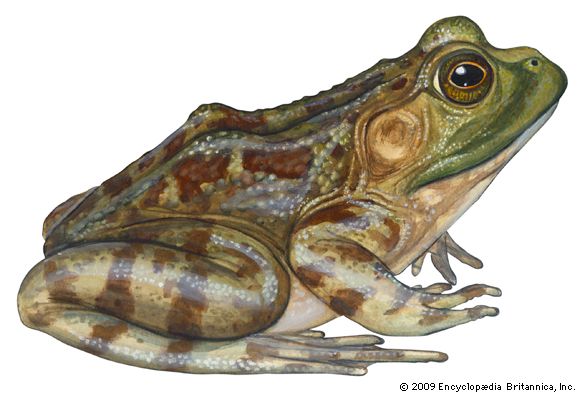
The term "bullfrog" refers to several large species of frogs known for their loud, bellowing calls. While the name is most commonly associated with the North…
What is bullfrog?
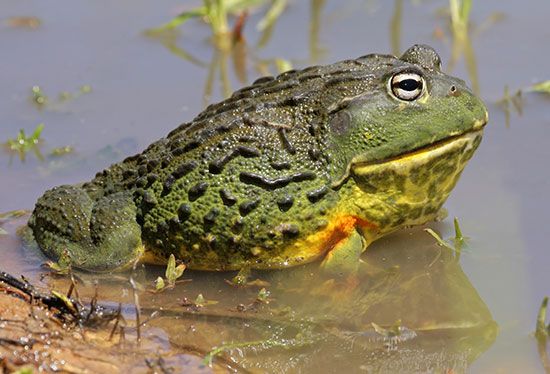
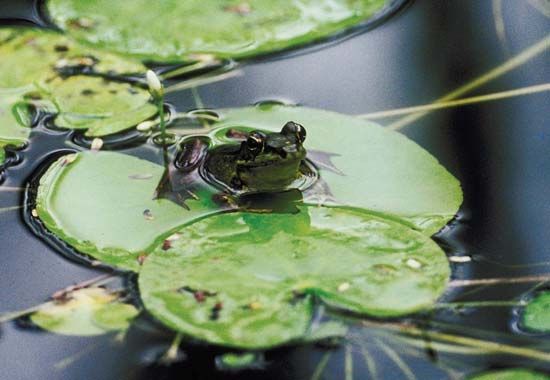
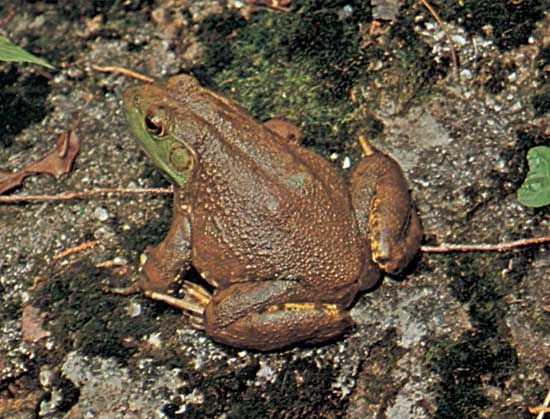
The term “bullfrog” refers to several large species of frogs known for their loud, bellowing calls. While the name is most commonly associated with the North American bullfrog (Lithobates catesbeianus), it is also applied to other large species globally, such as the African bullfrog (Pyxicephalus adspersus), the Indian Rana tigerina, and certain members of the Leptodactylidae family in South America1.1
The North American bullfrog is a semi-aquatic species native to the eastern United States and Canada. It typically reaches lengths of 20 cm (8 inches) and is often harvested for food. In contrast, the African bullfrog is a robust, burrowing species found in Southern Africa. It is significantly larger, with males weighing up to 2 kg (4 pounds), and is known for its aggressive behavior and ability to survive dry seasons through estivation.21
How does the metamorphosis process work for frogs?
The metamorphosis of a tadpole into an adult frog is a complex biological transformation regulated by hormones. The process is initiated by the hypophysis, which releases thyrotropic hormone to activate the thyroid gland. This gland then produces thyroxine, a hormone that circulates in the blood and triggers the coordinated restructuring of the animal’s body.3
During this transition, the tadpole undergoes several profound physical changes:
- Limb Development: Hind limb buds appear first, eventually developing into functional legs with toes and webbing. Later, forelimbs emerge through the operculum.45
- Resorption of Larval Features: The tail is gradually absorbed by the body, and the internal gills disappear as the frog develops lungs for air-breathing.45
- Digestive and Structural Changes: The long, coiled intestine of the herbivorous tadpole shrinks into the shorter, folded digestive tract of an adult. Additionally, the mouthparts change as jaws and true teeth develop, and the skin acquires a protective, keratinized layer.35
These changes occur at varying speeds depending on the species, ranging from two weeks to three years.45
What are the main differences between the American and African bullfrog?
The American bullfrog (Lithobates catesbeianus) and the African bullfrog (Pyxicephalus adspersus) are distinct species with significant differences in biology, behavior, and habitat.
Key Differences
- Geography and Habitat: The American bullfrog is native to the eastern United States and Canada, typically living in or near still bodies of water. The African bullfrog is found in Southern Africa and is a burrowing species that inhabits grasslands, shrublands, and farmland, often spending time underground in moist holes.26
- Physical Characteristics: American bullfrogs grow to about 20 cm (8 inches) and weigh 0.5 kg (1 pound) or more. African bullfrogs are larger and more robust, with males reaching up to 25.5 cm (10 inches) and weighing as much as 2 kg (4 pounds).26
- Behavior and Survival: African bullfrogs are known for their aggressive nature and ability to survive dry seasons through estivation, during which they form a protective, waterproof cocoon. While both species are carnivorous, African bullfrogs are particularly noted for their fanglike projections on the lower jaw.6
- Reproduction: American bullfrogs breed in early summer, with a tadpole stage lasting one to three years. African bullfrogs have a much faster development, with tadpoles emerging in about two days and completing metamorphosis in approximately 18 days.26
What is the purpose of estivation for burrowing animals?
Estivation is a state of dormancy that allows animals to survive adverse environmental conditions, specifically those characterized by extreme heat, drought, and a lack of food or water. By entering this torpid state, animals can avoid the physiological stresses of their environment during the hottest and driest months of the year.891011
The primary purposes and mechanisms of estivation include:
- Energy Conservation: Similar to hibernation, estivating animals reduce their metabolic activity to minimize energy expenditure. This allows them to survive for extended periods by relying on internal fat reserves.891012
- Water Retention: In arid environments, estivation helps animals combat desiccation. For example, some species burrow into the mud and secrete a protective mucus cocoon to seal themselves off, which prevents water loss and protects them from the drying effects of the environment.912
- Survival in Microhabitats: Animals often select or construct specific microhabitats, such as cool, moist underground burrows, to provide a stable environment that shields them from surface heat and drought.8
- Metabolic Regulation: While the degree of metabolic suppression varies by species, estivating animals effectively “wait out” unfavorable conditions until more favorable environmental circumstances return.89
Sources
- bullfrog — Encyclopædia Britannica
- African bullfrog — Encyclopædia Britannica
- Animal development - Metamorphosis — Encyclopædia Britannica
- tadpole — Encyclopædia Britannica
- frog and toad - From tadpole to adult — Encyclopædia Britannica
- What do frogs eat? — Encyclopædia Britannica
- frog and toad - Breeding behaviour — Encyclopædia Britannica
- Dormancy - Fishes and amphibians — Encyclopædia Britannica
- Dormancy - Homoiotherms and heterotherms — Encyclopædia Britannica
- mammal - Response to environmental cycles — Encyclopædia Britannica
- estivation — Merriam-Webster
- A Trick for Dealing with Summer Heat: Estivate — Merriam-Webster
- Dormancy - Types of hibernation in mammals — Encyclopædia Britannica
- Hibernation — Encyclopædia Britannica
Published on · 4 min read