Beach Grass
Beach grass, belonging to the genus Ammophila, consists of two primary species of sand-binding plants in the Poaceae family. These plants are essential for…
What are the key characteristics of beach grass plants?
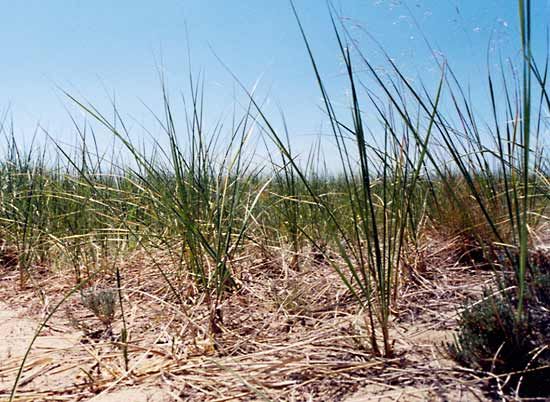
Beach grass, belonging to the genus Ammophila, consists of two primary species of sand-binding plants in the Poaceae family. These plants are essential for stabilizing shifting sand dunes in windy, coastal environments.12
Key characteristics include:
- Physical Structure: They are coarse perennial plants that typically grow to about 1 metre (3.3 feet) in height, forming dense tufts with rolled, spikelike leaves.1
- Reproduction and Growth: They produce long, dense, cylindrical flower clusters.1
- Root System: A defining feature is their tough, scaly rhizomes—underground stems that can spread 10 to 13 metres (33 to 43 feet) from the parent plant. This underground web acts as a stabilizer, holding sand in place and allowing dunes to grow higher.12
- Distribution: While native to specific temperate regions, they have been widely introduced globally as a tool for dune stabilization, though they are sometimes classified as invasive species outside their native ranges.1
What role does beach grass play in coastal ecosystems and dune stabilization?
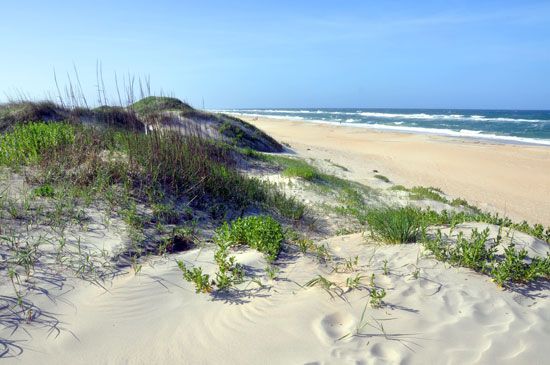
Beach grass, specifically the genus Ammophila (also known as marram grass), serves as a vital biological anchor in coastal environments. Because it is one of the few plants capable of thriving in the harsh, windy conditions between the water’s edge and the dunes, it plays a critical role in coastal dune stabilization.12
The plant’s effectiveness stems from its extensive root system. It utilizes tough, scaly rhizomes that spread horizontally beneath the sand, sometimes reaching 10 to 13 metres from the parent plant. This underground web binds shifting sand particles together, preventing erosion and allowing the dunes to accumulate more sediment and grow higher.12
By stabilizing the surface, beach grass transforms active, mobile sand into a more permanent landform. This process is essential for the development of foredunes, which act as a natural barrier against wind and wave action, protecting the landward environment. Without such vegetation, dunes remain active and prone to constant movement, which can destabilize the shoreline.24
What are some common species of beach grass found around the world?
The term “beach grass” primarily refers to the genus Ammophila, which consists of two main species of sand-binding plants known for their ability to stabilize coastal dunes.1
The two primary species are:
- American beach grass (Ammophila breviligulata): This species is native to North America, where it is commonly found along the Atlantic coast and throughout the Great Lakes region.1
- European beach grass (A. arenaria): This species is native to the temperate coasts of Europe, northern Africa, and western Asia. Due to its effectiveness as a dune stabilizer, it has been introduced to many other parts of the world, though it is sometimes considered an invasive species in regions outside its native range.1
While these are the two species specifically classified under the genus Ammophila, other grasses may also inhabit sandy coastal environments, such as various species of sandburs (Cenchrus), which are adapted to sandy soils but serve different ecological roles.4
How do rhizomes help beach grass survive in shifting sand?
Rhizomes are essential to the survival of beach grass in the volatile, windy environments of coastal dunes. These tough, scaly underground stems allow the plant to thrive by performing several critical functions:
- Stabilization: Rhizomes spread horizontally just beneath the surface of the sand, often reaching 10 to 13 metres from the parent plant. By forming an extensive underground web, they bind shifting sand particles together, which prevents erosion and allows the dune to accumulate sediment and grow higher.21
- Vegetative Propagation: These stems are capable of producing new shoot and root systems, enabling the plant to send up new shoots throughout the dune. This allows the grass to colonize and spread across the landscape effectively.17
- Survival and Storage: As modified stems, rhizomes serve as storage organs for starches and proteins. This energy reserve helps the plant survive unfavorable seasons and maintain its growth in an environment where nutrients may be scarce.7
By anchoring the plant and facilitating rapid expansion, rhizomes transform unstable, mobile sand into a more permanent, vegetated landform.2
Sources
- Beach grass — Encyclopædia Britannica
- 11 Questions About Useful Plants Answered - Why do people plant marram grass on sand dunes? — Encyclopædia Britannica
- Poaceae - Distribution and abundance — Encyclopædia Britannica
- beach grass — Merriam-Webster
- coastal landforms - Coastal dunes — Encyclopædia Britannica
- Ammophila — Merriam-Webster
- Rhizome — Encyclopædia Britannica
Published on · 3 min read