Carcharhinid
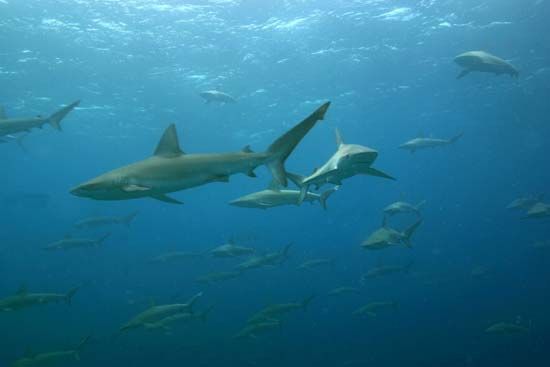
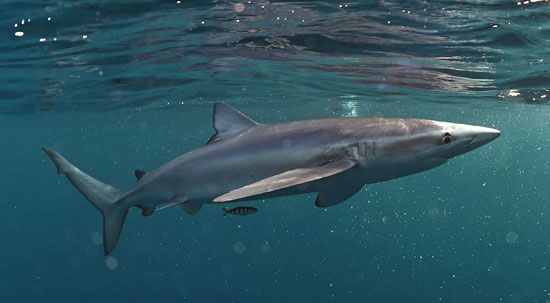
Carcharhinid sharks, members of the family Carcharhinidae, are a large group of predatory sharks found in tropical and temperate waters worldwide. While many…
How do carcharhinid sharks interact with humans, and are there any safety concerns?
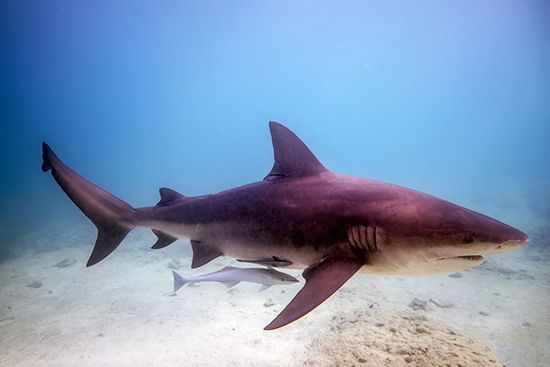
Carcharhinid sharks, members of the family Carcharhinidae, are a large group of predatory sharks found in tropical and temperate waters worldwide. While many species are harmless, some of the larger members—including the bull shark, tiger shark, and oceanic whitetip shark—are considered potentially dangerous to humans.123
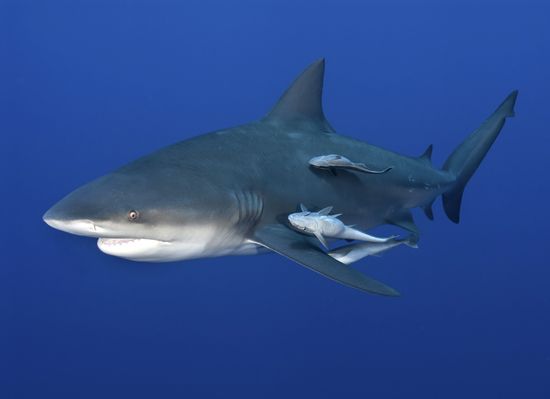
Safety concerns arise primarily because the habitats of these sharks and humans often overlap. Bull sharks, for instance, are known to frequent shallow coastal waters, estuaries, and even rivers, increasing the likelihood of encounters. Attacks are often attributed to mistaken identity; because these sharks rely on electroreception and smell to hunt, they may mistake the vibrations of a swimming human for prey.45
Most recorded interactions are nonfatal, often involving a “probing bite” where the shark is investigating a foreign object. To mitigate risks, many regions employ safety measures such as lookout towers, sirens, and gill nets at public beaches. It is important to note that shark attacks are statistically rare compared to other aquatic mishaps.463
What role do carcharhinid sharks play in marine ecosystems?
Carcharhinid sharks, which comprise one of the largest families of sharks, serve as vital carnivorous predators within marine ecosystems1. By preying on a wide variety of fishes, squid, octopuses, and other invertebrates, they play a significant role in regulating the populations of their prey species.14
Their ecological impact is supported by a highly integrated sensory system that allows them to effectively locate and capture food. This includes a well-developed sense of smell, the lateral line system for detecting vibrations, and electroreception to sense the weak electrical signals emitted by other animals. As powerful, streamlined swimmers, many carcharhinids are adept at hunting in diverse environments, ranging from open-ocean habitats to shallow coastal waters and even riverine systems.481
Because they occupy high trophic levels, these sharks are essential for maintaining the health and balance of the marine food web. However, many species, such as the oceanic whitetip shark, have seen their populations decline significantly due to human activities like bycatch, which threatens their ability to continue performing these critical ecological functions.1

How do carcharhinid sharks differ from other shark families?
Carcharhinid sharks, members of the family Carcharhinidae, are distinguished from other shark families by several specific physical and behavioral traits:
- Physical Appearance: Carcharhinids typically possess two dorsal fins, an elongate upper tail lobe, and single-cusped, blade-shaped teeth. While they share the general sharklike body plan—including a fusiform shape, gill clefts on the sides of the head, and tough skin with toothlike scales—their specific tooth morphology is highly diagnostic for identifying species within the family.1910
- Habitat Versatility: Unlike many other shark families that are strictly marine, some carcharhinids, such as the bull shark, are capable of inhabiting fresh or brackish water, allowing them to travel significant distances up rivers.110
- Taxonomic Classification: They belong to the order Carcharhiniformes, known as ground sharks, which is one of the largest and most diverse groups of sharks. This family is distinct from other orders like the Lamniformes (mackerel sharks, which include the white shark) or the Squaliformes (dogfish).14
- Behavioral Adaptations: Many carcharhinids are active, powerful swimmers that rely on advanced sensory systems, including electroreception, to hunt prey ranging from fish to invertebrates.1410
Which species are included in the carcharhinid family, and what are some notable examples?
The family Carcharhinidae, often referred to as requiem sharks, is one of the largest and most diverse groups of sharks, encompassing approximately 12 genera and 50 species found in tropical and temperate waters worldwide. These sharks are typically characterized by a sharklike appearance, featuring two dorsal fins, an elongate upper tail lobe, and single-cusped, blade-shaped teeth.112
Notable examples of carcharhinid sharks include:
- Tiger shark: A large, voracious predator known for its scavenging habits and distinct vertical bars when young.13
- Bull shark: A blunt-snouted species famous for its ability to inhabit both saltwater and freshwater environments, sometimes traveling thousands of kilometers up rivers.16
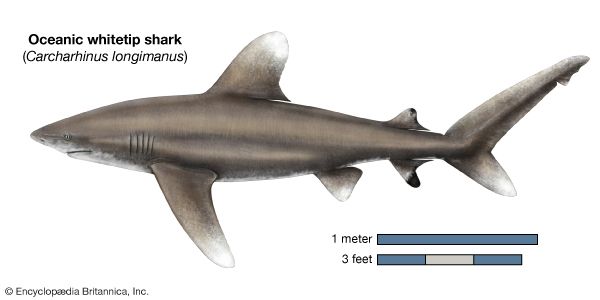
- Oceanic whitetip shark: A tropical, open-ocean species recognized by its long, paddle-like pectoral fins and white-tipped fins.15
- Lemon shark: An inshore species often identified by its yellowish coloration.1
- Blacktip shark: A group of species, including the blacktip reef shark (C. melanopterus), characterized by dark markings on their fin tips.1
Sources
- carcharhinid — Encyclopædia Britannica
- bull shark — Encyclopædia Britannica
- chondrichthyan - Danger to human life — Encyclopædia Britannica
- shark - Description and habits — Encyclopædia Britannica
- requiem — Merriam-Webster
- requiem shark — Merriam-Webster
- shark - Hazards to humans — Encyclopædia Britannica
- chondrichthyan - Sharks — Encyclopædia Britannica
- list of sharks, skates, and rays — Encyclopædia Britannica
- shark: Top Questions — Encyclopædia Britannica
- chondrichthyan - Reproductive behaviour — Encyclopædia Britannica
- tiger shark — Encyclopædia Britannica
- oceanic whitetip shark — Merriam-Webster
- whitetip reef shark — Merriam-Webster
Published on · 3 min read