Charlock
Charlock (Sinapis arvensis), also known as wild mustard, is an early-flowering plant belonging to the Brassicaceae family. Native to the Mediterranean…
What is charlock?
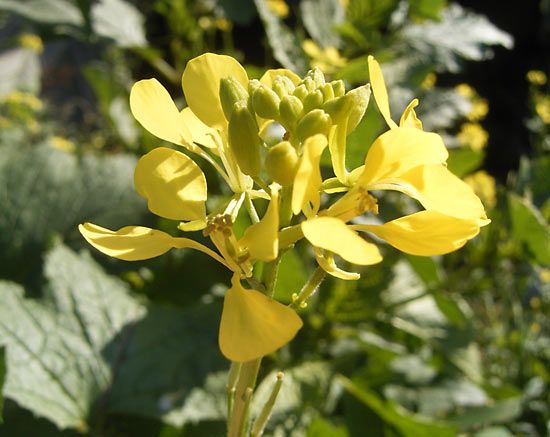
Charlock (Sinapis arvensis), also known as wild mustard, is an early-flowering plant belonging to the Brassicaceae family. Native to the Mediterranean region, it has naturalized in temperate areas globally, where it is often considered an agricultural weed or an invasive species.12
The plant typically reaches a height of 1 meter (3.3 feet) and is characterized by stiff bristles on its stems and leaves. It produces clusters of yellow, four-petaled flowers, followed by long fruit pods. Each pod contains 10 to 12 black seeds that can remain viable in the soil for over a decade. Charlock is closely related to white mustard, which is cultivated to produce the common condiment mustard.1
How does the Brassicaceae family differ from other plant families?
The Brassicaceae family, or mustard family, is distinguished from other plant families by several unique anatomical and chemical characteristics:
- Cruciform Flowers: The family is commonly known as “crucifers” because their flowers are cruciform, meaning they are arranged in the shape of a cross with four petals and four sepals.3
- Distinctive Stamen Arrangement: Unlike many other flowering plants, Brassicaceae flowers characteristically feature four long and two short stamens.3
- Chemical Defense: The family is chemically defined by the presence of glucosinolates, or mustard oils. These sulfur-containing compounds provide the plants with their characteristic pungent taste and smell and serve as a defense mechanism against herbivores. While these compounds are found in nearly every member of the order Brassicales, they are rare in other plant groups.34
- Fruit Structure: The seeds are produced in dry, podlike fruits. Long, thin versions are called siliques, while shorter, rounded versions are known as silicles.35
Why are some plants classified as invasive species?
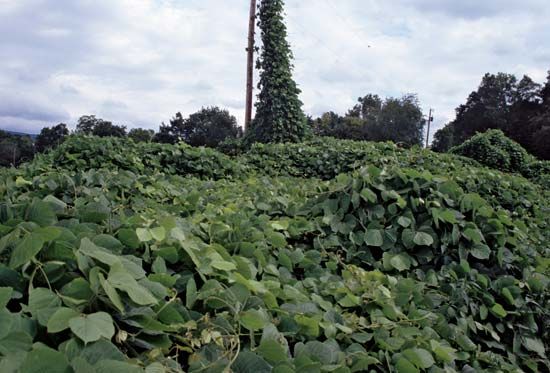
Plants are classified as invasive species when they are nonnative organisms that significantly disrupt or modify the ecosystems they colonize. While many introduced plants are benign or even beneficial, those that become invasive typically possess a competitive advantage over indigenous species, allowing them to thrive in new environments.67
Several factors contribute to this classification:
- Lack of Natural Controls: Invasive plants often flourish because the new ecosystem lacks the natural predators or pathogens that kept their populations in check in their native range.6
- Competitive Advantage: Many invasive species exhibit rapid growth, efficient reproductive strategies (both sexual and asexual), and the ability to tolerate diverse environmental conditions like drought or poor soil. Some, such as Japanese knotweed, are allelopathic, meaning they release chemicals into the soil that inhibit the growth of surrounding native plants.8
- Human Activity: Global commerce and human movement are the primary drivers of these introductions, whether they occur deliberately for landscaping and erosion control or inadvertently as contaminants in fodder or soil.687
- Ecological Disruption: By outcompeting native flora for space, food, and other resources, invasive plants can reduce local [biodiversity], alter fire regimes, and negatively impact the wildlife that depends on native vegetation.697
What are the differences between wild mustard and commercial mustard?
It is inaccurate to distinguish between “wild” and “commercial” mustard as separate biological categories, as the mustard used in commerce is derived from specific wild-growing species within the Brassicaceae family that have been domesticated or cultivated for agricultural use.1011
The primary species used for commercial production are white mustard (Sinapis alba) and brown mustard (Brassica juncea). While these are cultivated as crops, they can also exist as weeds or invasive species in regions outside their native ranges.31011
The differences between these plants are defined by their species and chemical properties rather than their status as “wild” or “commercial”:
- Flavor Profiles: Brown mustard contains a volatile oil that provides a pungent, acrid taste, whereas white mustard produces a nonvolatile oil that is milder and primarily creates a sensation of heat on the tongue.3
- Cultivation: Commercial mustard production is fully mechanized in major producing countries, utilizing specific soil and climate conditions to ensure consistent yields.103
- Usage: Both types are used in various condiment pastes, but their distinct flavor profiles dictate their culinary applications—brown mustard is often used in French-style pastes, while white mustard is common in milder American or German varieties.103
Sources
- charlock — Encyclopædia Britannica
- charlock — Merriam-Webster
- Brassicaceae — Encyclopædia Britannica
- Brassicales — Encyclopædia Britannica
- brassica — Encyclopædia Britannica
- invasive species — Encyclopædia Britannica
- Japanese knotweed — Encyclopædia Britannica
- Wetland - Disturbances caused by humans — Encyclopædia Britannica
- Plant - Dispersal and colonization — Encyclopædia Britannica
- white mustard — Encyclopædia Britannica
- mustard — Encyclopædia Britannica
Published on · 3 min read