Chubut River
The Chubut River is a 503-mile (810-km) long river located in southern Argentina. It originates in the Andes Mountains south of San Carlos de Bariloche and…
What is Chubut River?
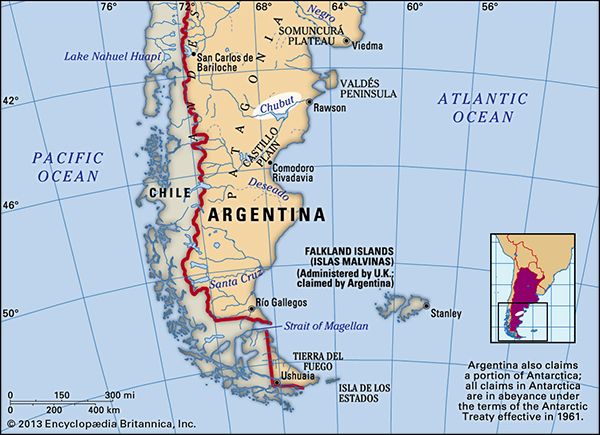
The Chubut River is a 503-mile (810-km) long river located in southern Argentina. It originates in the Andes Mountains south of San Carlos de Bariloche and flows through the province of Chubut before emptying into the Atlantic Ocean at Punta Castro.12
Although the river is not navigable, its lower course plays a vital role in the regional economy by irrigating the adjacent valley, which supports the production of apples and cherries. As it traverses Patagonia, the river passes through several notable locations, including Las Plumas, Trelew, and the provincial capital, Rawson.12
What is the geography of the Patagonia region?
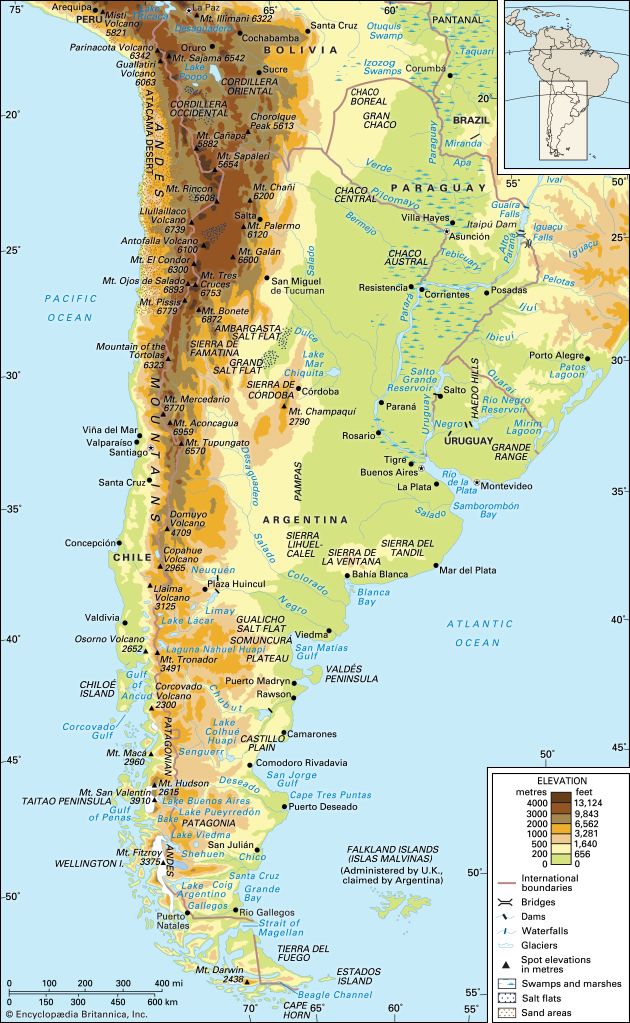
Patagonia is a vast, semiarid region covering nearly the entire southern portion of mainland Argentina, extending south from approximately 37° to 51° S latitude. Its geography is defined by a transition from the rugged Andes Mountains in the west to the Atlantic Ocean in the east.34
Physiography and Relief
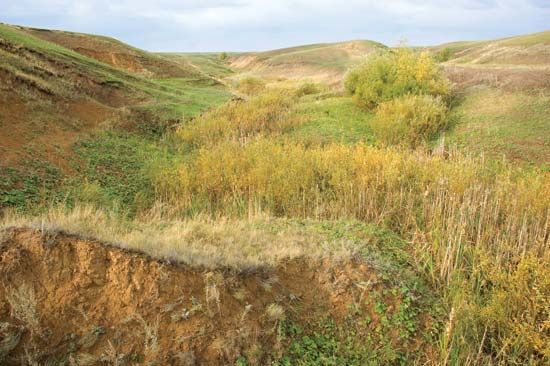
The region is characterized by a series of broad, flat steps or terraces that descend from the Andean foothills toward the coast. While often described as a vast, treeless steppe, the landscape is complex, featuring:45
- Andean Zone: Known as Western Patagonia, this area contains the Patagonian Andes, which are marked by glaciers, ice fields, deep fjords, and numerous lakes.64
- Tableland: The main plateau consists of horizontal sedimentary rock and lava flows, punctuated by volcanic hills, basaltic massifs, and isolated mesas covered in grava patagónica.45
- Coastline: The Atlantic coast is defined by high cliffs that rise significantly in the south, often separated from the sea by narrow coastal plains.45
Climate and Vegetation
Patagonia’s climate is heavily influenced by the Andes, which block moisture from the Pacific, resulting in dry, cold, and strong westerly winds. The region is generally divided into two zones:7
- Northern Zone: Semiarid with xerophytic scrub forests and grasses.78
- Southern Zone: A colder, more arid environment with sparse vegetation and heavy winter snows.78
While the interior is largely desert or steppe, the western border supports deciduous and coniferous forests, and the Valdés Peninsula on the coast is a renowned World Heritage site for its marine wildlife.98
How did Welsh immigrants influence the development of Chubut?
Welsh immigrants played a foundational role in the development of the Chubut province in southern Argentina. Arriving in the mid-19th century, these settlers were primarily motivated by the desire to preserve their cultural, religious, and political liberties.2
Their influence on the region’s development was significant in several key areas:
- Establishment of Settlements: Welsh pioneers founded several of the province’s most important towns, including the provincial capital, Rawson, as well as Trelew and Puerto Madryn. These locations served as the early hubs for regional organization.1011
- Economic Foundations: The Welsh colonizers were responsible for introducing and establishing sheep raising and wool production, which became the predominant economic activities of the province.10
- Cultural Legacy: The impact of this migration persists today, as Welsh is still spoken in parts of the region, serving as a lasting testament to the community’s historical presence.12
By 1884, the area they helped develop was officially organized as the Chubut National Territory, eventually achieving provincial status in 1955.10
What wildlife can be found on the Valdés Peninsula?
The Valdés Peninsula, a designated World Heritage site, is a critical habitat for a diverse array of marine and terrestrial wildlife.
Marine Life
The coastal waters surrounding the peninsula are particularly significant for their populations of marine mammals, including:
The surrounding Atlantic waters are also rich in crustaceans, mollusks, and various species of fish.13
Terrestrial Life
The peninsula’s land environment supports several species characteristic of the broader Patagonian region, most notably:
Sources
- Chubut River — Encyclopædia Britannica
- Chubut — Encyclopædia Britannica
- Patagonia — Encyclopædia Britannica
- Andes Mountains - Physiography of the Southern Andes — Encyclopædia Britannica
- Patagonia - Climate — Encyclopædia Britannica
- Argentina - Patagonia and Tierra del Fuego — Encyclopædia Britannica
- Patagonia - Plant life — Encyclopædia Britannica
- Argentina - Patagonia — Encyclopædia Britannica
- Patagonia - Physiography — Encyclopædia Britannica
- Patagonia - History — Encyclopædia Britannica
- Argentina - Patagonia — Encyclopædia Britannica
- Rawson — Encyclopædia Britannica
- Patagonia - Animal life — Encyclopædia Britannica
Published on · 3 min read