Crake
Crakes, which are members of the Rallidae family, primarily communicate and form pairs through their voices. Males establish and vigorously defend their…
How do crakes communicate with each other, and what sounds do they make?
Crakes, which are members of the Rallidae family, primarily communicate and form pairs through their voices. Males establish and vigorously defend their territories using distinctive songs and calls, which simultaneously serve to attract females.1
These birds produce a wide variety of sounds, with specific noises often characteristic of their species:
- Black crake (Limnocorax flavirostra): Produces a curious gurgling sound in its papyrus swamp habitat.1
- Pygmy crakes (Sarothrura species): Known for a variety of melodious calls.1
- Buff-spotted crake (S. elegans): Emits a low, moaning noise reminiscent of a tuning fork.1
- Corncrake (Crex crex): Produces a rasping sound, often compared to a heavy comb being drawn across a piece of wood.1
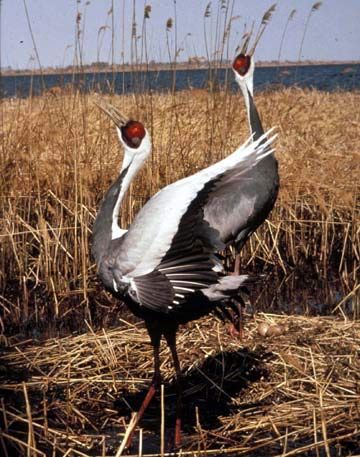
In addition to vocalizations, crakes may engage in courtship displays that involve specific physical postures, such as lowering the head, raising the wings, and fanning the tail, often while uttering special calls.1
How do crakes build their nests, and what are their breeding habits?
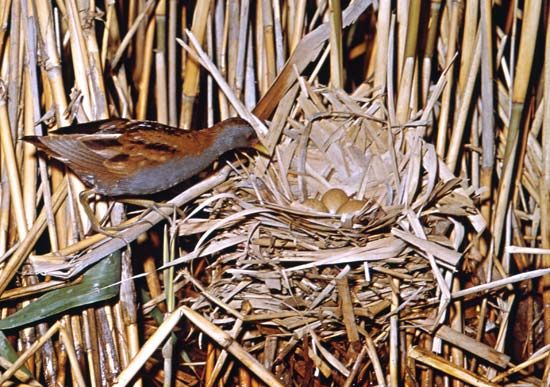
Marsh-dwelling rails, including crakes, build simple nests composed of grass and aquatic plants. These nests are typically constructed within thick tufts of grass; to provide concealment, the birds pull the surrounding blades down over the nest.4
Regarding their breeding habits, crakes and other rails exhibit several notable characteristics:
- Clutch Size: Rails can have large clutches, sometimes exceeding 10 eggs. In some instances, exceptionally large clutches of 15–20 eggs have been recorded, which may result from multiple females laying in the same nest.4
- Egg Appearance: The eggs are generally white or buff, though they may occasionally be pale gray or pale green. They are often marked with brown spots or blotches, typically concentrated at one end.4
- Incubation and Care: Both the male and female participate in incubating the eggs and caring for the young.4
- Development: Upon hatching, young crakes are downy and plain black in color. They are precocial, meaning they leave the nest almost immediately or very soon after hatching.42
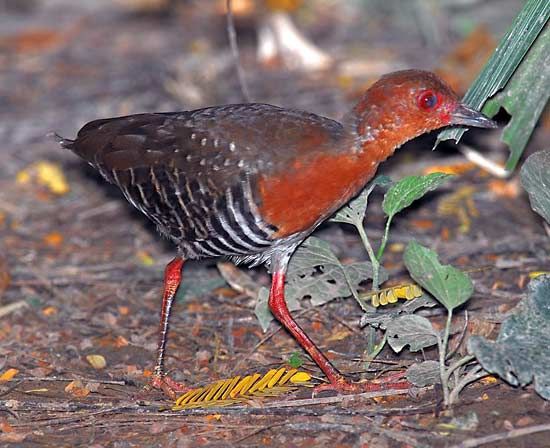
How many species of crakes are there, and which are some of the most well-known?
The term “crake” refers to numerous marsh birds within the Rallidae family, specifically those characterized by a short, conical bill. While the term is primarily European in origin, it is broadly applied to small rail species worldwide.1
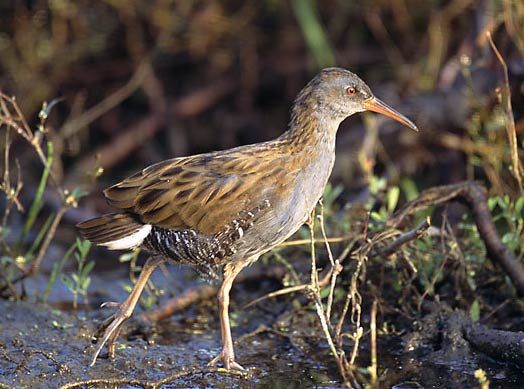
Because “crake” is a descriptive term rather than a single taxonomic group, there is no fixed number of species; rather, they are found across several genera, including Porzana, Crex, Limnocorax, Sarothrura, and Laterallus.1
Some of the most well-known species include:
- Spotted crake (Porzana porzana): A widespread Eurasian species known for its brown plumage and light-spotted breast.1
- Sora (Porzana carolina): Often called the Carolina rail, this is the New World counterpart to the spotted crake, distinguished by black markings on its face and throat.1
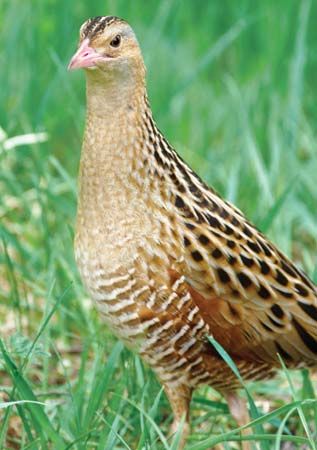
- Corncrake (Crex crex): Also known as the land rail, this migratory bird is recognized by its stout bill and reddish wings.1
- Black crake (Limnocorax flavirostra): A small, distinctive African species with black feathers, a green bill, and pink legs.1
- Little crake (P. parva): A relatively common form found across Eurasia.1
- Black rail (Laterallus jamaicensis): One of several species within the Laterallus genus.1
Where are crakes typically found in the world, and what habitats do they prefer?
Crakes are found globally, with various species distributed across Europe, Asia, Africa, Australia, New Zealand, and the Americas.1
These birds are primarily associated with wetland environments, as they are classified as marsh birds within the Rallidae family. Their preferred habitats include:1
- Marshes and Swamps: Most crakes are secretive inhabitants of dense marshland and swampy areas, where they rely on thick vegetation for cover.1
- Swampy Forests: Certain specialized species, such as the African pygmy crakes (Sarothrura), are found specifically within swampy forest environments.1
- Grasslands: In contrast to the typical marsh-dwelling species, the land rail, or corncrake, is known for inhabiting terrestrial environments like grasslands.1
While many species are highly secretive and difficult to observe, some, such as the African black crake, are noted for being less reclusive than their relatives.1
Sources
- Crake — Encyclopædia Britannica
- Gruiform - Courtship — Encyclopædia Britannica
- crake — Merriam-Webster
- Gruiform - Nesting — Encyclopædia Britannica
- Bird - Nesting — Encyclopædia Britannica
- Reproductive behaviour - Parental care — Encyclopædia Britannica
Published on · 3 min read