Water Cock
The term "water cock" most commonly refers to the water cock (Gallicrex cinerea), a marsh bird belonging to the rail family. Found throughout India, Japan…
What is Water cock?
The term “water cock” most commonly refers to the water cock (Gallicrex cinerea), a marsh bird belonging to the rail family. Found throughout India, Japan, Southeast Asia, and the Philippines, this species exhibits distinct sexual dimorphism: males are blue-black with a red bill and frontal shield, while females are mottled yellowish brown. These birds are known to nest in rice fields, where they are often considered a nuisance, and they are historically hunted for their meat and eggs.12
It is important to distinguish this bird from mechanical terminology. While the word “cock” is sometimes used as a synonym for a valve, tap, or stopcock used to control liquid flow in plumbing systems, “water cock” is not a standard technical term for such a device.345
What are other birds in the rail family?
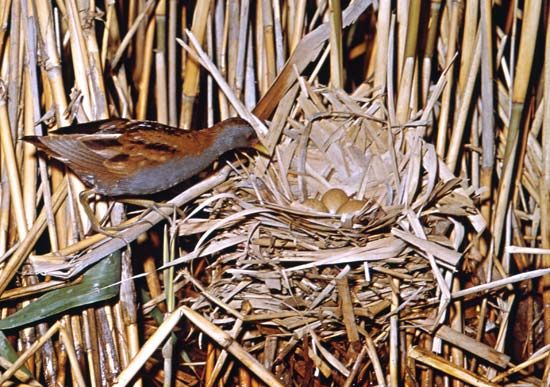
The Rallidae family is a diverse group of marsh-dwelling birds that includes approximately 138 species across 33 genera. Beyond the various types of rails, the family encompasses several other distinct groups:6
- Coots: Unlike the more secretive rails, coots are known for being ostentatious. They frequently flock like ducks, swim in open water, and are often seen waddling on shore.7
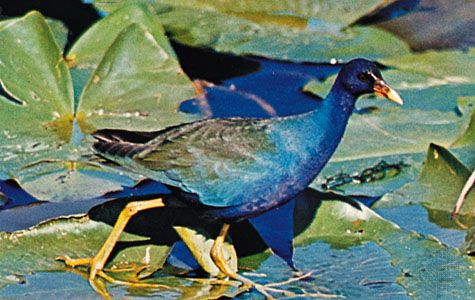
- Gallinules: Similar to coots, these birds are more conspicuous than rails and are commonly found in open water environments.7
- Crakes: This term is generally used to describe the shorter-billed species within the rail family.7
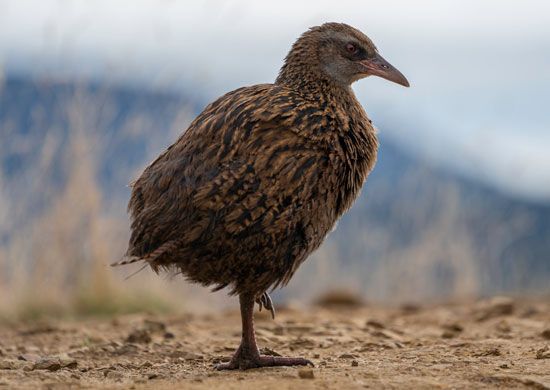
- Wekas: Native to New Zealand, these are flightless birds that are roughly the size of chickens.87
While many members of the family are secretive and dull-colored, the family’s size and behavior vary significantly, ranging from the tiny, flightless Inaccessible Island rail to larger, more social forms.7
How do birds adapt to living in rice fields?
Birds that inhabit rice fields, such as the water cock and various species collectively known as ricebirds, have adapted to these artificial wetlands by utilizing them as primary nesting and foraging grounds.
Rice fields provide a consistent, flooded environment that mimics the natural marshland habitats preferred by members of the rail family. These birds take advantage of the dense vegetation provided by the growing crops, which offers both protection from predators and suitable material for building nests. Furthermore, the agricultural cycle of rice cultivation creates a reliable food source, as the flooded paddies support a variety of aquatic invertebrates and seeds that these birds consume. While these adaptations allow birds to thrive in human-altered landscapes, they often bring the species into conflict with farmers, who may view them as pests that damage crops.110
What is the difference between a stopcock and a gate valve?
A stopcock and a gate valve are both devices used for controlling the flow of fluids in a pipe, but they differ significantly in their internal mechanisms and operation.11
A stopcock, also known as a plug valve or cock, consists of a conical plug with a hole perpendicular to its axis. This plug fits into a conical seat within the valve body. To operate it, you turn the plug so that the hole is either aligned with the pipe to permit flow or set at a right angle to block the passage.11
In contrast, a gate valve uses a wedge-shaped disk as its movable element. This disk seats against two tapered faces within the valve body to obstruct the opening. While both are classified as types of valves, the stopcock relies on a rotating plug mechanism, whereas the gate valve utilizes a sliding wedge-shaped disk to control flow.11
Sources
- Water cock — Encyclopædia Britannica
- water cock — Merriam-Webster
- water supply system - Fittings — Encyclopædia Britannica
- stopcock — Merriam-Webster
- stopcocks — Merriam-Webster
- Rallidae — Encyclopædia Britannica
- Rallidae — Merriam-Webster
- Rail — Encyclopædia Britannica
- Gruiform - Annotated classification — Encyclopædia Britannica
- ricebird — Merriam-Webster
- valve — Encyclopædia Britannica
- stopcock — Merriam-Webster
Published on · 3 min read