Dachstein
The Dachstein is a prominent mountain massif located in the northern Alps of Austria. It reaches a maximum elevation of 9,826 feet (2,995 metres) at its…
What is Dachstein?
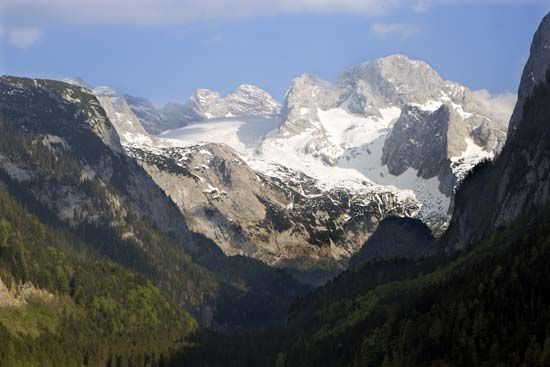
The Dachstein is a prominent mountain massif located in the northern Alps of Austria. It reaches a maximum elevation of 9,826 feet (2,995 metres) at its highest peak, the Hoher Dachstein.12
As a limestone massif, the region is characterized by significant geological features, including the easternmost and northernmost glaciers of the Alps, such as the Hallstättergletscher. The area is also famous for its extensive cave systems, with over 240 identified, including the notable Dachsteineishöhle and Koppenbrüllerhöhle. Due to its dramatic Alpine scenery, the massif is a popular destination for skiers and mountain climbers. It serves as a major geographical landmark within the Salzkammergut region, contributing to the area’s reputation for spectacular mountain landscapes.12
How are limestone caves formed in mountain massifs?
Limestone caves, often referred to as solution caves, are primarily formed through the chemical dissolution of limestone or dolomite by circulating groundwater.34
The Process of Formation
The formation of these caves typically involves the following stages:
- Acidification: As rainwater infiltrates the soil, it absorbs carbon dioxide, forming a dilute solution of carbonic acid.54
- Dissolution: This acidic water percolates through mechanical fractures, such as joints and bedding-plane partings, in the bedrock. The acid reacts with the calcium carbonate in the limestone, dissolving it and carrying it away in solution.674
- Initiation: Initially, water moves very slowly through narrow fractures. Over thousands of years, this process gradually widens these openings into pencil-sized conduits.7
- Conduit Development: Once a continuous pathway is established, flow velocities increase, and the system begins to function like a pipe. This allows for more rapid dissolution and the transport of sediment, eventually creating large, integrated cave systems.37
These features are characteristic of karst terrain, where surface drainage is often replaced by internal, underground routes.36
What makes the Alps a significant mountain range in Europe?
The Alps are the most prominent physiographic region in Western Europe, stretching approximately 750 miles across several countries, including France, Italy, Switzerland, Germany, and Austria. Their significance stems from several key factors:1011
- Geographic and Climatic Influence: The mountain range acts as a major barrier that separates different European regions and climates. By isolating the marine west-coast climates from the Mediterranean areas, the Alps create unique, sharp climatic contrasts based on elevation and relief.10
- Hydrological Importance: The Alps serve as the source for many of Europe’s major rivers, including the Rhône, Rhine, Po, and the Danube. Consequently, water from these mountains flows into the North, Mediterranean, Adriatic, and Black seas.10
- Economic and Human Impact: Historically, the region supported a pastoral economy, which has since evolved to include industry and mass tourism. The development of hydroelectric power in the 20th century, utilizing glacial runoff, has been vital for supporting local manufacturing industries.109
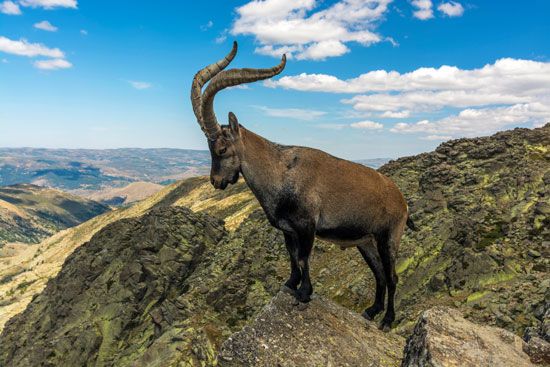
- Ecological Diversity: The range hosts diverse vegetation zones and specialized wildlife, such as the ibex and chamois, though it faces significant environmental threats due to human pressure and global warming.1012
How do glaciers impact the surrounding Alpine environment?
Glaciers have played a transformative role in shaping the Alpine environment, acting as powerful agents of erosion and deposition that sculpted the region’s dramatic topography.913
Landscape Sculpting
During the Quaternary Period, expanding ice tongues carved the mountains into their present-day forms. Key impacts include:9
- Peak and Valley Formation: Glacial erosion sharpened mountaintops into iconic peaks like the Matterhorn and Grossglockner, while simultaneously widening and deepening valleys into characteristic U-shapes.913
- Hydrological Features: The movement of ice created deep basins that now hold elongated lakes, such as Lake Constance. Additionally, the retreat of glaciers left behind hanging valleys, which are the source of spectacular waterfalls like the Staubbach.9
- Depositional Legacy: As glaciers melted, they deposited vast quantities of sand, gravel, and moraines. These deposits created inherently more fertile soils in the valleys, which facilitated human settlement and communication by moderating the otherwise harsh physical environment.913
Modern Significance
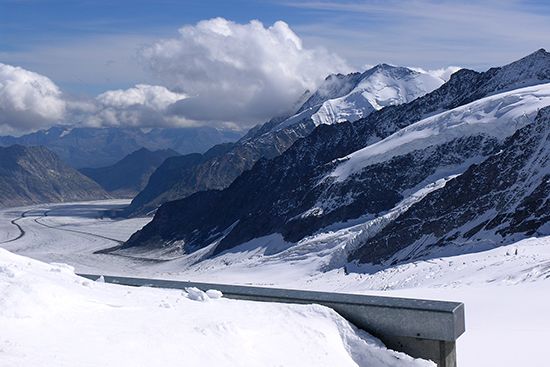
Today, the legacy of glaciation continues to influence the region. Modern glaciers, such as the Aletsch Glacier, remain vital to the Alpine ecosystem; their summer runoff is a critical resource for generating hydroelectric power.9
Sources
- Dachstein — Encyclopædia Britannica
- Salzkammergut — Encyclopædia Britannica
- cave — Encyclopædia Britannica
- carbonic acid — Encyclopædia Britannica
- cave - Glacier caves — Encyclopædia Britannica
- karst — Encyclopædia Britannica
- cave - Initiation phase — Encyclopædia Britannica
- cave - Solution caves — Encyclopædia Britannica
- Alps - Geology — Encyclopædia Britannica
- Alps — Encyclopædia Britannica
- Alps - Plant and animal life — Encyclopædia Britannica
- Exploring 7 of Earth’s Great Mountain Ranges - Alps — Encyclopædia Britannica
- Alpine lakes — Encyclopædia Britannica
- Pleistocene Epoch - Glaciation — Encyclopædia Britannica
Published on · 3 min read