Do Kangaroos Really Box?
Yes, kangaroo boxing is a genuine behavior observed in these Australian marsupials. Male kangaroos engage in boxing, biting, and kicking primarily to…
Do kangaroos really box?
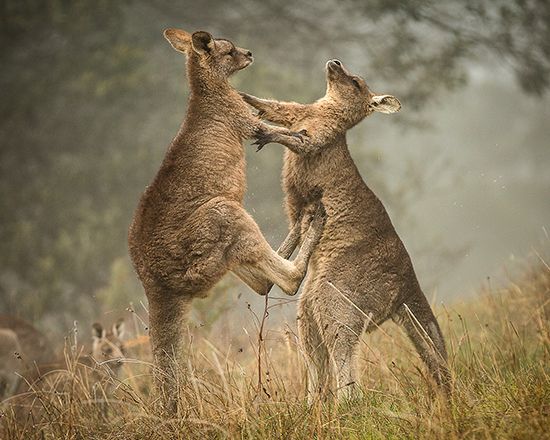
Yes, kangaroo boxing is a genuine behavior observed in these Australian marsupials. Male kangaroos engage in boxing, biting, and kicking primarily to establish dominance and secure access to females during the mating season.123
Beyond social competition, boxing serves as a critical defense mechanism against predators. During these encounters, kangaroos use their agile forepaws to grip an opponent or enemy. A key component of their technique involves using their powerful tails as a “third leg” for balance and stability. By leaning back on their tails, they free their muscular hind legs to deliver forceful, clawed kicks capable of causing severe injury to dogs and humans. What may appear to be a “hug” during these fights is actually a tactical maneuver used to stabilize the body while the kangaroo prepares to strike with its hind feet.123
How do kangaroos use their tails for balance?
Kangaroos utilize their long, muscular tails as a vital tool for balance and stability in several ways:
- As a “Third Leg”: Large kangaroos frequently use their tails to support their weight when standing still, effectively acting as a third leg to maintain an upright posture.3
- During Combat: When engaging in boxing or defensive fighting, kangaroos often lean back on their tails. This provides the necessary stability to balance their bodies, which in turn frees their powerful hind legs to deliver forceful, clawed kicks against opponents or predators.45
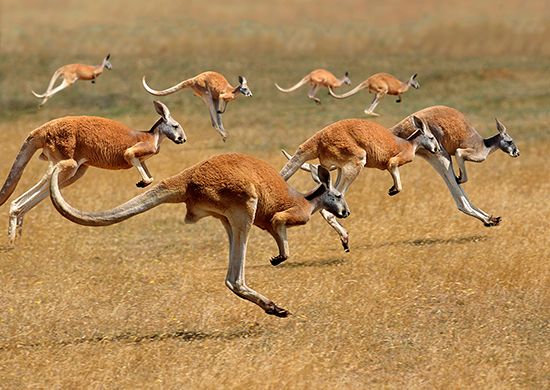
- Locomotion: While their primary mode of movement is saltation (hopping), the tail works in conjunction with their body mechanics to maintain equilibrium during their bipedal gait.36
By serving as a structural support, the tail allows these marsupials to perform complex physical maneuvers that would otherwise be impossible, blending agility with the brute strength required for both social dominance and survival.5
What are the main predators of kangaroos in the wild?
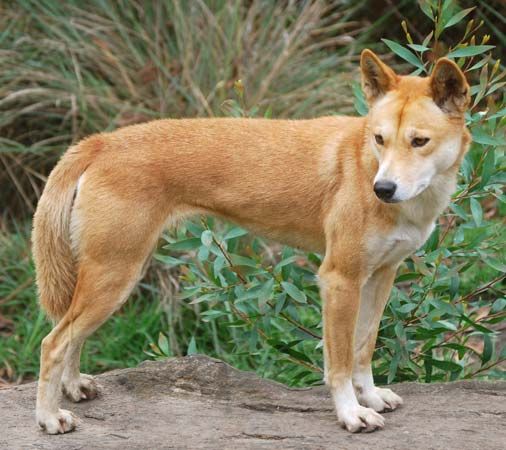
In the wild, kangaroos face threats from both native and introduced predators. The dingo—a wild canine native to Australia—has historically been a primary predator of kangaroos and wallabies. Additionally, the wedge-tailed eagle is recognized as one of the few natural predators capable of taking down young kangaroos.2189
The introduction of non-native species by humans has also significantly impacted kangaroo populations. Smaller species of kangaroos and related macropodids have faced severe decline or extinction due to predation by introduced foxes. Furthermore, feral dogs pose an ongoing threat to these marsupials across the Australian mainland.942
To defend themselves against these threats, kangaroos utilize their agile forepaws to grip an attacker while balancing on their tails, allowing them to deliver powerful, clawed kicks with their hind legs. In some instances, when pursued by hunters or dogs, they have been known to retreat into water to defend themselves.210
How do kangaroos stay cool in the Australian heat?
To cope with the intense heat of the Australian environment, kangaroos employ specific behavioral adaptations to regulate their body temperature.
One primary method is licking their forearms. By applying saliva to this area, they promote heat loss through evaporation, which helps cool their blood as it circulates through the body.2
Additionally, kangaroos exhibit an irregular activity rhythm. While they can be found in the open during the day, they are generally most active at night or during periods of lower light intensity, allowing them to avoid the peak temperatures of the midday sun.2
Sources
- Do kangaroos really box? — Encyclopædia Britannica
- kangaroo - Behaviour — Encyclopædia Britannica
- Why do kangaroos hug? — Encyclopædia Britannica
- kangaroo - Common features — Encyclopædia Britannica
- Tail — Encyclopædia Britannica
- Locomotion - Saltation — Encyclopædia Britannica
- Why Do Animals Have Tails? — Encyclopædia Britannica
- dingo — Encyclopædia Britannica
- wedge-tailed eagle — Merriam-Webster
- marsupial - Paleontology and recent history — Encyclopædia Britannica
- What do kangaroos eat? — Encyclopædia Britannica
Published on · 3 min read