What Do Kangaroos Eat?
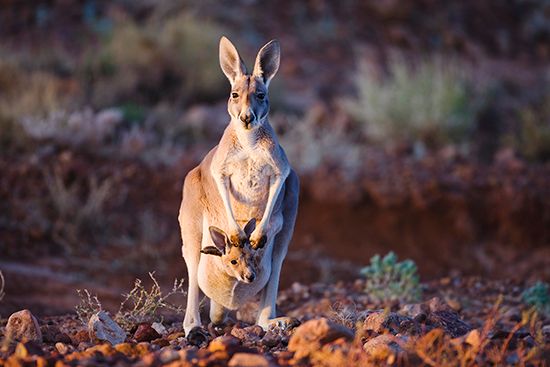
Kangaroos are herbivores, meaning their diet consists exclusively of plant-based foods. Their primary food sources include:
What do kangaroos eat?
Kangaroos are herbivores, meaning their diet consists exclusively of plant-based foods. Their primary food sources include:1
- Grass: Larger species, such as red and gray kangaroos, are primarily grazers that consume large amounts of grass in open areas.1
- Other Vegetation: When grass is scarce, they adapt by eating leaves, shrubs, and tree bark.1
- Selective Browsing: Smaller species, such as wallabies, are often more selective and focus on browsing rather than grazing.1
To process this diet, kangaroos possess a specialized, chambered stomach that functions similarly to the rumen of cattle. This allows them to ferment and break down cellulose, a tough plant material that many other animals cannot digest. Their ability to adapt their feeding habits to the availability of vegetation is a critical survival strategy in the diverse and often harsh Australian environment.1
How does a kangaroo’s digestive system compare to that of a cow?
Both kangaroos and cattle are herbivores that rely on specialized digestive systems to break down cellulose, a tough plant material that mammals cannot digest on their own. While they share the goal of extracting nutrients from fibrous vegetation, their anatomical approaches differ:145
- Stomach Structure: Cattle are true ruminants with a complex, four-chambered stomach consisting of the rumen, reticulum, omasum, and abomasum. Kangaroos also possess a chambered stomach that functions similarly to the rumen, allowing for the fermentation of plant material by symbiotic microorganisms.451
- The Process of Rumination: A key distinction is the practice of rumination. Cattle ingest food quickly, store it in the rumen, and later regurgitate it as cud to be chewed again for further breakdown. While kangaroos use their chambered stomachs to ferment and digest cellulose, they do not exhibit the same regurgitation and cud-chewing behavior characteristic of cattle.4561
Both animals rely on these internal microbial populations to convert otherwise indigestible plant fibers into usable energy and protein.156
What are the main differences between grazing and browsing animals?
The primary distinction between grazing and browsing animals lies in their preferred food sources and the habitats they occupy.
- Grazers: These animals primarily feed on grasses and herbaceous plants found in open areas. Because grass quality and availability can fluctuate significantly with the seasons, many grazing species are migratory, traveling long distances to find succulent pastures. Examples include red and gray kangaroos, cattle, sheep, and the white rhinoceros/domesticated-sheep), and the white rhinoceros.189
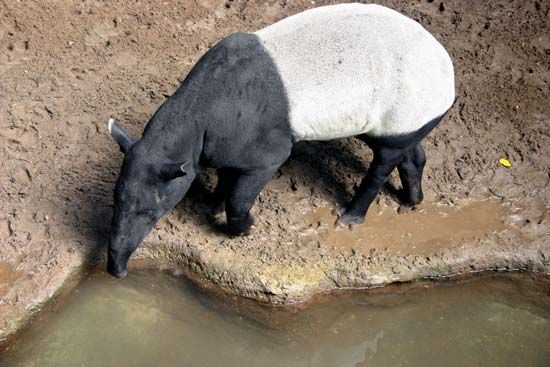
- Browsers: These animals feed on the foliage of trees and shrubs, including leaves, twigs, and bark. Because this type of vegetation is often more readily available throughout the year, browsing species tend to be more sedentary than grazers. Browsers often exhibit specialized physical adaptations, such as prehensile lips or long necks, to reach foliage at various heights. Examples include tapirs and certain species of deer.189
While some animals are specialized, many herbivores are flexible, shifting their diet between grazing and browsing depending on food availability and seasonal changes.18
What other Australian marsupials share similar feeding habits to kangaroos?
Several other Australian marsupials share similar herbivorous feeding habits with kangaroos, filling various ecological niches as grazers or browsers:
- Wallabies: These are closely related to kangaroos and belong to the same family, Macropodidae. While larger kangaroo species are typically grazers, many smaller species like wallabies are more selective and often focus on browsing on leaves and shrubs.110
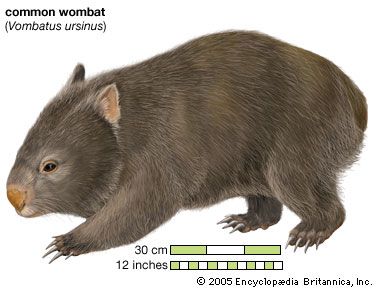
- Wombats: These terrestrial marsupials are strictly herbivorous. They consume grasses, and some species, such as the common wombat, also feed on the inner bark of tree and shrub roots. Unlike kangaroos, wombats have continuously growing, rootless teeth specifically adapted to this hard-wearing diet.11
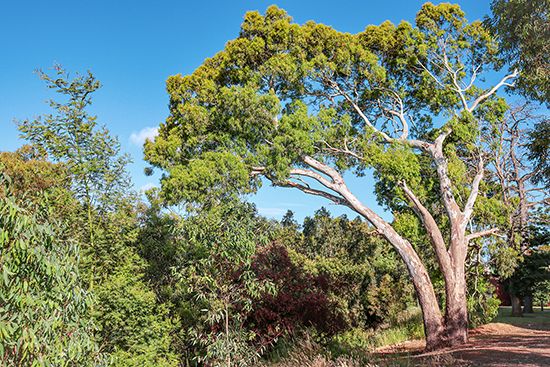
- Koalas: As specialized arboreal herbivores, koalas occupy a different niche than grazing kangaroos, focusing their diet almost exclusively on foliage, such as eucalyptus leaves.1210
These animals, along with kangaroos, demonstrate the diverse ways in which Australian marsupials have adapted to process plant-based diets in their environment.112
Sources
- What do kangaroos eat? — Encyclopædia Britannica
- kangaroo - Behaviour — Encyclopædia Britannica
- mammal - Food habits — Encyclopædia Britannica
- ruminant — Encyclopædia Britannica
- artiodactyl - Digestive system — Encyclopædia Britannica
- Animal - Digestion — Encyclopædia Britannica
- esophagus — Encyclopædia Britannica
- artiodactyl - Food habits — Encyclopædia Britannica
- perissodactyl - Feeding — Encyclopædia Britannica
- marsupial — Encyclopædia Britannica
- kangaroo - Common features — Encyclopædia Britannica
- Grassland - Biota — Encyclopædia Britannica
- wombat — Encyclopædia Britannica
Published on · 3 min read