Why Do Kangaroos Hug?
It is a common misconception that kangaroos "hug" as a sign of affection; in reality, this behavior is a tactical maneuver used during physical…
Why do kangaroos hug?
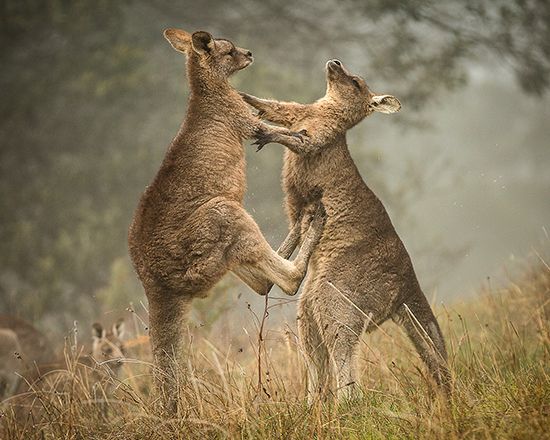
It is a common misconception that kangaroos “hug” as a sign of affection; in reality, this behavior is a tactical maneuver used during physical confrontations. When kangaroos fight—typically males competing for dominance and access to females during mating season—they use their agile arms to grip their opponents.1
This “hugging” position serves to stabilize the animals, allowing them to balance while leaning back on their tails, which function like a third leg. By securing this grip, they free their powerful hind legs to deliver kicks or to grapple with their opponent. During these intense matches, which also involve boxing and biting, the animals may attempt to gouge each other’s eyes. This same gripping tactic is also employed defensively against predators, where a kangaroo may hold an enemy in place before using its clawed hind feet to strike.12
How do kangaroos use their tails for balance?
Kangaroos possess long, powerful tails that are thickened at the base, serving as a critical tool for maintaining balance and stability. This adaptation is most evident in large kangaroos, which utilize the tail as a “third leg” when standing still.3
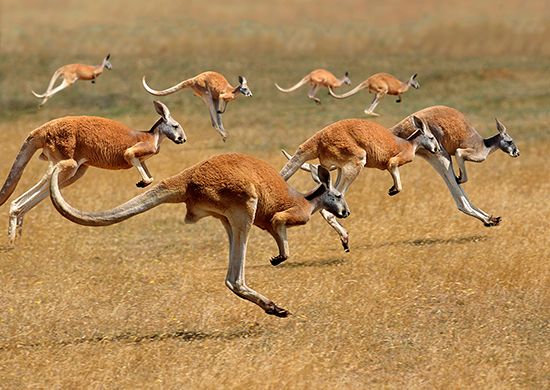
Beyond stationary support, the tail is essential for the animal’s locomotion, providing necessary equilibrium during their characteristic hopping and leaping movements. The tail also plays a vital role in physical confrontations and defense. During a fight, a kangaroo can lean back on its tail to stabilize its body, which frees its powerful hind legs to deliver forceful kicks. By acting as a tripod, the tail allows the kangaroo to maintain its center of gravity while engaging in boxing or grappling with an opponent or predator.341
What are the primary differences between mobs and other animal social groups?
The primary difference between a kangaroo “mob” and many other animal social groups lies in the level of cohesion and social structure. While groups like lion prides are considered “true” social groups, kangaroo mobs are essentially loose aggregations of individuals.267
Key Differences
- Social Cohesion: In true social groups, members often exhibit coordinated behavior, maintain hierarchies, and pay attention to leaders or elders. In contrast, kangaroo mobs lack this structure; individual members move at liberty, and there is no cohesive social organization beyond temporary associations.862
- Leadership and Hierarchy: While a dominant male (“old man” or “boomer”) may emerge during the mating season, this does not imply a permanent leadership role for the group as a whole. Many other social mammals maintain strict dominance hierarchies that are reinforced through stereotyped behaviors to conserve energy.28
- Group Function: True social groups often evolve for specific, cooperative purposes such as collective hunting, shared defense of territory, or the protection of offspring. Kangaroo mobs are primarily feeding groups that form in response to environmental conditions; they do not function as a unified unit for these complex social tasks.8726
- Communication: While kangaroos can signal alarm by thumping their tails—which can cause the entire mob to scatter in a “wild rout”—this is a reactive, individualistic response rather than a coordinated group strategy.2
How do kangaroos defend themselves against predators like dingoes?
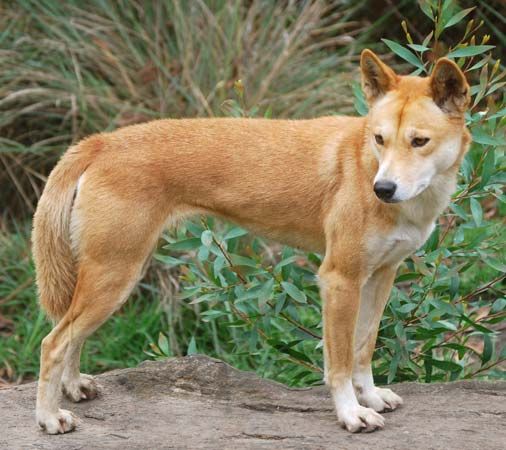
When facing predators such as dingoes, kangaroos employ a sophisticated defense mechanism that combines agility, balance, and physical force.
Defensive Tactics
- Boxing and Grappling: Kangaroos use their agile forepaws to grip an attacker, effectively holding the predator in place while they prepare to strike.14
- Tail Stabilization: During these encounters, the kangaroo leans back on its thick, muscular tail. This acts as a third leg, providing the necessary stability to lift its body off the ground.21
- Powerful Kicking: Once balanced on the tail, the kangaroo delivers forceful, swift kicks with its large, clawed hind feet. This defensive maneuver is powerful enough to disembowel dogs and other threats.14
- Water Defense: When pursued by hunters or dogs, kangaroos often retreat to water. Once in the water, they may turn to face their pursuer, using their forepaws to press the animal down in an attempt to drown it.4
Sources
- Why do kangaroos hug? — Encyclopædia Britannica
- kangaroo - Behaviour — Encyclopædia Britannica
- kangaroo - Common features — Encyclopædia Britannica
- Do kangaroos really box? — Encyclopædia Britannica
- Why Do Animals Have Tails? — Encyclopædia Britannica
- mammal - Social behaviour — Encyclopædia Britannica
- marsupial — Encyclopædia Britannica
- lion - Prides — Encyclopædia Britannica
- herds — Merriam-Webster
Published on · 3 min read