Favosites
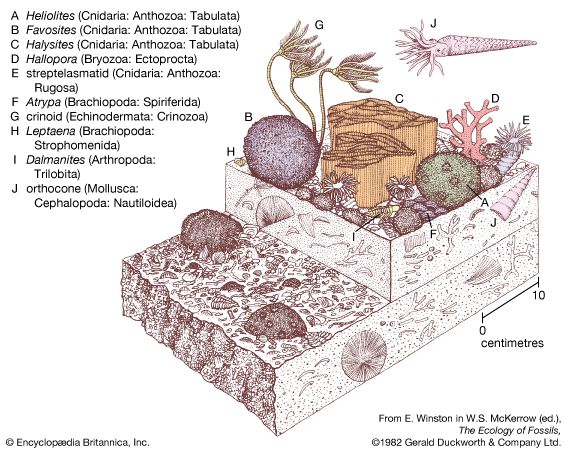
Favosites is an extinct genus of colonial coral that lived during the Paleozoic Era, specifically from the Ordovician to the Permian periods (approximately…
What is Favosites?
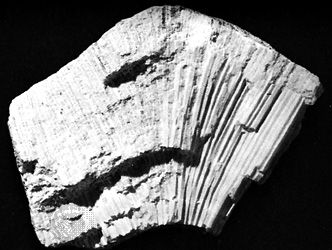
Favosites is an extinct genus of colonial coral that lived during the Paleozoic Era, specifically from the Ordovician to the Permian periods (approximately 488 million to 251 million years ago).12
These corals are commonly referred to as “honeycomb coral” due to their distinctive appearance. They are characterized by closely packed, long, narrow tubes that house individual coral animals, narrow tubes that house individual coral animals. When viewed in cross section, these polygonal cells create a pattern resembling a honeycomb. Favosites fossils are particularly abundant in Silurian and Devonian marine rock formations.312
How do colonial corals build their structures?
Colonial corals build their structures through a process of asexual reproduction known as budding, where new polyps remain attached to the original parent polyp. As these colonies grow, they continuously add new individuals, creating complex, rigid frameworks.14
The construction of these structures involves several key biological and chemical processes:
- Skeletal Secretion: Most reef-building corals, such as stony corals, secrete an external cup-shaped skeleton made of calcium carbonate-shaped skeleton made of calcium carbonate. In some species, polyps are so tightly packed that they share common walls, creating massive or branching formations.65
- Symbiotic Assistance: The process is significantly accelerated by zooxanthellae, symbiotic algae living within the coral tissues. These algae aid in skeletal formation by removing metabolic carbon dioxide and increasing the speed at which calcium carbonate is deposited.6
- Structural Integration: While corals provide the primary framework, other organisms like calcareous algae, mollusks, and protozoans contribute by filling gaps with fragments and cementing the structure together.4
What are the main differences between Paleozoic and modern corals?
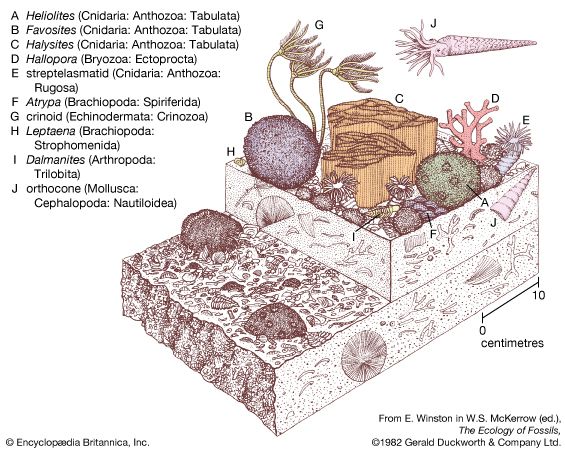
The primary difference between Paleozoic and modern corals lies in their classification and evolutionary history. Paleozoic corals, specifically the rugose and tabulate groups, were dominant reef-builders for millions of years but became extinct at the end of the Permian Period, approximately 251 million years ago.14
Key distinctions include:
- Taxonomic Groups: Paleozoic corals consisted of distinct orders like the rugose (often called “horn corals” due to their shape, such as Cystiphyllum) and tabulate (colonial corals like Favosites, known for their honeycomb-like structure). Modern reef-building corals belong to different evolutionary lineages that rose to prominence after the Paleozoic extinctions.8149
- Extinction Event: The Permian-Triassic mass extinction was a catastrophic event that eliminated the rugose and tabulate corals entirely, along with a vast majority of other marine invertebrate species.14
- Structural Composition: While both groups utilized calcium carbonate to build skeletons, the specific internal architecture and growth patterns differ between these extinct Paleozoic forms and the modern anthozoan corals that inhabit today’s oceans.1011
What can fossils tell us about ancient marine environments?
Fossils serve as vital indicators of ancient marine environments, offering scientists a window into the history of Earth’s oceans, climate, and biological evolution. By analyzing the remains and imprints preserved in sedimentary rock, researchers can reconstruct past conditions with remarkable detail.12
Environmental Indicators
Fossilized organisms act as proxies for the environments in which they once lived. For example, the presence of specific coral species in the fossil record indicates that the area was once a warm, shallow-water environment. When such fossils are discovered in regions that are now polar, it provides strong evidence that the Earth’s crust has shifted over time. Similarly, the analysis of microfossils—such as foraminifera and ostracods—allows geologists to determine the depositional environment and age of sedimentary rocks, which is essential for understanding the history of marine ecosystems.121314
Climate and Glacial History
The chemical composition of fossilized shells provides a record of past climates. By measuring the ratio of oxygen isotopes (16O^{16}O and 18O^{18}O) in the calcium carbonate of marine microfossils, scientists can infer past water temperatures and global ice volumes. Because shells formed in colder water contain more 18O^{18}O, these records help map cycles of glaciation and interglaciation, serving as a standard for correlating terrestrial and marine stratigraphic records.1516
Chronology and Evolution
Fossils also function as index fossils, which are characteristic of specific time spans or environments. Because these organisms were abundant and widely distributed, they allow geologists to define boundaries in the geologic time scale and correlate rock layers across different locations. Furthermore, observing morphological changes in fossil groups over time helps scientists track the evolution of species as they adapted to changing environmental pressures.1712
Sources
- Favosites — Encyclopædia Britannica
- Favosites — Merriam-Webster
- honeycomb coral — Merriam-Webster
- cnidarian - Support mechanisms and skeletons — Encyclopædia Britannica
- coral reef - Biological factors — Encyclopædia Britannica
- coral — Encyclopædia Britannica
- coral reef - Corals and other reef-building organisms — Encyclopædia Britannica
- Triassic Period - Permian-Triassic extinctions — Encyclopædia Britannica
- skeleton - Calcareous structures — Encyclopædia Britannica
- Permian extinction - Marine invertebrates — Encyclopædia Britannica
- Cystiphyllum — Encyclopædia Britannica
- fossil record — Encyclopædia Britannica
- Pleistocene Epoch - Marine oxygen isotope record — Encyclopædia Britannica
- geology - Micropaleontology — Encyclopædia Britannica
- Earth sciences - Micropaleontology — Encyclopædia Britannica
- geochronology - Coral growth — Encyclopædia Britannica
- index fossil — Encyclopædia Britannica
- Marine ecosystem - Links between the pelagic environments and the benthos — Encyclopædia Britannica
- Tertiary Period - Marine extinctions and recovery — Encyclopædia Britannica
- Quaternary - Paleoclimate — Encyclopædia Britannica
Published on · 3 min read