Forsythia
Forsythia is a genus of approximately seven species of deciduous shrubs belonging to the olive family (Oleaceae). Native to East Asia and parts of Europe…
What is Forsythia?
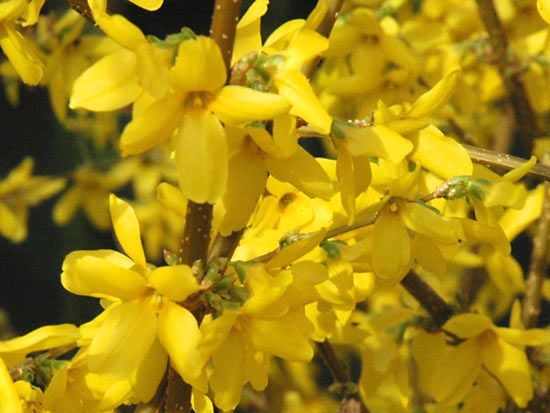
Forsythia is a genus of approximately seven species of deciduous shrubs belonging to the olive family (Oleaceae). Native to East Asia and parts of Europe, these plants are widely cultivated as low-maintenance, fast-growing ornamentals.1
The plant is best known for its vibrant, four-petaled yellow flowers, which typically emerge along the stems in early spring before the leaves appear1. The leaves are simple, narrow, and arranged oppositely along hollow or pithy stems.21
Common varieties include:
- Green-stem forsythia (Forsythia viridissima): Native to China, reaching up to 3 meters in height.1
- Weeping forsythia (F. suspensa): Characterized by hollow, pendulous stems.1
- Common forsythia (F. ×intermedia): A popular hybrid featuring arching stems and bright yellow blooms.1
Named after the British botanist William Forsyth, the shrub has been a staple in gardens since the early 19th century.2
What other plants belong to the olive family?
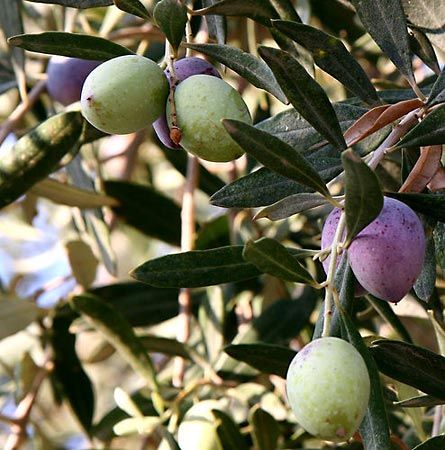
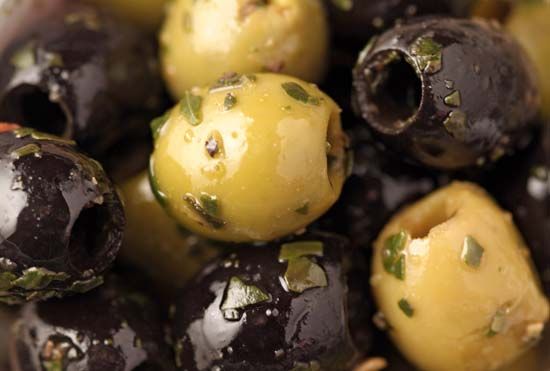
The olive family (Oleaceae) comprises approximately 24 genera and 615 species of woody plants, including trees, shrubs, and some woody climbers. Beyond the olive tree (Olea europaea), several other plants belong to this family, many of which are valued for their timber or ornamental beauty:
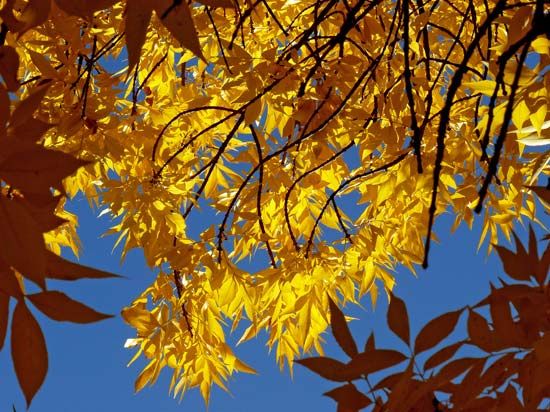
- Ash (Fraxinus): Known for producing durable, high-quality hardwood timber.4
- Lilac (Syringa): Widely cultivated for their fragrant, colorful flowers.4
- Jasmine (Jasminum): Often woody climbers, these are prized for their scent and are used in perfumes and tea flavoring.4
- Privet (Ligustrum): Frequently used in landscaping for hedges and ornamental plantings.4
- Osmanthus: Known for their sweet fragrance; their dried flowers are often used to scent teas in East Asia.4
- Mock privet (Phillyrea): Another genus commonly utilized for ornamental hedges.4
Why do some flowers bloom before their leaves appear?
Some plants bloom before their leaves appear in early spring primarily as an adaptation to their pollination strategy. For many wind-pollinated plants, such as various trees and grasses, the presence of leaves can act as a physical barrier that interferes with the movement of pollen through the air. By flowering before the foliage emerges, these plants ensure that their pollen has a clearer, less obstructed path to reach other flowers.5
This timing is often governed by temperature and day-length cues, which signal to the plant that it is time to transition from vegetative growth to the reproductive stage. While this strategy helps maximize pollination efficiency, it can also lead to “phenological mismatch” if the timing of the bloom becomes out of sync with the activity of pollinators like birds or bees, which may rely on different environmental triggers5.67
Who was William Forsyth and his contribution to botany?
It appears there is a misunderstanding regarding the identity of the person associated with the genus Forsythia. The flowering shrub forsythia was named in honor of William Forsyth (1737–1804), a Scottish botanist and royal gardener at Kensington Palace, rather than Alexander John Forsyth, who was a Scottish minister and inventor of the percussion lock for firearmspercussion lock](https://www.britannica.com/technology/percussion-lock) for firearms.1
William Forsyth served as the superintendent of the royal gardens at St. James’s and Kensington. His primary contribution to botany and horticulture was his work on the cultivation and care of fruit trees. He authored A Treatise on the Culture and Management of Fruit-Trees, which was highly influential in the late 18th and early 19th centuries. The genus Forsythia, which belongs to the olive family, was named to commemorate his contributions to the field of gardening and plant management.
Sources
- Forsythia — Encyclopædia Britannica
- come in/into bloom — Merriam-Webster
- forsythia — Merriam-Webster
- Oleaceae — Encyclopædia Britannica
- The Perils of an Early Spring — Encyclopædia Britannica
- vernalization — Encyclopædia Britannica
- Botanical Sex: 9 Alluring Adaptations — Encyclopædia Britannica
- Pollination - Beetles and flies — Encyclopædia Britannica
- Alexander John Forsyth — Encyclopædia Britannica
Published on · 3 min read