Four-o’clock
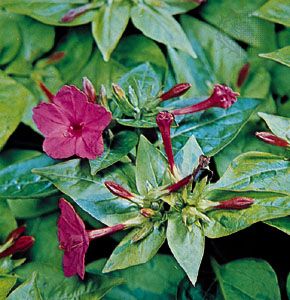
The four-o’clock (Mirabilis jalapa) is an ornamental perennial plant belonging to the Nyctaginaceae family, native to tropical America.
What is four-o’clock?
The four-o’clock (Mirabilis jalapa) is an ornamental perennial plant belonging to the Nyctaginaceae family, native to tropical America.1
Growing up to one meter tall, the plant is characterized by its oval leaves and stems that are swollen at the joints. It is most notable for its fragrant flowers, which appear in various colors—including white, yellow, pink, and red—and are sometimes streaked or mottled.12
The plant earns its common name from its unique blooming cycle: unlike many other flowers that open in the morning, the four-o’clock’s blossoms typically open in the late afternoon, around four o’clock, and remain open until the following morning. There are approximately 45 species within the Mirabilis genus, which consists of herbs that are primarily annual or perennial.132
Why do some flowers open only at night?
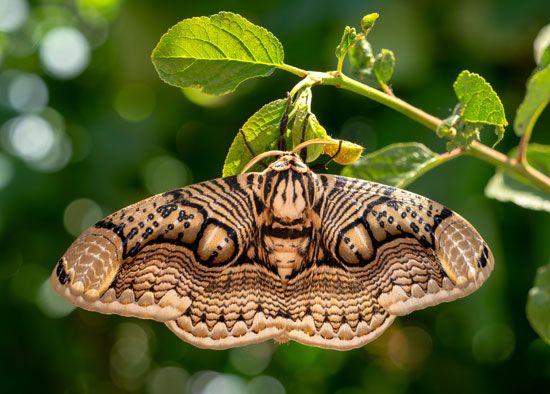
Flowers that open at night have evolved this behavior primarily to attract nocturnal pollinators, such as moths and bats. This strategy ensures that the plant can successfully reproduce by catering to the specific activity cycles of these animals.45
Night-blooming flowers often possess distinct characteristics to facilitate this interaction:
- Visibility: They are typically white or light-colored, making them easier for nocturnal visitors to locate in low-light conditions.45
- Fragrance: These plants are often highly fragrant, using scent to guide pollinators when visual cues are less effective.45
- Specialized Shapes: Many are long and narrow or vase-shaped to accommodate the feeding structures of their specific pollinators, such as the long tongues of hawk moths or the faces of nectar-eating bats.45
While some plants open their flowers at night to align with pollinator activity, others exhibit nyctinasty, a biological rhythm where petals close in response to darkness or decreasing light intensity. This movement is associated with the plant’s circadian cycle and involves changes in cellular turgor pressure.6
What are other examples of plants with unusual blooming times?
Beyond the four-o’clock, many other plants exhibit unusual or specific blooming patterns, often as an adaptation to their environment or to attract specific pollinators.
Night-Blooming Plants
Several species have evolved to bloom exclusively at night, typically to attract nocturnal pollinators like moths and bats.78
- Moonlight Cactus (Selenicereus): Also known as the queen-of-the-night, this genus produces large, fragrant white flowers that often last for only a single night.78
- Yucca: These plants share a famous mutualism with yucca moths. The flowers open at night to coincide with the emergence of the moths, which then actively pollinate the flowers while laying their eggs.9
Environmental and Rhythmic Responses
Other plants time their flowering or movement based on light cycles or specific environmental triggers:
- Nyctinasty: This is a rhythmic movement where petals or leaves close in response to darkness or decreasing light intensity. Plants like Portulaca exhibit this behavior, closing their flowers at dusk or during cloudy, rainy weather.10
- Photoperiodism: Many plants use the length of continuous darkness to regulate their transition to flowering. Short-day plants require long nights to bloom, while long-day plants are triggered by shorter nights.1112
- Spring Ephemerals: These plants, such as trillium and bloodroot, have a very short flowering window. They grow, bloom, and die back or go dormant within a few days or weeks, typically taking advantage of favorable conditions in early spring before the forest canopy closes.413
How do pollinators find flowers that open in the late afternoon?
Pollinators find flowers that open in the late afternoon or evening by relying on a combination of sensory cues, primarily fragrance and visual contrast, which are adapted to low-light conditions.
- Fragrance: Scent is often the most critical attractant for nocturnal or crepuscular (twilight-active) pollinators. These flowers release complex, volatile chemical mixtures that can be detected by receptors on the antennae of moths and other insects from a distance. For many species, such as hawk moths, these scents act as a primary guide to locate flowers that might otherwise be hidden from sight.515
- Visual Cues: While light levels are lower, flowers that open late in the day are typically white or light-colored, providing high contrast against the darkening environment to remain visible.1615
- Specialized Mechanisms: Some plants, such as the cuckoopint, use heat-generating metabolic processes to help volatilize their scent, making it easier for pollinators to track the odor source during the evening hours.17
Once a pollinator arrives, the flower’s shape—often long and narrow—guides the insect to the nectar, facilitating pollination as the insect feeds.1615
Sources
- four-o’clock — Encyclopædia Britannica
- four-o'clock — Merriam-Webster
- 7 Especially Fitting Common Names for Plants | Four O’clock — Merriam-Webster
- nyctinasty — Merriam-Webster
- Major types of pollinators - Butterflies and moths — Encyclopædia Britannica
- Bat-loving flowers — Encyclopædia Britannica
- moonlight cactus — Encyclopædia Britannica
- night-blooming cereus — Merriam-Webster
- Biennial — Encyclopædia Britannica
- Botanical Sex: 9 Alluring Adaptations — Encyclopædia Britannica
- ephemeral — Merriam-Webster
- Ephemeral — Encyclopædia Britannica
- Plant development - Environmental control of development — Encyclopædia Britannica
- Agricultural technology - Photoperiodism — Encyclopædia Britannica
- Pollination - Butterflies and moths — Encyclopædia Britannica
- coloration - Interspecific signals — Encyclopædia Britannica
- Pollination - Bees — Encyclopædia Britannica
- Chemoreception - Attraction — Encyclopædia Britannica
- Pollination - Beetles and flies — Encyclopædia Britannica
Published on · 3 min read