Gobi
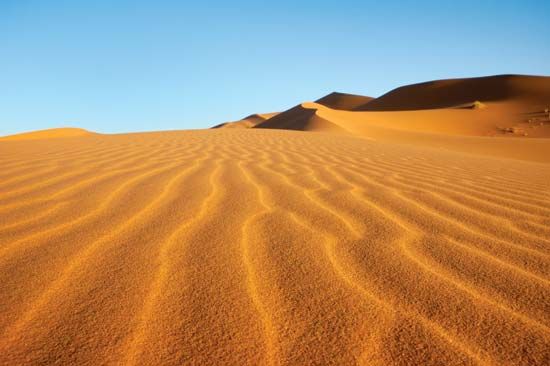
The Gobi is a vast desert and semidesert region located in Central Asia, spanning significant portions of Mongolia and China.
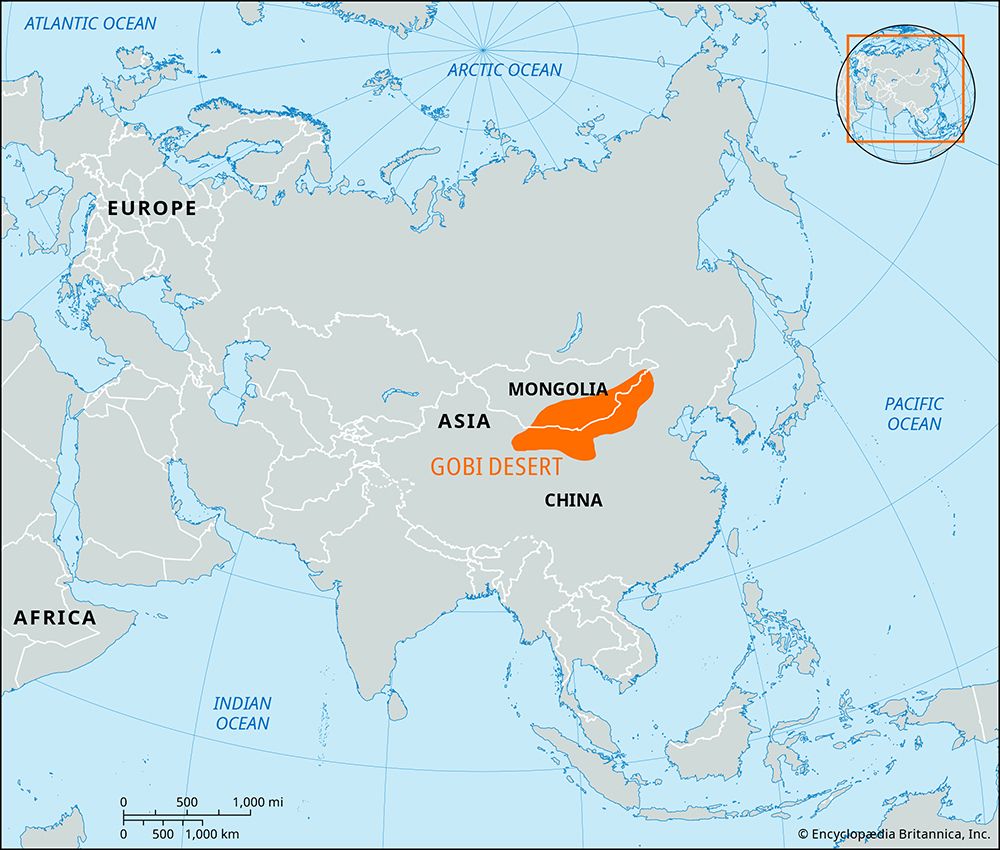
What is the geographical location and extent of the Gobi Desert?
The Gobi is a vast desert and semidesert region located in Central Asia, spanning significant portions of Mongolia and China.12
Geographical Extent
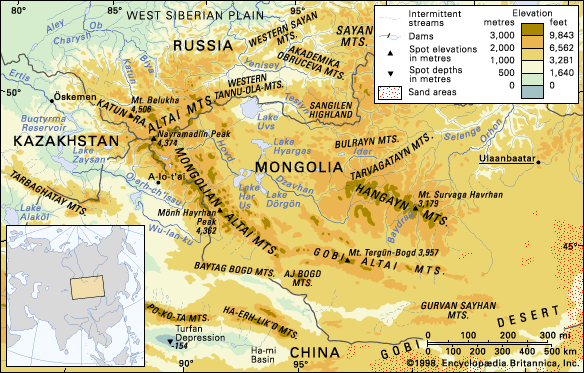
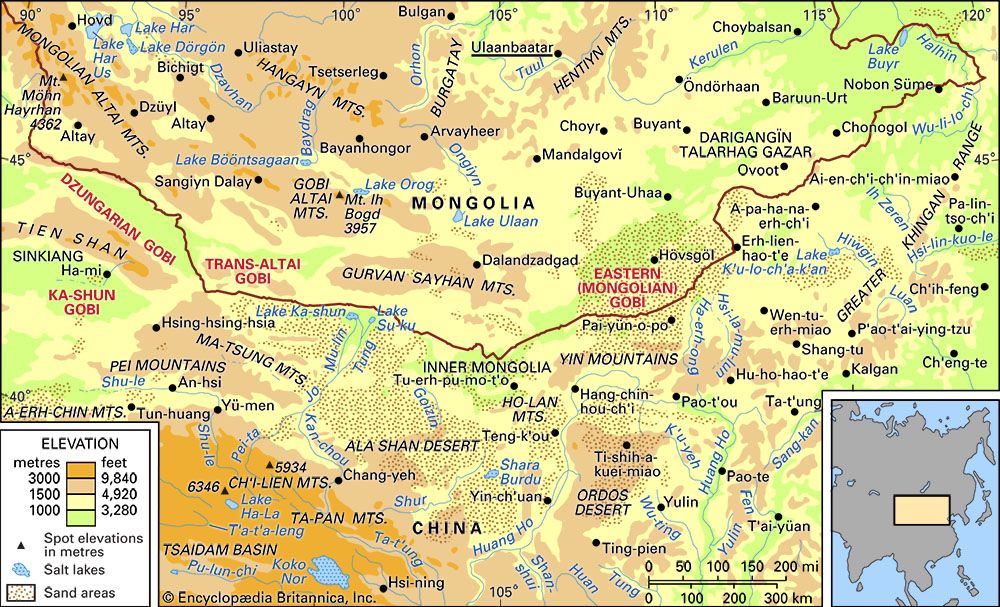
The desert occupies a massive arc of land measuring approximately 1,000 miles (1,600 km) in length and 300 to 600 miles (500 to 1,000 km) in width, covering an estimated area of 500,000 square miles (1,300,000 square km). Its boundaries are defined by several prominent mountain ranges and geographic features:1
- North: Altai and Hangayn mountains1.
- East: The western edge of the Da Hinggan (Greater Khingan) Range.1
- South: The Yin, Qilian, eastern Altun, and Bei mountains.1
- West: The eastern Tien Shan ranges.1
Unlike many sandy deserts, much of the Gobi consists of bare rock, shaped by its high elevation and its position in the rain shadow of the Himalayas.12
How do the Gobi’s temperatures vary between seasons, and what are its precipitation patterns?
The Gobi Desert is characterized by an acutely continental climate with extreme seasonal temperature variations and low annual precipitation.
Temperature Variations
The Gobi experiences severe, long winters and warm summers, with significant fluctuations occurring both seasonally and daily.
- Winter: Temperatures are harsh, with average lows in January frequently reaching −40 °F (−40 °C) as cold air masses descend from Siberia.23
- Summer: The climate shifts to intense heat, with average highs in July climbing as high as 113 °F (45 °C).3
Precipitation Patterns
The region is arid, with annual precipitation totals ranging from less than 2 inches (50 mm) in the west to more than 8 inches (200 mm) in the northeast. This aridity is largely due to the rain shadow effect created by the Himalayas, which blocks moisture from the Indian Ocean.32
Unlike many hot deserts, a significant portion of the Gobi’s limited precipitation falls as snow during the winter months. In the eastern regions, however, monsoonlike conditions occur, resulting in most of the annual rainfall arriving during the summer.23
What are the unique climate characteristics of the Gobi Desert?
The Gobi Desert is classified as a “cold desert” due to its acutely continental climate, which is defined by extreme seasonal and daily temperature fluctuations and significant aridity.24
Temperature Extremes
The region experiences severe, long winters and warm summers. Its inland location and high elevation, far from the moderating influence of oceans, result in dramatic temperature swings:2
- Winter: Bitterly cold conditions prevail as the desert is exposed to frigid air masses descending from the Siberian anticyclone. Average January temperatures often drop to −40 °C (−40 °F).24
- Summer: The climate shifts to intense heat, with daytime temperatures frequently exceeding 40 °C (104 °F) and reaching up to 113 °F (45 °C) in July.24
Precipitation and Aridity
The Gobi is characterized by low annual precipitation, ranging from less than 2 inches (50 mm) in the west to 8 inches (200 mm) in the northeast. This aridity is largely caused by the rain shadow effect of the Himalayas, which blocks moisture from the Indian Ocean. blocks moisture from the Indian Ocean. Unlike many hot deserts, much of the Gobi’s winter precipitation falls as snow, while eastern regions experience monsoonlike conditions that bring most rainfall during the summer.42
What are the major landforms and terrain features found in the Gobi Desert?
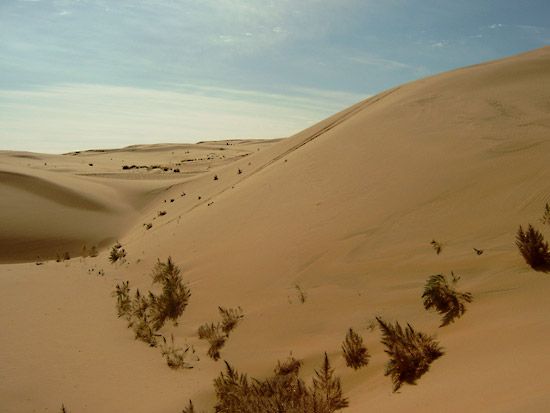
The Gobi Desert is a vast, diverse region primarily composed of bare rock rather than the shifting sands often associated with deserts. Its terrain is defined by several distinct physiographic zones, including the Gaxun, Junggar, and Trans-Altai Gobi in the west, the Eastern Gobi in the center and east, and the Alxa Plateau in the south.31
Key Terrain Features
- Plains and Plateaus: Much of the Gobi consists of elevated, rugged plains and vast, nearly barren expanses. The Alxa Plateau, for instance, is a large, sand-covered plain that rises in altitude from northwest to southeast.1
- Mountains and Hills: The landscape is frequently broken by isolated groups of low, rounded hills, rocky crests, and mountain ridges. These areas are often barren and furrowed by dry ravines and gullies.1
- Depressions and Salt Marshes: The desert contains numerous secluded depressions, many of which house salt marshes or takyr (clayey tracts).16
- Geological Composition: The surface is largely made of sedimentary rocks and gravel, with grayish-brown soil containing gypsum and halite.16
Sources
- Gobi — Encyclopædia Britannica
- Why is the Gobi Desert called a cold desert? — Encyclopædia Britannica
- Gobi - Physiography — Encyclopædia Britannica
- Gobi - Climate of Gobi — Encyclopædia Britannica
- Siberian anticyclone — Encyclopædia Britannica
- Gobi - Geology — Encyclopædia Britannica
- Gobi - Drainage and soils — Encyclopædia Britannica
Published on · 4 min read