How and Where Coral Bleaching Is Affecting the Great Barrier Reef
Coral bleaching is a critical threat to the Great Barrier Reef, occurring when the symbiotic relationship between coral polyps and their internal algae…
What is How and Where Coral Bleaching Is Affecting the Great Barrier Reef?
Coral bleaching is a critical threat to the Great Barrier Reef, occurring when the symbiotic relationship between coral polyps and their internal algae, known as zooxanthellae, breaks down.12
How Bleaching Occurs
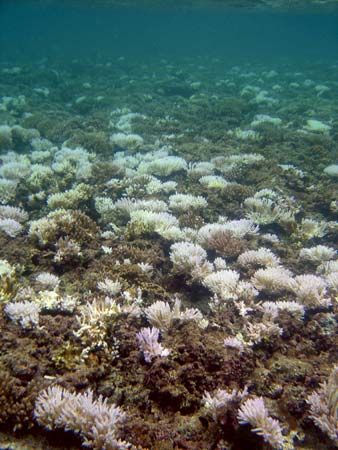
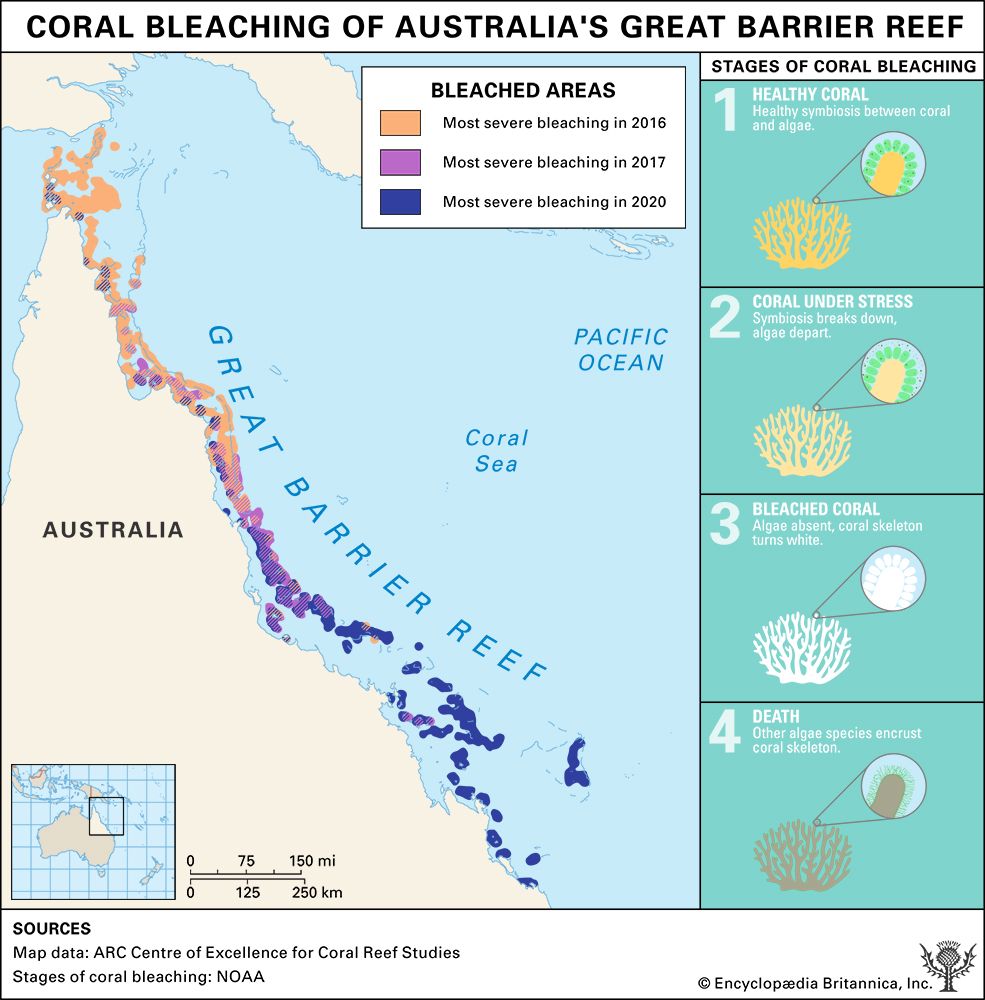
This relationship requires a specific temperature range to remain balanced. When seawater temperatures rise—often due to climate change—the coral experiences heat stress and expels the zooxanthellae. Without these algae, which provide color and essential nutrients through photosynthesis, the coral appears white and becomes vulnerable to starvation and disease. If temperatures do not return to normal within a few months, the coral may die, leading to a loss of biodiversity across the reef ecosystem.134
Where It Affects the Reef
The Great Barrier Reef is divided into three sectors, all of which have faced significant bleaching events:
- Northern Sector: Often the most severely impacted, such as in 2016, when 81 percent of surveyed reefs experienced severe bleaching.41
- Central Sector: Has also recorded substantial bleaching, with 33 percent of surveyed reefs severely affected in 2016.1
- Southern Sector: While historically less affected, severe bleaching events, such as the one in 2020, have extended into these southern areas.12
What is the symbiotic relationship between coral and zooxanthellae?
The relationship between reef-building corals and zooxanthellae is a symbiotic partnership, meaning it is mutually beneficial to both organisms.61
How the Symbiosis Works
Zooxanthellae are single-celled, photosynthetic algae that live within the tissues of coral polyps. This partnership functions through a constant exchange of resources:71
- Benefits to the Coral: The zooxanthellae perform photosynthesis, using sunlight to produce food that provides essential nutrients to the coral. Additionally, the algae help the coral remove metabolic waste products—such as carbon dioxide, nitrogen, phosphorus, and sulfur—that would otherwise be excreted. By accelerating the removal of carbon dioxide, the algae significantly increase the speed at which the coral can form its calcium carbonate skeleton.716
- Benefits to the Zooxanthellae: The coral provides the algae with a protected environment and access to the metabolic byproducts necessary for their survival and photosynthetic processes.61
This complex interaction is essential for the growth of coral reefs, as it allows these ecosystems to thrive in nutrient-poor tropical waters.76
How does ocean acidification specifically harm coral skeletons?
Ocean acidification harms coral skeletons primarily by reducing the availability of essential raw materials needed for their construction and maintenance.8
The Chemical Process
Coral skeletons are composed of calcium carbonate, which relies on the presence of carbonate ions in seawater. When carbon dioxide is absorbed by the ocean, it reacts with water to form carbonic acid, which then releases hydrogen ions. These hydrogen ions react with carbonate ions to form bicarbonate, effectively lowering the concentration of carbonate available for calcifying organisms.89
Impact on Coral Growth
As carbonate ion concentrations fall, corals face several critical challenges:
- Reduced Calcification: Corals struggle to obtain the materials necessary to build and maintain their skeletons, leading to slower growth rates.8
- Structural Vulnerability: With less material available, skeletons may become weaker or fail to develop properly, leaving the coral more susceptible to damage.8
- Habitat Loss: If acidification intensifies, the decline in reef-building capacity threatens the entire habitat that supports diverse marine life, potentially leading to the disappearance of coral reefs themselves.8
What are some other major threats to coral reef biodiversity besides bleaching?
Beyond coral bleaching, coral reefs face a variety of significant threats that jeopardize their biodiversity and structural integrity. These pressures are largely driven by human activity and environmental changes:
- Destructive Fishing Practices: To sustain declining catches, some fishers use dynamite and poisons to capture reef life. These methods physically shatter or kill sections of the reef, destroying the complex habitats that support diverse marine species. Similarly, bottom trawling involves dragging heavy, weighted nets across the seafloor, which crushes and buries corals and other bottom-dwelling organisms.110
- Sedimentation and Coastal Development: Deforestation and poor land-management practices lead to increased soil erosion. When rain washes this sediment into the sea, it can “smother” corals, blocking the sunlight necessary for photosynthesis and promoting harmful algal blooms and promoting harmful algal blooms.10
- Pollution and Nutrient Enrichment: Runoff from agriculture and industry often carries fertilizers and other pollutants into coastal waters. This nutrient overload can trigger toxic blooms and create “dead zones” where oxygen levels are too low to support marine life. Furthermore, chemicals from sunscreens and personal care products can accumulate in high-tourism areas, promoting viral infections in corals.112
- Disease: Outbreaks of disease have caused significant declines in major reef-building coral species, particularly in the Caribbean, shifting ecosystems from coral-dominated to algae-dominated states.1112
- Physical Disturbance: Beyond industrial damage, direct human interaction—such as tourists touching or trampling corals—can interfere with the delicate community dynamics of the reef system.10
We could dive deeper into how specific conservation strategies, such as the establishment of marine protected areas, are being used to mitigate these diverse threats.
Sources
- Coral bleaching — Encyclopædia Britannica
- coral reef - Coral bleaching — Encyclopædia Britannica
- Coral Bleaching: A Threat to Our Reefs — Encyclopædia Britannica
- How and Where Coral Bleaching Is Affecting the Great Barrier Reef — Encyclopædia Britannica
- Great Barrier Reef — Encyclopædia Britannica
- Marine ecosystem - Benthos — Encyclopædia Britannica
- coral reef - Biological factors — Encyclopædia Britannica
- ocean acidification — Encyclopædia Britannica
- skeleton - Calcareous structures — Encyclopædia Britannica
- conservation - In the oceans — Encyclopædia Britannica
- conservation - Pollution — Encyclopædia Britannica
- coral reef - Winds , currents, temperature, and salinity — Encyclopædia Britannica
- coral reef - Other threats — Encyclopædia Britannica
- coral reef - Sedimentation — Encyclopædia Britannica
Published on · 4 min read