Greenfinch
A greenfinch is any of several small, greenish songbirds belonging to the family Fringillidae and the genus Carduelis. These birds are characterized by their…
What is Greenfinch?
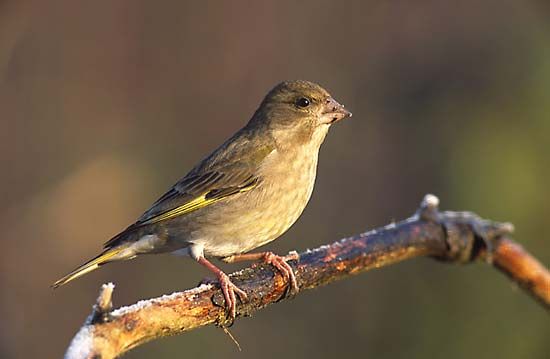
A greenfinch is any of several small, greenish songbirds belonging to the family Fringillidae and the genus Carduelis. These birds are characterized by their olive-green and yellow plumage, particularly on their wings and tails.12
Greenfinches are sociable, seed-eating birds known for their trilling and twittering calls. They typically nest in evergreens and are generally found in temperate regions. Notable species include:13
- European greenfinch (C. chloris): A common species that has been introduced to Australia.12
- Chinese (or Oriental) greenfinch (C. sinica): A species native to eastern Asia, often seen as a dooryard bird in Japan.1
As members of the finch group, they share the characteristic heavy, conical bill used for cracking seeds, which allows them to thrive in various environments.3
What are the main differences between true finches and other songbirds?
The term “finch” is often used broadly to describe many small, seed-eating songbirds within the order Passeriformes. However, it is important to distinguish between “true finches” and other birds that share the name.34
True Finches (Family Fringillidae)
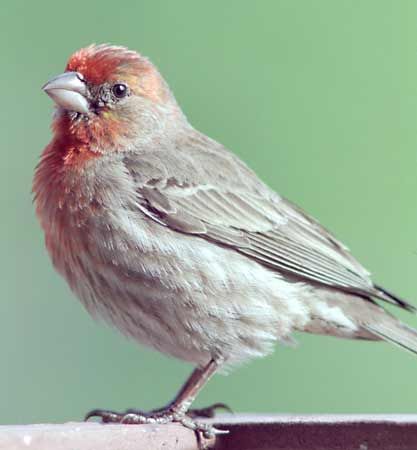
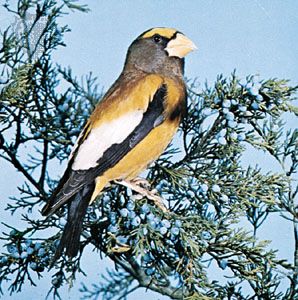
True finches belong exclusively to the family Fringillidae. This group includes approximately 230 species, such as grosbeaks, euphonias, and chaffinches. Key characteristics include:4
- Global Distribution: They are found on every continent except Antarctica.4
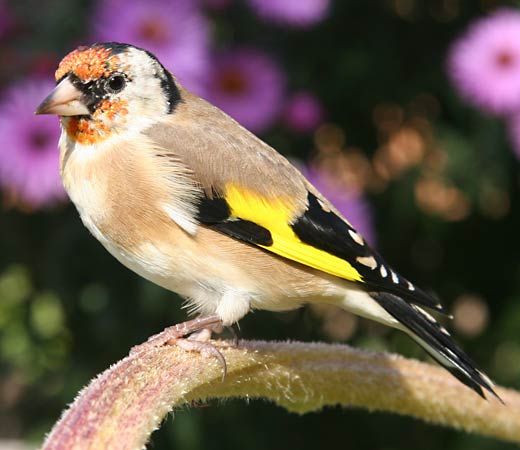
- Physical Traits: They possess strong, conical bills that are thick at the base, specialized for cracking seeds.35
- Sexual Dimorphism: Many species exhibit well-marked differences in appearance between males and females, with juveniles often resembling the females.5
Other “Finches”
Many other songbirds are commonly called finches but belong to entirely different families, such as Emberizidae, Thraupidae, and Estrildidae. For example, the famous Galapagos finch is classified within the family Emberizidae. While these birds may share similar seed-eating habits or physical appearances due to convergent evolution, they are genetically distinct from the true finches of the Fringillidae family.346
How do finches use their beaks to adapt to different food sources?
Finches have evolved a remarkable diversity of bill shapes, which serve as primary tools for accessing specific food sources. This adaptation is a classic example of adaptive radiation, where groups of birds evolve specialized traits to exploit different ecological niches.67
Bill Morphology and Function
While many finches are characterized by heavy, conical bills designed for cracking seeds, their beak structures vary significantly based on their diet. These adaptations include:38
- Seed-Cracking: The most common finch bill is stout and conical, allowing birds like the hawfinch to exert the force necessary to crack hard objects, such as cherry pits.3
- Specialized Extraction: Some species have evolved unique bill shapes for specific food types. For instance, crossbills possess specialized bills for extracting seeds from pine cones.3
- Probing and Tool Use: In the Galapagos Islands, different species have evolved bills suited to their specific environments. Some, such as the woodpecker finch, have adapted to use cactus spines as tools to probe for grubs, compensating for a bill not naturally shaped for wood-boring.6
Evolutionary Plasticity
It is important to note that bill shape is evolutionarily plastic, meaning it reacts relatively quickly to selective pressures and changes in feeding habits. While these bills are highly adapted, most finches remain opportunistic feeders, often supplementing their primary diet with insects—especially when feeding nestlings—or seasonal plant foods.38
Why are some finch species considered invasive in new environments?
Finch species can become invasive in new environments primarily due to human activity, which has facilitated their spread across the globe for various purposes, including the pet trade and ornamental interests. Once introduced to a new region, these birds may thrive and cause ecological disruption for several reasons:311
- Lack of Natural Predators: In new environments, particularly on islands, introduced species may face fewer natural predators or competitors, allowing their populations to grow unchecked.3
- Agricultural Impact: Some finches, such as the weaver or the Java sparrow, can become serious agricultural pests. When introduced to areas with extensive one-crop agriculture, they may experience population explosions due to the abundance of food, leading to significant crop damage.11
- Urban Nuisance: Certain introduced species, like the house sparrow, have adapted to urban environments where they can become pests by fouling buildings and obstructing infrastructure with their nests.11
- Hybridization: The introduction of nonnative species can lead to interbreeding with rare native species, which may threaten the genetic integrity of the local population.3
Sources
- Greenfinch — Encyclopædia Britannica
- greenfinch — Merriam-Webster
- Finch — Encyclopædia Britannica
- Fringillidae — Encyclopædia Britannica
- Fringillidae — Merriam-Webster
- Galapagos finch — Encyclopædia Britannica
- Passeriform - Bill — Encyclopædia Britannica
- adaptive radiation — Encyclopædia Britannica
- American goldfinch: Top Questions — Encyclopædia Britannica
- Charadriiform - Adaptations for feeding — Encyclopædia Britannica
- conservation - Introduced species — Encyclopædia Britannica
- Goldfinch — Encyclopædia Britannica
- Passeriform - Aesthetic and economic importance — Encyclopædia Britannica
Published on · 3 min read