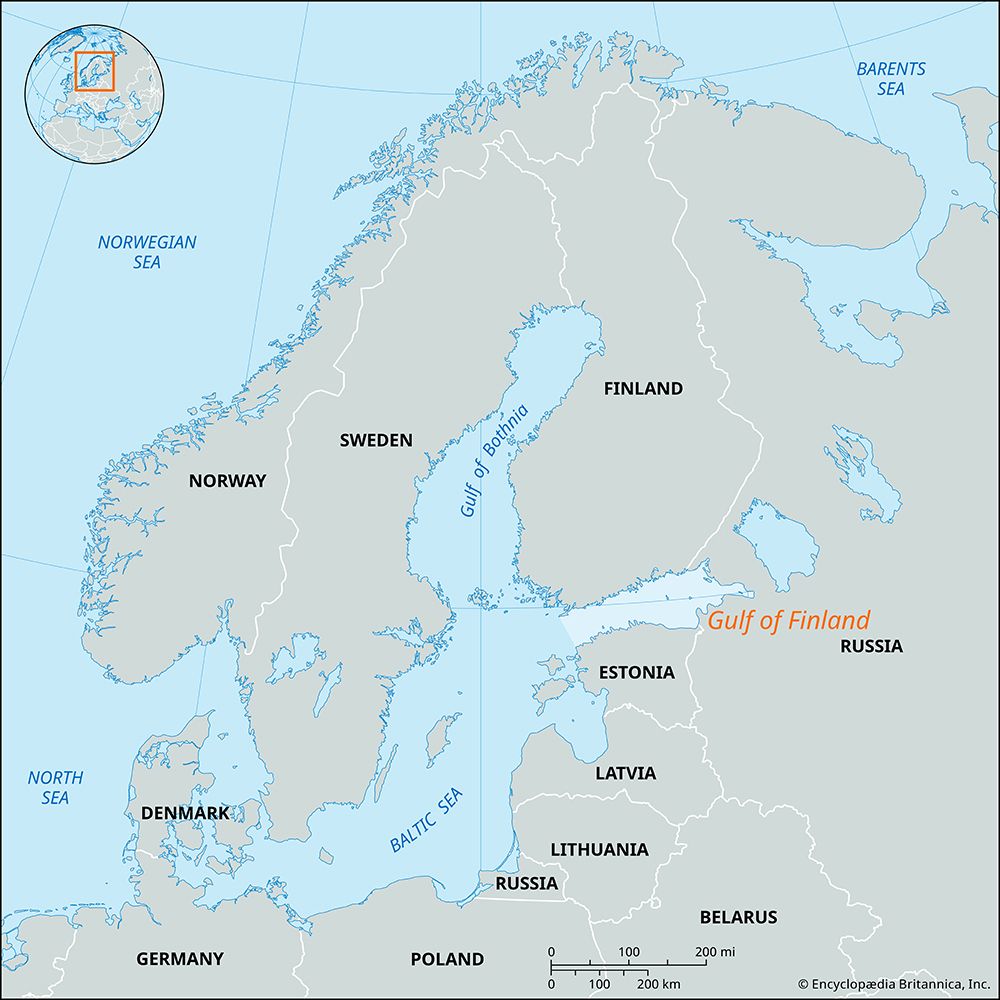
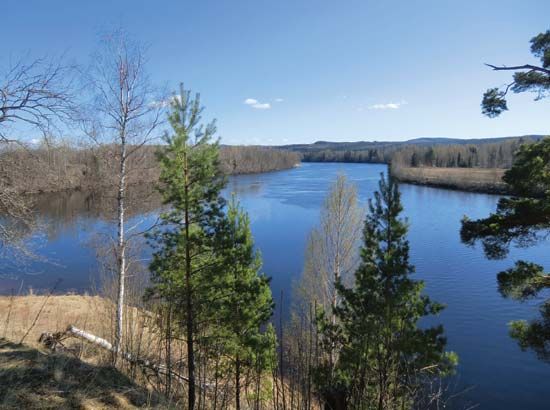
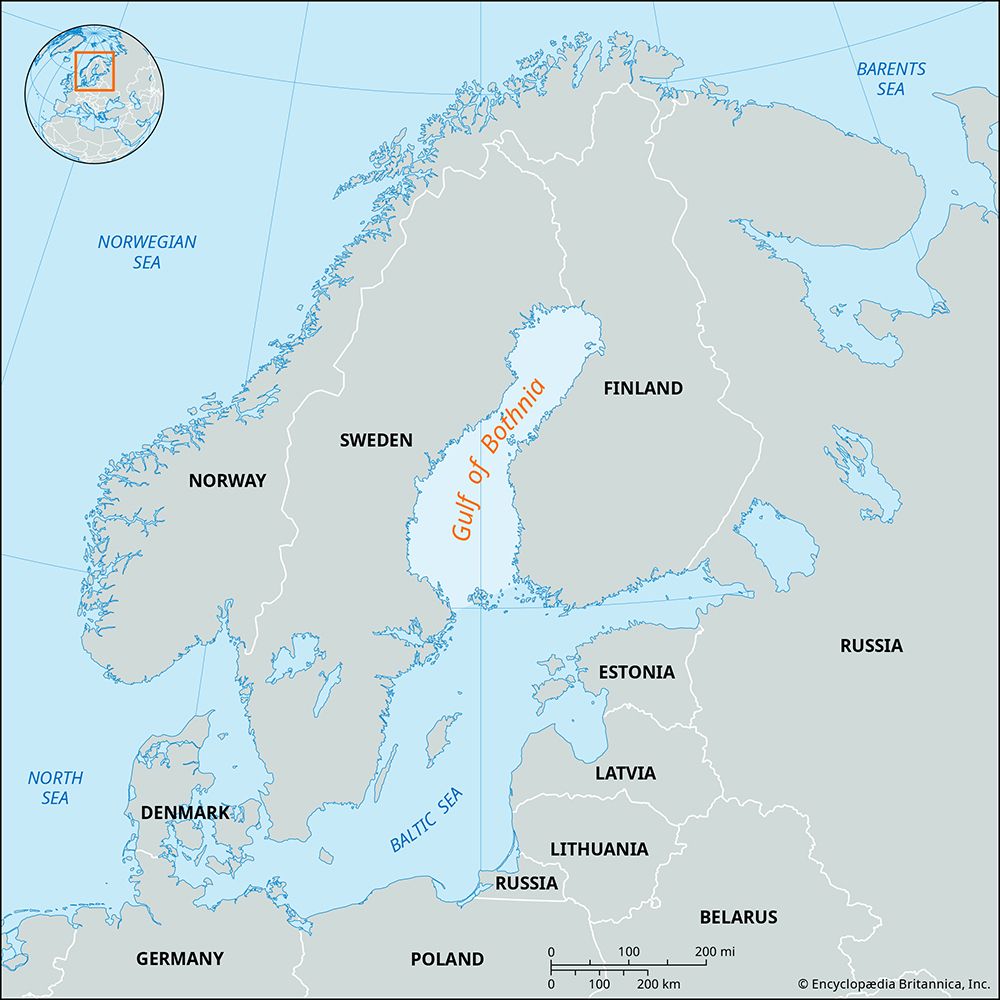
Gulf of Bothnia
The Gulf of Bothnia, a northern arm of the Baltic Sea, serves as a vital region for several key industries and economic activities:
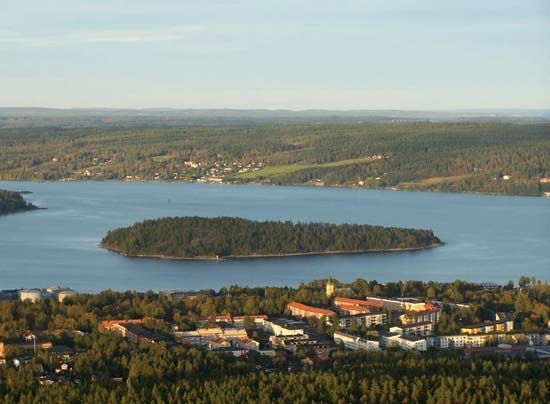
What are some of the economic activities and industries associated with the Gulf of Bothnia?
The Gulf of Bothnia, a northern arm of the Baltic Sea, serves as a vital region for several key industries and economic activities:
- Forestry and Wood Processing: The region is heavily defined by its vast forest resources. Numerous coastal sawmills are located along the gulf to process timber from the hinterland. Wood products remain a significant export for the surrounding nations.12
- Shipbuilding: While traditional shipbuilding has declined in some areas, it remains an active industry in Finland, particularly regarding the construction of specialized, ice-strengthened vessels designed to navigate the gulf’s winter ice cover.12
- Shipping and Trade: Major ports, including Pori, Vaasa, and Oulu in Finland, as well as Luleå, Härnösand, Sundsvall, and Gävle in Sweden, facilitate the movement of bulk cargoes and regional exports.1
- Modern Manufacturing: Beyond maritime-based industries, the broader Baltic region has seen a shift toward light engineering, high-quality furniture production, and motor-vehicle manufacturing.2
How does the Gulf of Bothnia’s salinity gradient affect its biodiversity?
The Gulf of Bothnia is characterized by extremely low salinity levels, with its inner reaches containing water that is nearly fresh. This condition is primarily the result of significant freshwater runoff from numerous rivers, such as the Ångerman, Ume, Lule, Torne, Kemi, and Oulu.13
While the provided search results confirm that the gulf’s water is nearly fresh due to this high volume of river discharge, they do not contain specific data regarding how this salinity gradient directly affects the region’s biodiversity. Consequently, I cannot provide a detailed explanation of the biological impacts or the specific species composition within the gulf based on the available information.
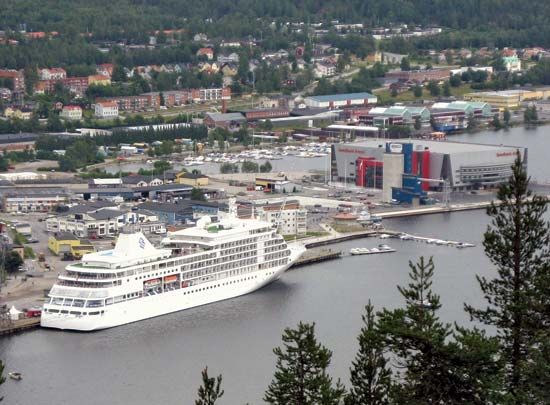
How does the Gulf of Bothnia’s unique brackish water environment affect its ecosystem?
The Gulf of Bothnia’s ecosystem is profoundly shaped by its extremely low salinity, which is among the lowest in the entire Baltic Sea. This environment is primarily driven by the massive influx of freshwater from numerous rivers, including the Ångerman, Ume, Lule, Torne, Kemi, and Oulu rivers.14
Because the gulf is nearly landlocked and receives such high volumes of river discharge—which is further diluted by spring snowmelt—the water remains remarkably fresh, particularly at the northern head of the gulf. This low salinity, combined with shallow coastal waters, creates a unique environment where pack ice frequently accumulates. During the winter, this ice cover can persist for up to five months, significantly impacting the physical conditions of the habitat and creating challenges for navigation. While these conditions are well-documented, the specific biological adaptations and the resulting composition of the gulf’s biodiversity are not detailed in the available records.14
What role does the Gulf of Bothnia play in the Baltic Sea’s water circulation?
The Gulf of Bothnia acts as a significant source of freshwater input into the Baltic Sea. Because it receives substantial discharge from numerous rivers—such as the Ångerman, Ume, Lule, Torne, Kemi, and Oulu—the gulf maintains extremely low salinity levels, reaching its lowest point at the head of the gulf.154
While the Baltic Sea as a whole experiences a general outflow of surface water into the North Sea, this is balanced by a deeper countercurrent of denser, saltier water flowing into the Baltic. The influx of freshwater from the Gulf of Bothnia contributes to the overall hydrological balance of the Baltic, which is characterized by its nearly landlocked nature and remarkably fresh water. Additionally, southwesterly winds can cause an accumulation of water in the northern Baltic, further influencing the regional water distribution.5
Sources
- Gulf of Bothnia — Encyclopædia Britannica
- Baltic Sea - Economic aspects — Encyclopædia Britannica
- Atlantic Ocean - Salinity — Encyclopædia Britannica
- Baltic Sea - Hydrology — Encyclopædia Britannica
- Bay of Bothnia — Encyclopædia Britannica
Published on · 3 min read