Hartebeest
DNA studies indicate that there are approximately 10 subspecies of the hartebeest (Alcelaphus buselaphus), a large African antelope. These subspecies exhibit…
How many subspecies of hartebeest exist, and what are their main differences?
DNA studies indicate that there are approximately 10 subspecies of the hartebeest (Alcelaphus buselaphus), a large African antelope. These subspecies exhibit significant variations in size, coloration, and horn structure:
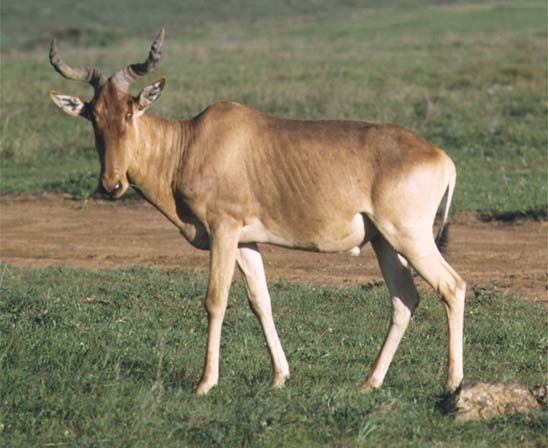
- Coke’s hartebeest (A. buselaphus cokei): Found in East Africa, this is the smallest and plainest subspecies. It is lion-coloured with a white rump patch, featuring a moderately elongated head and simple horns.
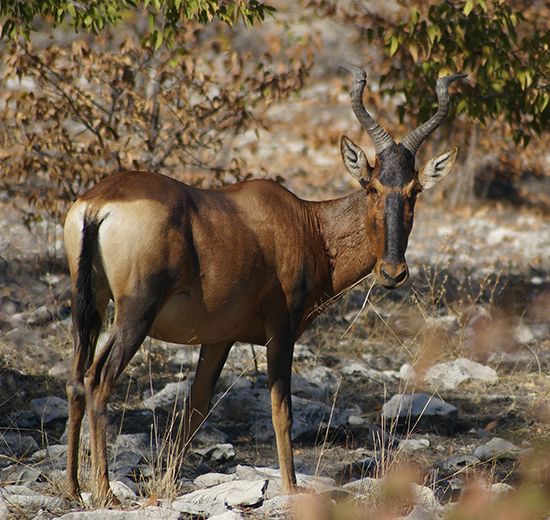
- Red hartebeest (A. buselaphus caama): Native to southwest Africa, it is the most colourful variety, characterized by extensive black markings, a white belly, and complex, high horns joined at the base.
- Western hartebeest (A. buselaphus tora): The largest subspecies, reaching weights of 228 kg (502 pounds) and heights of 143 cm (56 inches).
- Lichtenstein’s hartebeest (A. buselaphus lichtensteinii): Inhabits the miombo woodland zone and has historically been classified as a separate species.
What is the social structure and behavior of hartebeest herds?
Hartebeests are highly sociable animals that typically organize into small, stable herds consisting of 6 to 25 females and their young. These maternal groups form the core of their social structure, while adult males generally maintain and defend individual territories year-round.1
Territorial Behavior
In preferred habitats, a herd’s home range may overlap with as many as 20 to 30 male territories. Territorial bulls are responsible for protecting these areas, which are selected to include high-quality pastures that remain nutritious throughout different seasons.1
While territorial males are generally aggressive toward other adult males, they often tolerate young males within the herd. This tolerance is largely due to the protective behavior of the mothers and the performance of elaborate submissive displays by the young males. Eventually, these young males leave to join bachelor herds, where they remain until they are mature enough—typically at four years of age—to compete for their own territory and mating opportunities.1
Social Dynamics and Survival
The social nature of the hartebeest provides significant survival advantages. Herding behavior allows for social facilitation, where the collective response of the group to a threat—such as fleeing—increases the chances of individual survival. Furthermore, the presence of older generations within the herd can help guide the group to essential resources like water and grazing grounds.2
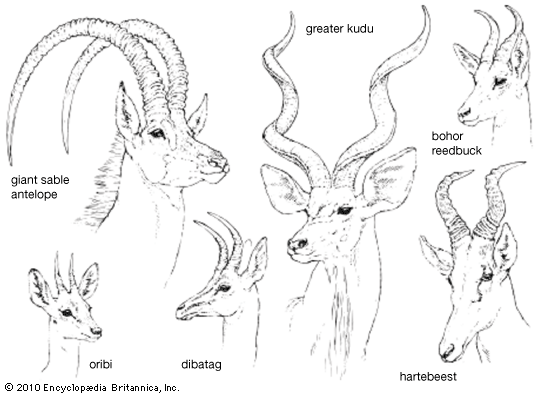
What are the unique physical characteristics of a hartebeest?
The hartebeest (Alcelaphus buselaphus) is a large African antelope belonging to the family Bovidae. Its physical appearance is defined by several distinct traits:
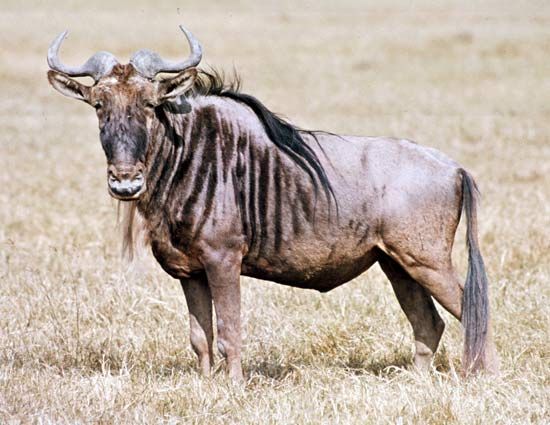
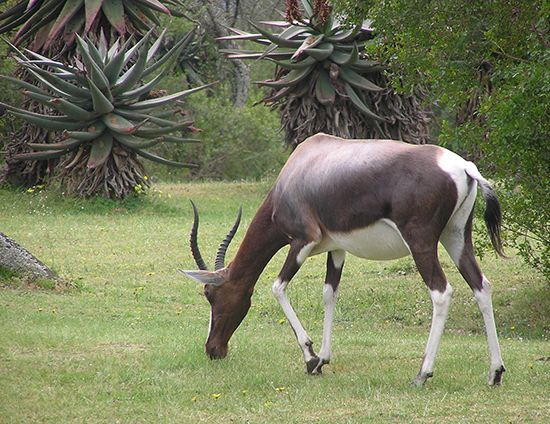
- Body Shape: Hartebeests possess a characteristically elongated head and a narrow muzzle, which allows them to be highly selective grazers. Their body structure features high forequarters that slope down toward lower hindquarters, a trait shared with other members of the tribe Alcelaphini, such as wildebeests, the topi, and the blesbok.1
- Horns: They are known for their unusual, bracket-shaped horns. While the specific shape varies by subspecies—ranging from relatively simple to complex, high curves joined at the base—they are generally annulate and divergent.14
- Size and Coloration: There is significant variation among the approximately 10 subspecies. For example, the Coke’s hartebeest is smaller and lion-coloured, while the red hartebeest is more colourful with prominent black markings. Females are typically 12 percent smaller than males.1
How have hartebeests been depicted in African folklore and culture?
Sorry, the Britannica knowledge base does not contain information regarding the depiction of hartebeests in African folklore and culture. The available records focus on their biological classification, physical characteristics, and ecological behaviors.14
Sources
- hartebeest — Encyclopædia Britannica
- artiodactyl - Social behaviour — Encyclopædia Britannica
- Alarm signal — Encyclopædia Britannica
- hartebeest — Merriam-Webster
Published on · 3 min read