Hohe Tauern
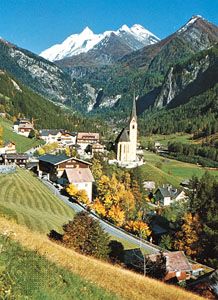
The Hohe Tauern is a prominent mountain range within the Eastern Alps, located in southern Austria. Stretching approximately 70 miles (110 km), the range…
What is Hohe Tauern?
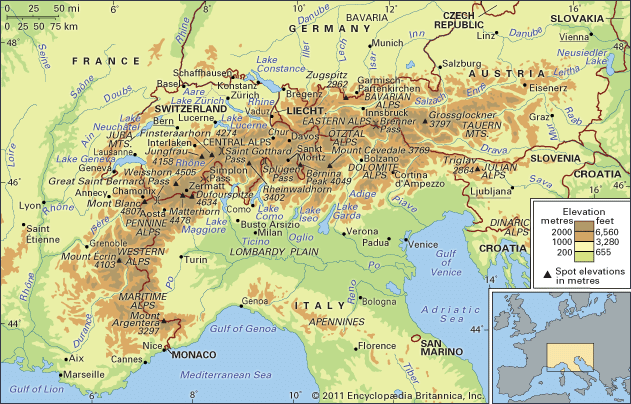
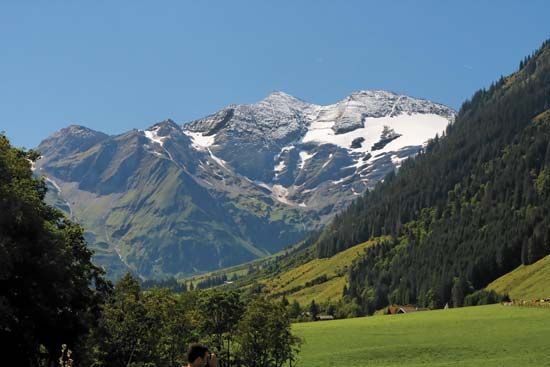
The Hohe Tauern is a prominent mountain range within the Eastern Alps, located in southern Austria. Stretching approximately 70 miles (110 km), the range spans the region between the Zillertal Alps to the west and the Katschberg Pass to the east.1
This range is home to several significant peaks, most notably the Grossglockner, which stands at 12,460 feet (3,798 meters) and serves as the highest point in Austria. The area is well-connected by infrastructure, including the Felber Tauern and Hochtor tunnels for road travel, as well as a major railroad line that utilizes the Tauern Tunnel to link Spittal an der Drau and Schwarzach im Pongauu](https://www.britannica.com/place/Spittal) and Schwarzach im Pongau. Due to its dramatic topography, the region is a popular destination for mountain climbing and skiing.1
What is the significance of the Grossglockner peak?
The Grossglockner is significant primarily as the highest peak in Austria and the Hohe Tauern range, reaching an elevation of 12,460 feet (3,798 meters).341
Beyond its stature, the mountain holds importance for several reasons:
- Geographic Landmark: It sits on the border between the federal states of Tirol and Kärnten.3
- Glacial Features: It is home to the Pasterze Glacier, a massive ice formation measuring 8 km long and 5 km wide.3
- Accessibility and Tourism: The Grossglockner-Hochalpenstrasse, a famous high-alpine road opened in 1935, provides access to the region, making it a premier destination for mountain climbing, skiing, and tourism.31
- Historical Milestone: The peak has a rich history in mountaineering, having been first successfully climbed in 1800.3
What kind of wildlife lives in Hohe Tauern National Park?
Hohe Tauern National Park serves as a vital sanctuary for diverse Alpine fauna that have adapted to the region’s rugged, high-altitude environment.
Key wildlife species found in the park include:
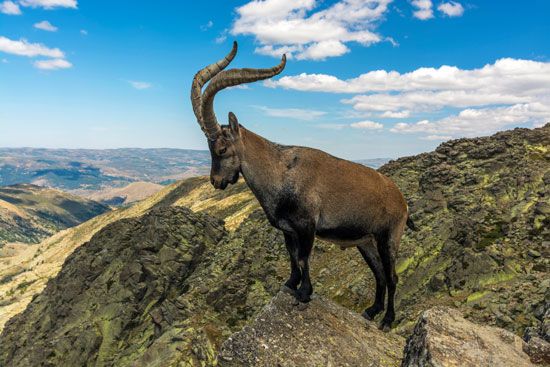
- Mammals: The ibex and the goatlike chamois are well-known for their agility on craggy terrain. Other notable mammals include marmots, which hibernate in underground galleries, and the mountain hare, which develops a white coat for winter camouflage.
- Birds: The ptarmigan, a type of grouse, also turns white in winter. Additionally, the bearded vulture (or lammergeier) has been successfully reintroduced to the area.
- Protected Species: Conservation efforts within the park and broader Alpine regions have supported the reintroduction of larger predators, such as the brown bear and the lynx.
These species are protected by strict conservation laws to ensure their survival against pressures from human development and environmental change.56
How do mountain tunnels impact travel in the Alps?
Mountain tunnels have fundamentally transformed travel across the Alps by overcoming the region’s historically rugged and steep terrain, which once acted as a significant barrier to movement. By allowing passage under massive mountain ranges, these tunnels have ended the isolation of many Alpine valleys and enabled year-round transit, regardless of weather conditions.7
The impact of these engineering feats includes:
- Increased Capacity and Efficiency: Modern “base tunnels,” such as the Gotthard Base Tunnel, pass through the base of mountains rather than traversing difficult terrain. These routes are largely flat and straight, allowing for higher speeds, heavier freight loads, and significantly reduced travel times compared to older mountain passes or tunnels.8
- Economic and Tourism Growth: Tunnels like the Mont Blanc Tunnel and the Arlberg road tunnel have facilitated a massive increase in tourism and trade by providing reliable, shortened routes between countries.910
- Environmental Challenges: While tunnels have improved connectivity, the resulting influx of motor vehicles and people has contributed to the degradation of the Alpine environment. Additionally, the construction and operation of these tunnels face ongoing safety and environmental concerns, such as the need for advanced ventilation and emergency systems following major accidents.710
Sources
- Hohe Tauern — Encyclopædia Britannica
- Hohe Tauern — Merriam-Webster
- Grossglockner — Encyclopædia Britannica
- Grossglockner — Merriam-Webster
- Alps - Plant and animal life — Encyclopædia Britannica
- Austria - Plant and animal life — Encyclopædia Britannica
- Arlberg — Encyclopædia Britannica
- Simplon Tunnel — Encyclopædia Britannica
- tunnels and underground excavations - Canal and railroad tunnels — Encyclopædia Britannica
- Gotthard Base Tunnel — Encyclopædia Britannica
- Alps - Transportation — Encyclopædia Britannica
- Mont Blanc Tunnel — Encyclopædia Britannica
Published on · 3 min read