How Do Fish Sleep?
Fish enter a state of rest characterized by minimal movement and decreased responsiveness, though it differs from the deep sleep observed in mammals. Because…
How do fish sleep?
Fish enter a state of rest characterized by minimal movement and decreased responsiveness, though it differs from the deep sleep observed in mammals. Because they lack eyelids, fish cannot close their eyes, yet they remain partially alert to environmental changes and potential threats.12
Sleep behaviors vary significantly across species:
- Movement: Most fish maintain slow, gentle movements to conserve energy while staying balanced.12
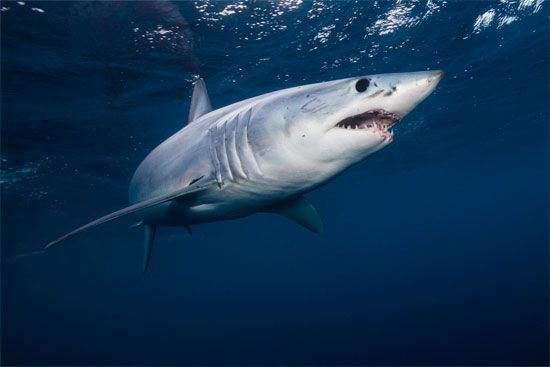
- Active Rest: Some species, such as certain sharks, must keep moving to ensure water flows over their gills for respiration.1
- Shelter: Nocturnal species like catfish and eels often rest during the day in protected areas, while others may settle on the bottom of a body of water to blend in with their surroundings.12
These adaptations allow fish to balance the need for energy conservation with the necessity of remaining vigilant against predators.1
Why do some sharks need to keep moving to breathe?
It is a common misconception that all sharks must swim constantly to survive. While many species can rest, some are biologically required to keep moving due to their specific method of respiration.
Sharks that must swim to breathe rely on a process called obligate ram ventilation. These species, such as the great white shark, whale shark, and mako shark, lack the buccal muscles necessary to actively pump water over their gills. By swimming with their mouths open, they force oxygenated water through their gill slits; if they stop moving, the flow of water ceases, and they can no longer receive the oxygen required to survive.3
In contrast, many other sharks use buccal pumping, which allows them to use their cheek muscles to draw water into their mouths and over their gills while stationary. Some species even use a combination of both methods, providing them with greater flexibility in their movement.3
How do nocturnal fish choose their hiding spots?
Nocturnal fish choose their hiding spots primarily to minimize the risk of predation while they rest during daylight hours. By selecting specific, protected environments, these fish can conserve energy while remaining partially alert to their surroundings.1
Common strategies for selecting these locations include:
- Structural Shelter: Many nocturnal species, such as catfish and eels, retreat into physical structures like holes, crevices, or thick vegetation. These areas provide a physical barrier against predators.15
- Background Matching: Fish often choose resting spots where their natural coloration or patterns allow them to blend into the environment. This form of camouflage is essential for remaining undetected on the bottom of a body of water or within coral and rocky reefs.156
- Environmental Vigilance: The choice of location is often dictated by the level of risk in the habitat. Fish living in areas with high predation pressure are more likely to prioritize spots that offer both concealment and a vantage point for maintaining alertness.1
What are the main differences between fish rest and human sleep?
While fish enter a state of rest that resembles sleep, it differs significantly from the deep, sustained sleep experienced by humans and other mammals.
Key differences include:
- Physical Signs: Humans typically close their eyelids to reduce sensory stimulation. Because most fish lack eyelids, they cannot close their eyes, leaving them partially alert to their environment even while resting.12
- Responsiveness: Human sleep is characterized by a decreased sensitivity to the external environment. In contrast, fish in a resting state maintain a level of alertness that allows them to respond quickly to threats, such as darting away if disturbed.12
- Physiological Criteria: Human sleep is often defined by specific electroencephalogram (EEG) brain patterns and relaxed skeletal muscles. These criteria are more difficult to satisfy for fish, making the unequivocal identification of “true” sleep in fish more complex compared to mammals.7
- Behavioral Adaptations: While humans typically seek horizontal repose, fish exhibit diverse resting behaviors, such as hovering, resting on the bottom, or, in some cases, continuing to swim to ensure oxygen flow over their gills.17
Sources
- How do fish sleep? — Encyclopædia Britannica
- fish: Top Questions — Encyclopædia Britannica
- chondrichthyan - Respiration — Encyclopædia Britannica
- Do Sharks Really Die if They Stop Swimming? — Encyclopædia Britannica
- tetraodontiform - Activity cycle — Encyclopædia Britannica
- coloration - Background matching — Encyclopædia Britannica
- sleep - The nature of sleep — Encyclopædia Britannica
Published on · 3 min read