How Many Eyes Does a Spider Have?
Spiders typically have eight eyes, though the number and arrangement vary significantly across different families. While eight is standard, some species…
How many eyes does a spider have?
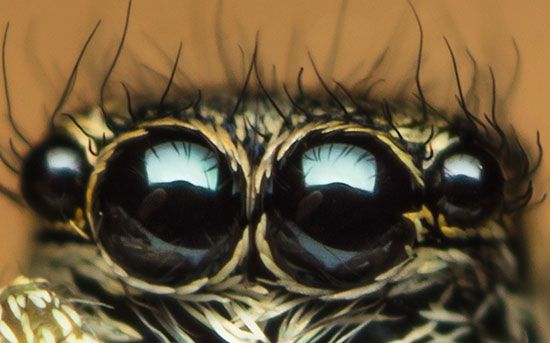
Spiders typically have eight eyes, though the number and arrangement vary significantly across different families. While eight is standard, some species possess fewer, and certain cave-dwelling spiders are entirely eyeless.12
The specific count often serves as a distinguishing feature:
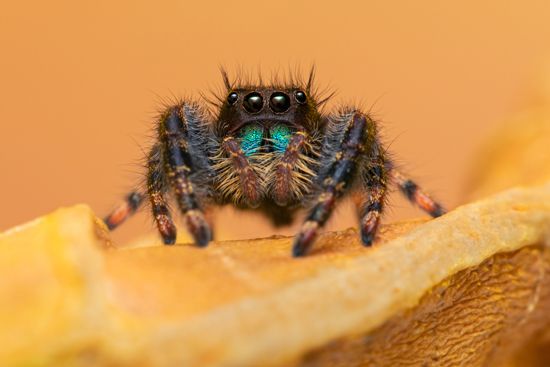
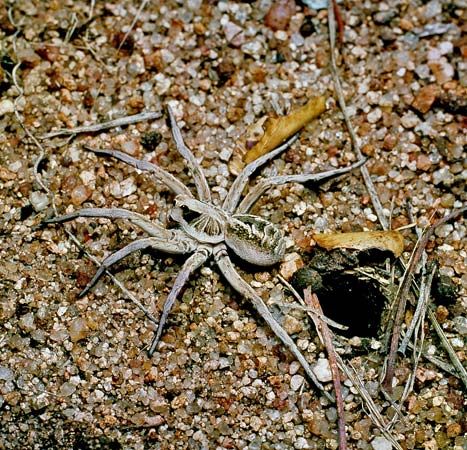
- Eight eyes: Common in many species, including jumping spiders and wolf spiders, which utilize them for tasks ranging from high-resolution hunting to motion detection.12
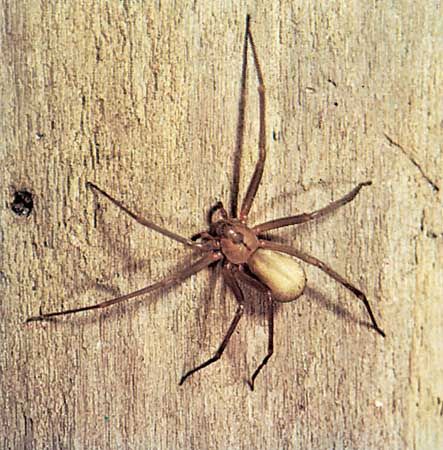
- Six eyes: Found in species such as the brown recluse and the woodlouse spider.1
- Two eyes: Most members of the family Caponiidae possess only two.1
- Zero eyes: Some species adapted to cave environments lack eyes entirely.1
In spiders with multiple eyes, the organs are often categorized into principal eyes, used for tasks like species recognition, and secondary eyes, which frequently function as movement detectors or navigation aids.2
How do jumping spiders use their eyes to hunt?
Jumping spiders are highly effective ambush predators that rely on their exceptional eyesight to hunt without the use of webs. Their visual system is composed of eight eyes, each serving specific functions to facilitate their hunting strategy:134
- Principal Eyes: The two large, forward-facing eyes feature spherical lenses, internal focusing mechanisms, and four-tiered retinas. These act like a telescope, allowing the spider to perceive the full spectrum of color, discern fine details, and make distant objects appear closer.41
- Secondary Eyes: The remaining six eyes—two located beside the main eyes and four situated around the crest of the head—function primarily as motion detectors, providing the spider with a wide field of view to track movement in its surroundings.41
When hunting, jumping spiders use this visual information to stalk their prey until they are within a range of 5 to 10 cm (2 to 4 inches). Once in position, they utilize their hydraulic leg system to pounce explosively, capturing the prey and delivering a lethal bite.516
Why do some cave-dwelling spiders have no eyes?
Some cave-dwelling spiders have no eyes because they have evolved to live in environments where light is entirely absent. In such habitats, the visual system offers no survival advantage, and the energy required to develop and maintain complex eyes is better allocated to other biological functions.17
The loss of eyes in these species is a result of natural selection, which favors traits that provide a functional advantage. Because eyes evolved to take advantage of sunlight to facilitate survival—such as hunting or navigating—they become redundant in perpetual darkness. Over time, species that do not rely on vision may lose these organs as they adapt to their specific ecological niches.7
What is the difference between principal and secondary eyes?
In spiders, the distinction between principal and secondary eyes lies in their specialized functions and anatomical roles. While spiders typically possess eight eyes, these are categorized based on how they process visual information.21
Principal Eyes
The principal eyes are the primary organs for acute vision. They are typically forward-facing and are essential for tasks requiring high-resolution detail, such as recognizing members of their own species or identifying prey. In jumping spiders, these eyes are particularly advanced, capable of resolving fine details and scanning images to identify targets with precision far exceeding that of their insect prey.2
Secondary Eyes
The secondary eyes generally serve as supplementary sensory tools rather than primary image-forming organs. Their specific function depends on the spider’s lifestyle:2
- Hunting Spiders: Use these eyes primarily as movement detectors to track activity in their surroundings.2
- Web-building Spiders: These eyes are often underfocused and serve as navigation aids. They help the spider detect the position of the Sun and the patterns of polarized light in the sky, which assists in orientation.2
Sources
- How many eyes does a spider have? — Encyclopædia Britannica
- Photoreception - Corneal eyes — Encyclopædia Britannica
- jumping spider — Encyclopædia Britannica
- spider - Stalking prey — Encyclopædia Britannica
- peacock spider: Top Questions — Encyclopædia Britannica
- Nine Incredible Jumping Spiders — Encyclopædia Britannica
- coloration - Visual functions — Encyclopædia Britannica
- evolution - Diversity and extinction — Encyclopædia Britannica
- Why do cats have slit pupils? — Encyclopædia Britannica
Published on · 3 min read