Jumping Plant Louse
Jumping plant lice, members of the family Psyllidae, function primarily as herbivores within their ecosystems. By feeding on the sap of host plants, they…
What role do jumping plant lice play in the ecosystem, if any?
Jumping plant lice, members of the family Psyllidae, function primarily as herbivores within their ecosystems. By feeding on the sap of host plants, they serve as a food source for other organisms, though they are often recognized for their impact on vegetation.1
Their ecological role includes:
- Nutrient Cycling: As they feed, these insects excrete honeydew, a sweet, sugary by-product of digestion. This substance can coat leaves and branches, providing a potential energy source for other organisms in the environment.1
- Food Source: In some instances, the secretions produced by these insects, such as those from the Australian sugar lerp insect, have been utilized as a food source by humans.1
- Plant Interaction: Some species induce the formation of galls on their host plants, which can alter plant growth patterns. While many species are considered pests—such as the apple sucker and pear sucker, which can damage blossoms and shoots—they remain a natural component of the plant-insect relationship.12
How do jumping plant lice damage plants and what are the signs of infestation?
Jumping plant lice (family Psyllidae) damage plants primarily by feeding on their sap, which can lead to significant physiological stress and physical injury to the host.14
Mechanisms of Damage
- Sap Extraction: As they feed, these insects remove excessive amounts of plant sap, which can weaken the plant and impair its normal growth.14
- Physical Injury: Nymphs often cluster together on blossoms and shoots, causing them to become damaged or stunted.1
- Gall Formation: Some species induce the development of galls—abnormal growths of plant tissue—which occur due to the chemical or mechanical stimuli of egg-laying and the subsequent feeding of the young.15
- Honeydew Accumulation: The insects excrete a sugary by-product called honeydew. When this accumulates on foliage, it can promote the growth of sooty mold, a fungus that covers the plant in black spots and can render fruit unmarketable.14
Signs of Infestation
- Shriveled Leaves: A common sign of damage, particularly from species like the apple sucker and pear sucker, is the shriveling of leaves.1
- Leaf Curling and Yellowing: Similar to other sap-sucking insects, psyllids can cause leaves to curl or turn yellow, a condition sometimes referred to as “potato yellows” in specific hosts.4
- Visible Residue: The presence of a sticky film or dripping liquid on leaves and branches indicates the accumulation of honeydew.1
- Abnormal Growths: The appearance of galls on leaves or twigs is a clear indicator of psyllid activity.15
What family do jumping plant lice belong to, and how are they related to other insects?
Jumping plant lice belong to the insect family Psyllidae.17
Taxonomic Classification and Relationships
While historically classified under the order Homoptera, modern entomologists often group jumping plant lice within the order Hemiptera. Within this order, they are categorized under the suborder Sternorrhyncha.189
Their relationships to other insects are defined by several key characteristics:
- Piercing-Sucking Mouthparts: Like all members of the order Hemiptera, psyllids possess specialized piercing-sucking mouthparts, which distinguish them from insects that do not have these modifications.9
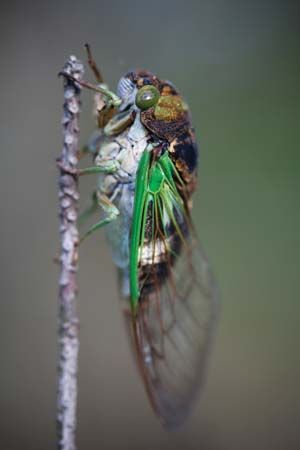
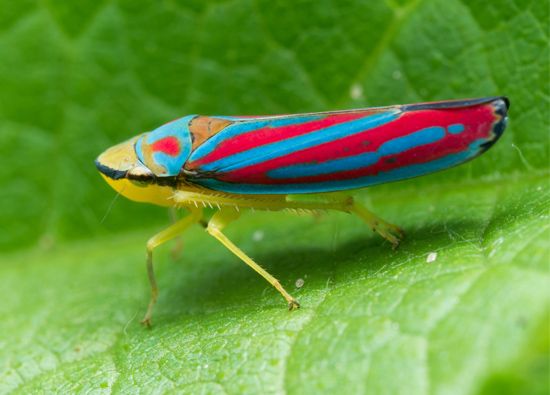
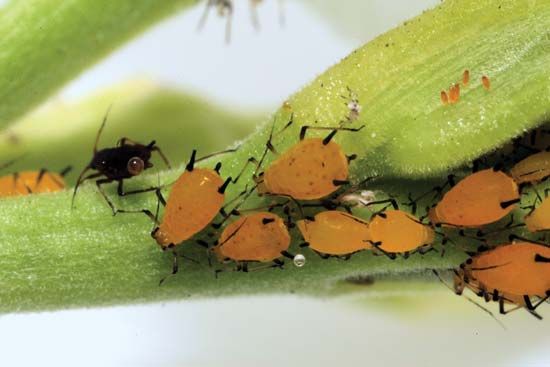
- Evolutionary Lineage: The suborder Sternorrhyncha, which includes psyllids, aphids, and scale insects, is believed to have diverged from the Auchenorrhyncha (a group including cicadas and leafhoppers) as early as the Lower Permian period, approximately 280 million years ago.8
- Distinguishing Features: Psyllids are differentiated from other groups by their specific structural adaptations, such as thickened femora adapted for leaping and long, typically 10-jointed antennae. Unlike the suborder Heteroptera, psyllids lack scent glands and possess a membranous or absent gula, which allows their mouthparts to fuse with the prothorax.79
What are the main physical characteristics of jumping plant lice?
Jumping plant lice, members of the family Psyllidae, are small insects typically about the size of a pinhead. Their physical characteristics are defined by several key features:1
- Body Structure: They possess a head, long antennae, and legs that resemble those of a cicada on a reduced scale that resemble those of a cicada on a reduced scale. Their hind femora (the upper portion of the leg) are thickened and specifically adapted for leaping.1106
- Antennae: They typically feature long antennae that are usually 10-jointed.6
- Wings: They have transparent wings, with the forewings often being thicker than the hindwings.16
- Mouthparts: As members of the order Homoptera (often classified within Hemiptera), they possess well-developed, piercing-sucking mouthparts.11
- Tarsi: Their feet (tarsi) are two-segmented and equipped with two claws.11
- Nymphs: The immature stages, or nymphs, are typically flattened and broadly ovate in shape. Some species are covered in wax, while others may induce the formation of galls on their host plants.1
Sources
- jumping plant louse — Encyclopædia Britannica
- plant bug — Encyclopædia Britannica
- Psyllia — Merriam-Webster
- homopteran - Importance — Encyclopædia Britannica
- homopteran - Formation of galls — Encyclopædia Britannica
- jumping plant louse — Merriam-Webster
- heteropteran - Distinguishing taxonomic features — Encyclopædia Britannica
- Psyllidae — Merriam-Webster
- homopteran - Evolution and paleontology — Encyclopædia Britannica
- homopteran - Annotated classification — Encyclopædia Britannica
- louse - Form and function — Encyclopædia Britannica
- heteropteran - Nymphs — Encyclopædia Britannica
Published on · 4 min read