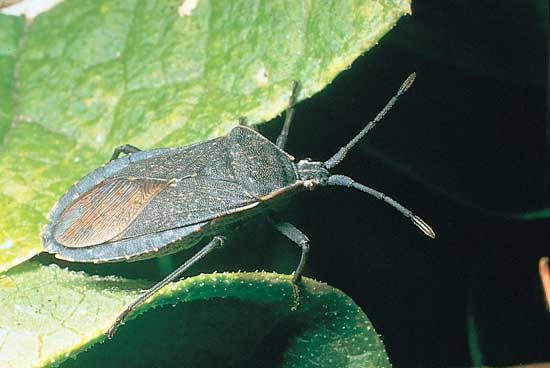
Plant Bug
Plant bugs, primarily members of the families Miridae and Lygaeidae, are significant agricultural and garden pests that feed on plant sap and juices. By…
How do plant bugs impact agriculture and gardening?
Plant bugs, primarily members of the families Miridae and Lygaeidae, are significant agricultural and garden pests that feed on plant sap and juices. By piercing plant tissues with their beaks, they cause damage such as brown spots, withering leaves, and fruit injury, often rendering crops unmarketable. Notable examples include the tarnished plant bug, which affects a wide range of plants, and the cotton fleahopper, a destructive pest of cotton.12
While most plant bugs are considered pests, some species are beneficial; for instance, Cyrtorhynus mundulus is used to control other pests by feeding on their eggs.2
Management of these insects often involves integrated pest management (IPM), an ecologically harmonious approach that minimizes reliance on chemical pesticides. Control strategies include:3
- Cultural practices: Pruning, burning infested material, and eliminating hibernating sites like trash piles.24
- Biological control: Utilizing natural predators or parasites.54
- Resistant varieties: Breeding plants that are naturally immune or resistant to attack.54
- Chemical control: Using insecticides as a last resort when other methods are insufficient.23
What are some common species of plant bugs?
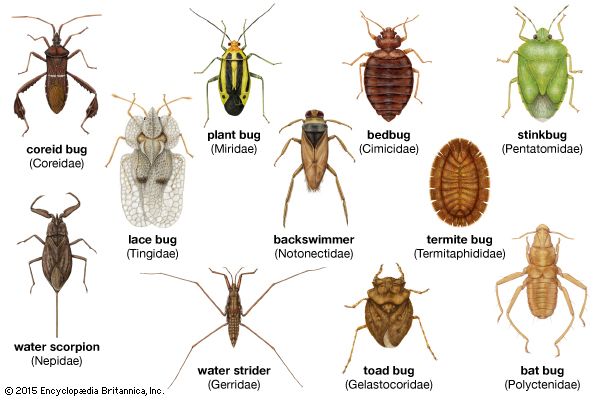
Plant bugs belong to the order Heteroptera and are primarily categorized into two families: Lygaeidae and Miridae. While there are thousands of species, several are well-known for their impact on agriculture and gardening.2
Common Species of Plant Bugs
- Four-lined plant bug (Poecilocapsus lineatus): A yellowish insect characterized by four longitudinal black lines on its back. It primarily feeds on blueberries, currants, and gooseberries, causing leaves to wither and develop brown spots.2
- Tarnished plant bug (Lygus pratensis): A widespread North American pest that is dark in color with red, black, and yellow markings. It is highly versatile, feeding on a variety of plants ranging from grasses and cereals to trees.2
- Apple red bug (Lygus mendax): As the name suggests, this bug is red and black. It is a significant pest in apple orchards, where it causes leaf spotting and damages fruit, making it unmarketable.2
- Garden fleahopper (Halticus bractatus): A small, shiny black bug that jumps. It is a common garden pest that sucks juices from various plants and can produce multiple generations in a single season.2
- Cotton fleahopper (Psallus seriatus): A pale green, oval-shaped insect that is a major pest for cotton crops. It often overwinters in weeds before migrating to cotton fields.2
- Tea blight bug (Helopeltis theivora): A highly destructive species found in Southeast Asia that is particularly common in tea cultivation.2
- Chinch bug: A well-known member of the Lygaeidae family and a significant pest for various crops.2
While most of these species are harmful, some, such as Cyrtorhynus mundulus, are considered beneficial because they prey on the eggs of other pests.2
How do plant bugs feed on plants, and what structures do they use?
Plant bugs, which belong to the order Heteroptera, feed on plants by using a specialized, segmented mouthpart known as a beak or proboscis.82
This beak is a critical structure for their survival, allowing them to access the internal fluids of a plant. When feeding, the bug uses its beak to pierce the protective layers of plant tissue. By sucking sap or injecting tissue-killing fluids, they can extract necessary nutrients. This process often damages the plant’s protective barriers, which can inadvertently create entry points for bacteria and other disease-causing organisms.8
While the specific mechanics of the beak in plant bugs are similar to other related insects, the feeding process is highly effective at extracting plant juices, which often results in visible symptoms such as brown spots, withered leaves, and injured fruit. In some cases, these insects may also probe moist surfaces, such as perspiring skin, in search of food fluids if their preferred plant hosts are unavailable.28
How do plant bugs differ from other types of insects?
Plant bugs, which belong to the order Heteroptera, are distinguished from other insects by several key anatomical and functional features.
Distinguishing Taxonomic Features
- Wing Structure: A primary characteristic of heteropterans is their forewings, which are generally divided into two distinct textures: a thick, leathery basal half and a membranous apical half. When at rest, these wings are held flat over the abdomen.1112
- Mouthpart Origin: The piercing-sucking mouthparts of heteropterans arise from the front part of the head. This differs from the suborder formerly known as “homopterans,” where the mouthparts appear to arise from the back of the head or near the prothorax.111213
- The Gula: Heteropterans possess a hard bridge called the gula, which separates the mouthparts from the prothorax. In contrast, this structure is often small, membranous, or absent in other related groups, allowing the mouthparts to abut or fuse directly to the prothorax.11
- Scent Glands: Terrestrial heteropterans, as well as many aquatic nymphs and adults, possess scent glands, a feature absent in homopterans.11
Comparison with Other Insects
While many insects share the piercing-sucking mouthpart modification, entomologists classify those with this specific structure into the order Hemiptera. Within this order, the Heteroptera are separated from other groups based on the aforementioned wing textures, resting positions, and the specific arrangement of the head and mouthparts. Unlike insects that undergo complete metamorphosis, plant bugs and other heteropterans undergo gradual metamorphosis.1112
Sources
- plant bug — Merriam-Webster
- plant bug — Encyclopædia Britannica
- Agricultural technology - Biological controls — Encyclopædia Britannica
- gardening - Control of pests and diseases — Encyclopædia Britannica
- Integrated pest management — Encyclopædia Britannica
- insect - Ecological factors — Encyclopædia Britannica
- Pest — Encyclopædia Britannica
- heteropteran - Harmful aspects — Encyclopædia Britannica
- homopteran - Head — Encyclopædia Britannica
- homopteran - Honeydew — Encyclopædia Britannica
- heteropteran - Distinguishing taxonomic features — Encyclopædia Britannica
- heteropteran - Habitats — Encyclopædia Britannica
- heteropteran - Annotated classification — Encyclopædia Britannica
- homopteran - Polymorphism — Encyclopædia Britannica
- insect - Head — Encyclopædia Britannica
- jumping plant louse — Encyclopædia Britannica
- flower bug — Encyclopædia Britannica
- thrips - Life cycle — Encyclopædia Britannica
- Coleoptera - Typical life cycle — Encyclopædia Britannica
Published on · 4 min read