King Crab
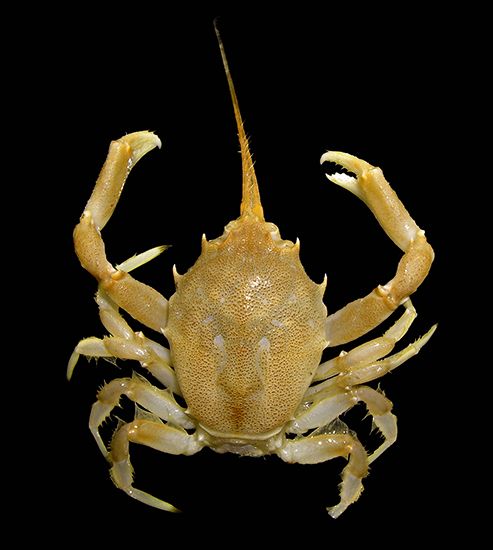
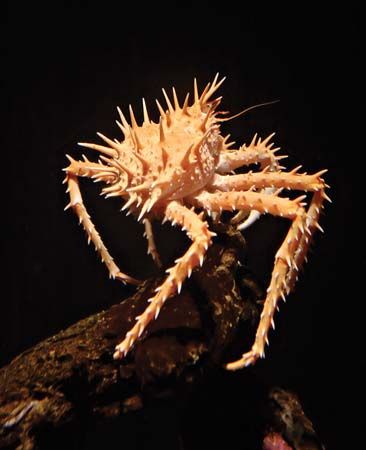
The term "king crab" primarily refers to Paralithodes camtschaticus, a large marine crustacean belonging to the order Decapoda.
What is king crab?
The term “king crab” primarily refers to Paralithodes camtschaticus, a large marine crustacean belonging to the order Decapoda.12
This species is highly valued as a food source due to its substantial size—often weighing 5 kg (11 pounds) or more—and its flavorful flesh. It is commercially fished in large numbers, particularly in the shallow waters off the coast of Alaska, the Bering Sea, and Japan.13
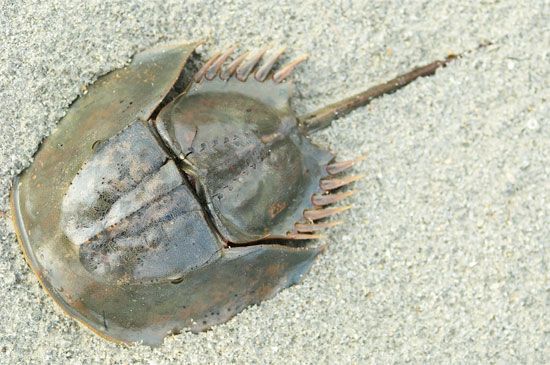
It is important to note that the name “king crab” is also occasionally used to describe members of the order Xiphosura, which are more commonly known as horseshoe crabs. While both are arthropods, they represent distinct biological groups.13
How do horseshoe crabs differ from true crabs?
Despite their shared name and similar habitats, horseshoe crabs and true crabs are biologically distinct animals. The primary difference lies in their classification: true crabs are crustaceans, while horseshoe crabs are not crabs at all but are more closely related to scorpions, spiders, and extinct trilobites.4
Key differences include:
- Taxonomy: True crabs belong to the subphylum Crustacea, whereas horseshoe crabs belong to the subphylum Chelicerata.45
- Anatomy: The body of a horseshoe crab is divided into three hinged parts: a broad, horseshoe-shaped cephalothorax, a smaller segmented abdomen, and a long, sharp tail-spine known as a telson.4
- Evolutionary History: Horseshoe crabs are often called “living fossils” because they have changed very little since their ancestors appeared during the Ordovician Period over 440 million years ago.4
- Biomedical Significance: Horseshoe crab blood contains a unique clotting agent called coagulogen, which is used in the LAL test to detect harmful bacteria in medical products and intravenous solutions.4
What are the different stages of a crab’s life cycle?
The life cycle of most crabs involves a series of developmental stages that transform the organism from a microscopic larva into an adult. While there is variation among species, the typical progression is as follows:
- Egg Stage: Most female crabs carry their eggs attached to their abdominal appendages until they are ready to hatch.7
- Zoea: Upon hatching, most crabs enter the zoea stage. These are minute, transparent, planktonic organisms that possess a rounded body and are often heavily ornamented with spines.78
- Megalops: After molting several times, the zoea transitions into a megalops (also called a megalopa). At this stage, the organism resembles a small crab, though its abdomen is still relatively long and extended rather than folded under the thorax.798
- Adult: Following another molt, the crab assumes its final form, which is very similar to that of the adult, with the abdomen tucked beneath the thorax.8
It is important to note that some species, particularly those living in freshwater, bypass these free-living larval stages entirely, emerging from the egg as miniature versions of the adult.78
What other types of large crustaceans are commercially fished?
Beyond various species of crabs, several other large crustaceans are significant targets of the commercial fishing industry. These animals are valued as important sources of protein and are harvested globally using methods ranging from small-scale traditional techniques to large-scale industrial operations.3
The most notable commercially fished crustaceans include:
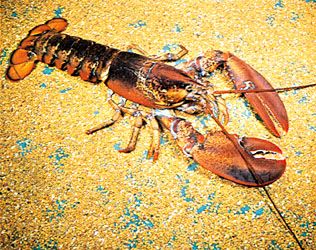
- Lobsters: These are highly sought after in commercial fisheries, though their cultivation through aquaculture is often considered uneconomical due to slow growth rates and high mortality.310
- Shrimp and Prawns: These are among the most important commercial species for many coastal nations, particularly in the Indian and Pacific Oceans. They are frequently harvested from the wild and are also widely raised in aquaculture facilities.101112
- Crayfish: These freshwater crustaceans are also cultivated and harvested for commercial purposes.310
While these species are vital to global food supplies, the industry faces ongoing challenges regarding overfishing and the environmental impact of non-selective fishing gear, which can result in significant bycatch of non-target species10.
Sources
- king crab — Encyclopædia Britannica
- king crab — Merriam-Webster
- crab — Encyclopædia Britannica
- horseshoe crab — Merriam-Webster
- horseshoe crab — Encyclopædia Britannica
- List of crustaceans — Encyclopædia Britannica
- crustacean - Reproduction and life cycles — Encyclopædia Britannica
- cirripede - Reproduction and life cycles — Encyclopædia Britannica
- megalops — Merriam-Webster
- commercial fishing — Encyclopædia Britannica
- aquaculture - Crustaceans — Encyclopædia Britannica
- Dungeness crab — Encyclopædia Britannica
- Indian Ocean - Fisheries — Encyclopædia Britannica
- Pacific Ocean - Fisheries — Encyclopædia Britannica
Published on · 3 min read