Kulunda Steppe
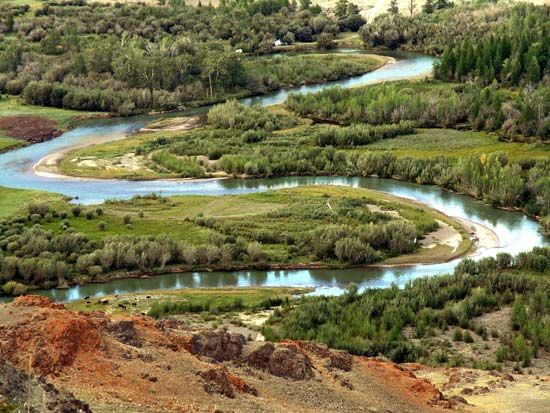
The Kulunda Steppe is a lowland region that serves as the extreme southern extension of the West Siberian Plain. Spanning approximately 39,000 square miles…
What is Kulunda Steppe?
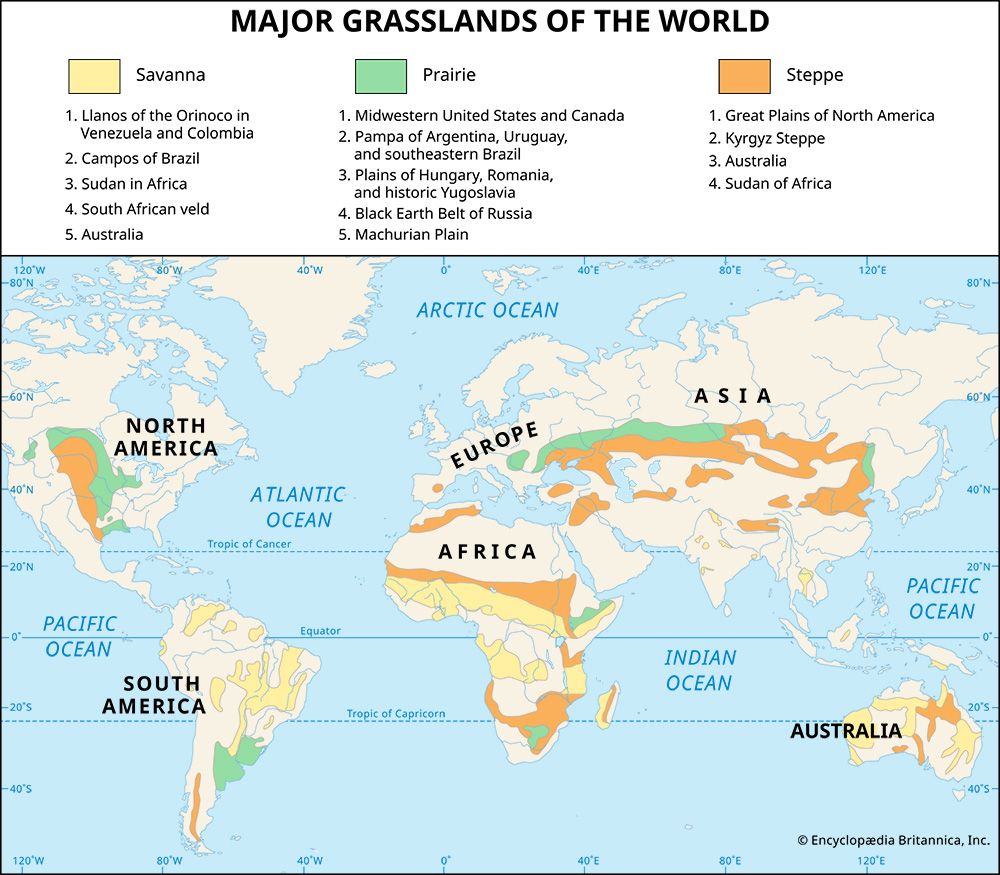
The Kulunda Steppe is a lowland region that serves as the extreme southern extension of the West Siberian Plain. Spanning approximately 39,000 square miles (100,000 square km), this roughly triangular area is located primarily in Russia, with its western portion extending into Kazakhstan.1
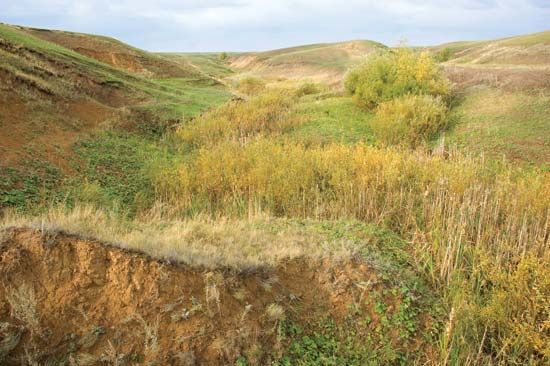
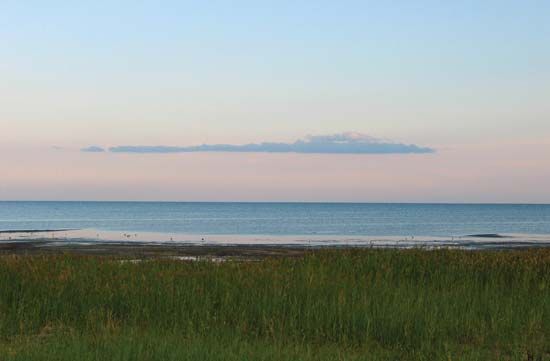
Due to low relative relief and meager rainfall, the region features a poor drainage pattern, resulting in numerous lakes, the largest of which is Lake Kulunda. These lakes are economically significant, as they serve as sources for soda and Glauber’s salt—a sodium sulfate compound utilized in the production of dyes and medicines. The city of Pavlodar is situated at the western margin of the steppe. As part of the broader steppe biome, the area is characterized by open grasslands and drought-resistant vegetation, though much of the original landscape has been transformed by grain cultivation.12
What makes chernozem soil so fertile for farming?
Chernozem, or “black earth,” is renowned for its exceptional fertility, which makes it a primary resource for global grain production. Its productivity is driven by several key environmental and chemical factors:
- High Humus Content: The soil features a deep, dark surface layer—sometimes reaching up to two meters thick—that is exceptionally rich in humus. This organic matter is derived from the decay of dense, natural grass vegetation typical of steppe, prairie, and pampa environments.43
- Climate-Driven Accumulation: The specific climate of these regions—characterized by cold winters and hot, dry summers—inhibits the rapid decomposition of organic matter. Furthermore, high evaporation rates prevent the leaching of nutrients, allowing humus to accumulate over time.3
- Chemical Composition: Chernozems possess low acidity and are rich in available calcium ions. These ions bind to soil particles, creating a well-aggregated structure that supports healthy plant growth.43
- Nutrient Cycling: While calcium compounds may be leached downward by spring snowmelt, they are drawn back toward the surface during the summer, concentrating in a lime-rich horizon that sustains the soil’s fertility.3
How do animals adapt to life on the open steppe?
Animals inhabiting the open steppe have evolved specialized physical and behavioral traits to survive in a landscape defined by vast, treeless plains, extreme seasonal temperatures, and a lack of natural cover.
Physical Adaptations
- Locomotion and Senses: Because the open terrain offers few places to hide, many large herbivores—such as the horse, gazelle, and saiga antelope—have evolved to be swift runners with sharp senses, allowing them to detect and outrun predators.6
- Protective Coloration: Many species, including birds like larks, quail, and gray partridge, possess yellowish-gray or brown concealing coloration. This camouflage helps them blend into the dried-up grasses, masking their location from predators.3
- Burrowing: To escape the lack of shelter and the harsh climate, many small animals, such as marmots, prairie dogs, and various rodents, have adapted to a subterranean lifestyle, using burrows for protection and temperature regulation.673
Behavioral and Physiological Adaptations
- Thermoregulation: Animals manage the steppe’s extreme temperature fluctuations through endothermy (generating internal heat) or ectothermy (relying on external heat). During periods of extreme cold or food scarcity, some species enter torpor or hibernation to conserve energy.8
- Migration: Large herbivores often rely on migration to move between pastures, ensuring access to food as seasonal conditions change.68
What are the main differences between a steppe and a desert?
The primary distinction between a steppe and a desert lies in the availability of moisture and the resulting impact on vegetation and soil development.1011
Key Differences
- Precipitation Levels: While both environments are characterized by aridity, the steppe is generally wetter than the desert. Steppes typically receive enough rainfall to support a continuous cover of grasses, whereas deserts experience such severe moisture shortages that vegetation is sparse or absent.1011
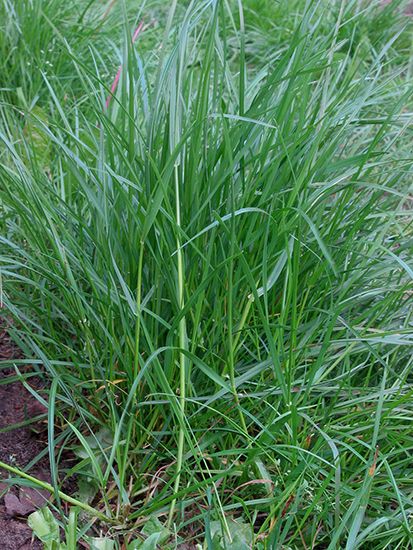
- Vegetation: The steppe is defined by its grassland landscape, featuring turf grasses like bunchgrass and fescue. In contrast, deserts are often barren, with loose sand or stony surfaces, and only support specialized plants in localized habitats where runoff or groundwater is available.1211
- Soil Composition: The steppe is famous for chernozem, a highly fertile “black earth” rich in humus due to the decay of dense grass cover. Desert soils are typically immature, weakly developed, and often alkaline, lacking the significant organic accumulation found in steppe regions.1211
- Climatic Positioning: Steppes often exist as transitional zones on the periphery of true deserts, acting as a buffer between arid desert regions and more humid forest or Mediterranean climates.103
Sources
- Kulunda Steppe — Encyclopædia Britannica
- West Siberian Plain — Encyclopædia Britannica
- Russia - Wooded steppe and steppe — Encyclopædia Britannica
- Chernozem — Encyclopædia Britannica
- South Dakota - Soils — Encyclopædia Britannica
- Steppe — Encyclopædia Britannica
- Biosphere - Temperature — Encyclopædia Britannica
- concealing coloration — Encyclopædia Britannica
- Europe - Wild animals — Encyclopædia Britannica
- Mid-latitude steppe and desert climate — Encyclopædia Britannica
- the Steppe - Geography of adjacent regions — Encyclopædia Britannica
- Desert - Environment — Encyclopædia Britannica
- Tropical and subtropical steppe climate — Encyclopædia Britannica
Published on · 3 min read