Margherita Peak
Margherita Peak is the highest summit of the Ruwenzori Range in East Africa and the third-highest peak on the continent, following Mount Kilimanjaro and…
What is Margherita Peak?
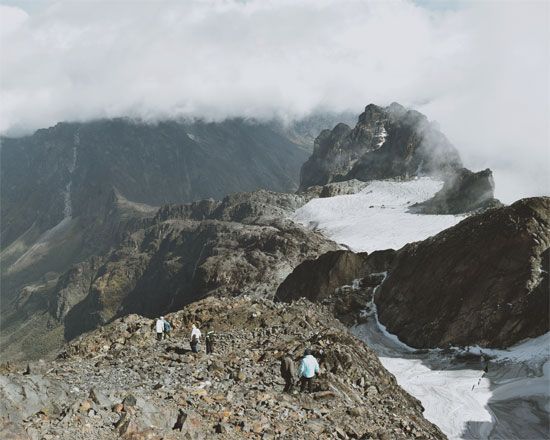
Margherita Peak is the highest summit of the Ruwenzori Range in East Africa and the third-highest peak on the continent, following Mount Kilimanjaro and Mount Kenya.1
Located on the border between the Democratic Republic of the Congo and Uganda, it serves as the highest point of Mount Stanley. The peak reaches an elevation of 16,795 feet (5,119 meters) and is situated between Lake Edward to the south and Lake Albert to the north. It was named in honor of Queen Margherita of Italy and was first successfully climbed in 1906 by an expedition led by Luigi Amedeo, Duke of the Abruzzi.1
What are the Rwenzori Mountains known as the Mountains of the Moon?
The Ruwenzori Range is widely identified as the legendary “Mountains of the Moon” described by the 2nd-century CE geographer Ptolemy. For centuries, these mountains were famously believed to be the source of the Nile River.2
The association was solidified in 1888 when the Welsh explorer Henry Morton Stanley caught a glimpse of the range through a break in its persistent cloud cover and equated the peaks with Ptolemy’s ancient description. The mountains are often shrouded in clouds due to moist air currents from the Atlantic and Indian oceans, which likely contributed to their mysterious reputation in antiquity.32
Unlike many other prominent African peaks, the Ruwenzori Range is not of volcanic origin but is a massive horst—a block of the Earth’s crust that has been uplifted between faults.2
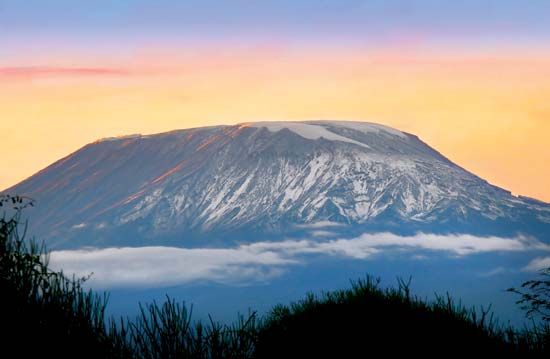
How do the glaciers on Margherita Peak compare to those on Mount Kilimanjaro?
The glaciers on Margherita Peak and Mount Kilimanjaro are both relict features of past glaciation that currently possess little erosive force, yet they differ significantly in their distribution and environmental context.1
- Extent and Coverage: The Ruwenzori Range hosts more than 30 small glaciers covering approximately 1.5 square miles, primarily concentrated on Mounts Stanley and Speke. In contrast, the ice on Kilimanjaro is found on the outer rims of the Kibo crater and scattered as giant blocks within it.1
- Elevation: On the Ruwenzori, the lowest valley glaciers descend to about 14,000 feet. On Kilimanjaro, the ice reaches down to approximately 16,000 feet on the wetter southwestern moorlands.1
- Climate: The Ruwenzori is the wettest and cloudiest of the East African mountains, with moist conditions reaching the peaks. Conversely, the Afro-Alpine zone of Kilimanjaro is characterized as a “veritable desert” due to a significant decrease in rainfall above the 10,000-foot cloud ceiling.6
Both ranges experienced rapid glacial retreat throughout the 20th century.1
What unique plants and animals live in the Rwenzori region?
The Ruwenzori Range is characterized by exceptionally moist and lush conditions, which support a unique biological environment.
Plant Life
The vegetation in the Ruwenzori region is notably more luxuriant than that of other East African mountains due to high rainfall. The range features distinct altitudinal zones, including:
- Montane Forest: Found on the lower slopes, this area transitions into bamboo forest and wooded parkland.
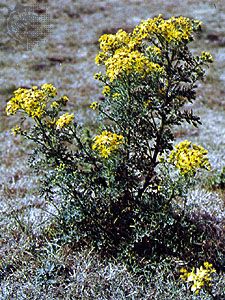
- Afro-Alpine Zone: Located at higher elevations, this zone is home to unique plants that exhibit “giantism,” such as tree groundsel and giant lobelia. These cold-loving species retreated to the mountains following the Pleistocene Epoch and have been preserved in these high-altitude “islands of refuge.”8
Animal Life
The region supports a diverse array of wildlife, with species distribution often reflecting the mountain’s role as a refuge for animals that once inhabited the surrounding plateaus.9
- Mammals: The range is home to chimpanzees, as well as leopards, various antelopes like the duiker, and the eland. In the higher moorland and Afro-Alpine zones, the hyrax and the groove-toothed rat are frequently observed.9
- Birds: The area hosts a variety of avian species, including the scarlet-tufted malachite sunbird and the lammergeier, a large bird of prey.9
Sources
- Margherita Peak — Encyclopædia Britannica
- Ruwenzori Range — Encyclopædia Britannica
- East African mountains - Study and exploration — Encyclopædia Britannica
- Ptolemy — Encyclopædia Britannica
- Ptolemy: Top Questions — Encyclopædia Britannica
- East African mountains - Physiography — Encyclopædia Britannica
- East African mountains - Climate — Encyclopædia Britannica
- East African mountains - Plant life — Encyclopædia Britannica
- Queen Elizabeth National Park — Encyclopædia Britannica
- East African mountains - Animal life — Encyclopædia Britannica
Published on · 3 min read