Duiker
There are 17 or 18 recognized species of duikers, which are small antelopes native to Africa. While they are highly similar in appearance, they exhibit a…
How many species of duikers are there, and what are some of the most common ones?
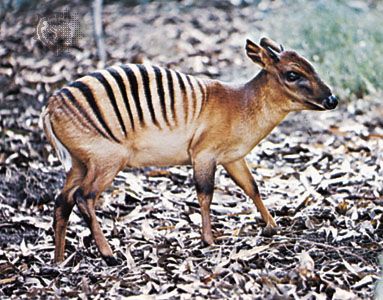
There are 17 or 18 recognized species of duikers, which are small antelopes native to Africa. While they are highly similar in appearance, they exhibit a wide range of sizes, from the small blue duiker (Cephalophus monticola) to the much larger yellow-backed duiker (Cephalophus silvicultor).1
Most species belong to the genus Cephalophus, which includes forest-dwelling varieties such as:
- Blue duiker (C. monticola): One of the smallest antelope species.1
- Yellow-backed duiker (C. silvicultor): A larger species reaching up to 80 kg.1
- Black-fronted duiker (C. nigrifons): Adapted to swampy forest environments.1
- Peters’ duiker (C. callipygus): A diurnal species.1
- Bay duiker (C. dorsalis): A nocturnal species.1
- White-bellied duiker (C. leucogaster): Often found in secondary forests with dense undergrowth.1
The only species not classified within Cephalophus is the bush, or gray, duiker (Sylvicapra grimmia), which is uniquely adapted to the savanna biome.1
Where are duikers primarily found in the wild?
Duikers are found exclusively on the continent of Africa. They are highly specialized animals that have evolved to inhabit virtually every type of wooded habitat across the region.1
While most species are forest-dwelling antelopes that thrive in closed-canopy environments, utilizing the fruits, flowers, and leaves that fall from the canopy, their specific preferences vary. For instance, some species occupy primary rainforests, while others prefer secondary forests with dense undergrowth or even swampy forest areas. The only exception to this forest-dwelling lifestyle is the bush, or gray, duiker (Sylvicapra grimmia), which is uniquely adapted to the savanna biome adapted to the savanna biome.1
How do duikers differ from other small antelopes?
Duikers are distinct from many other antelopes due to their specialized adaptations for life in closed, forested habitats. While antelopes of open plains are typically built for speed with level backs and long, equally developed limbs, duikers possess a compact, short-necked frame with overdeveloped hindquarters and a rounded back, which facilitates movement through dense undergrowth.134
Key differences include:
- Physical Traits: Duikers have sturdy, short legs and cryptic, often grizzled coloration for camouflage. Two unique features are the erectile tuft of hair on the crown (the name Cephalophus means “head crest”) and preorbital (cheek) glands that open into a horizontal slit, present in both sexes.1
- Behavior: Unlike the gregarious, herd-forming antelopes of open habitats, duikers are solitary or live in monogamous pairs that defend specific territories. They rely on concealment as their primary defense, often “freezing” in mid-stride to evade predators.14
- Diet and Niche: They are primarily browsers of foliage, fruits, flowers, and other forest floor items, rather than grazers of grass.14
What is the origin of the name ‘duiker’ and what does it mean?
The name “duiker” originates from the Afrikaans word duikerbok, which translates to “diving buck.” This term is derived from the Afrikaans verb duik, meaning “to dive,” which shares roots with the Middle Dutch dūken (to dive) and is related to the English word “duck.”21
The name describes the animal’s characteristic behavior of making a sudden, headlong flight into dense vegetation when it is flushed from hiding, appearing to “dive” into the undergrowth to escape danger.1
Sources
- duiker — Encyclopædia Britannica
- duiker — Merriam-Webster
- What is the difference between a pronghorn and an antelope? — Encyclopædia Britannica
- antelope — Encyclopædia Britannica
Published on · 2 min read