Mealybug
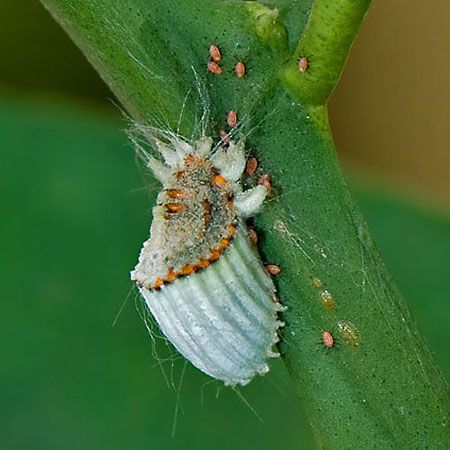
A mealybug is a small, sap-sucking insect belonging to the family Pseudococcidae. These insects are found worldwide and are known for being destructive pests…
What is mealybug?
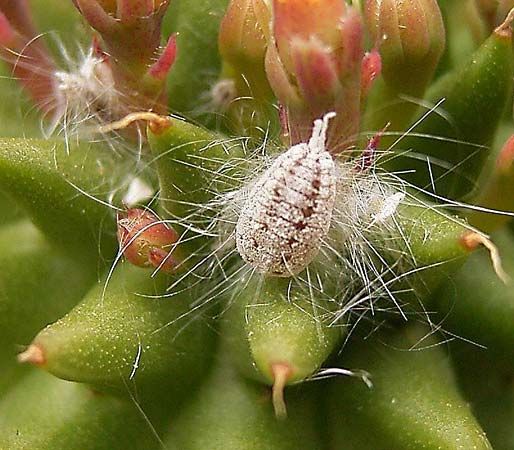
A mealybug is a small, sap-sucking insect belonging to the family Pseudococcidae. These insects are found worldwide and are known for being destructive pests that target citrus trees and ornamental plants, particularly in greenhouses and interior plantscapes.12
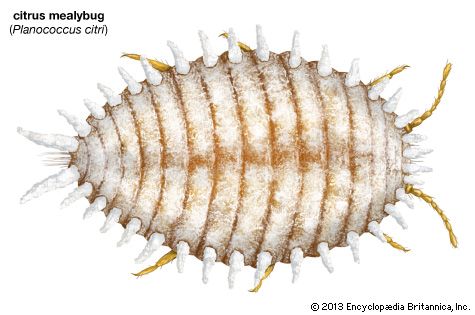
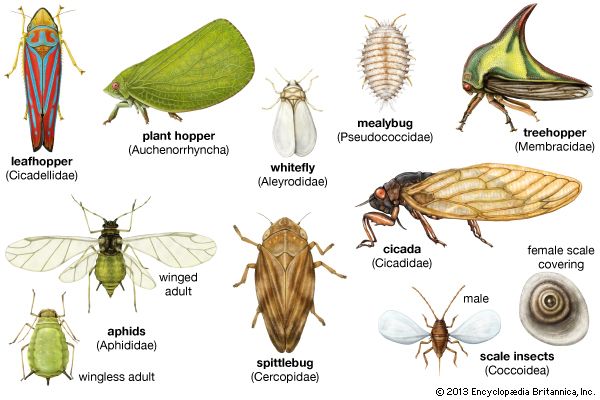
The name “mealybug” describes the insect’s appearance: its body is covered in a white, sticky, waxy powder that resembles cornmeal or cotton. While mature females are ovoid and sluggish, reaching about 1 cm (0.4 inch) in length, males are active fliers with two wings. These pests are closely related to scales, whiteflies, and aphids. Common examples include the citrus mealybug and the citrophilus mealybug. Management strategies often involve biological control, insecticidal soaps, and horticultural oils.12
How do mealybugs damage plants?
Mealybugs damage plants primarily by feeding on their sap, which can weaken the host plant. These insects, which often cluster along the veins on the undersides of leaves, excrete a sugary substance known as honeydew while they feed.13
This honeydew accumulation can lead to the development of sooty mold, a plant disease characterized by unsightly, splotchy black fungal coatings on leaves, stems, and fruit. While the mold itself is generally not directly harmful to the plant, it can interfere with the plant’s appearance and health by covering surfaces where the insects have been active. Because mealybugs are highly destructive to citrus and other ornamental plants, managing the underlying insect population is essential to preventing both direct sap loss and the secondary growth of sooty mold.3415
What are some natural predators of mealybugs?
Natural predators and parasitoids play a vital role in managing mealybug populations through biological control. These natural enemies help regulate pest numbers in both agricultural and natural environments.16
Key natural enemies of mealybugs include:
- Parasitic Wasps: Certain species of chalcid wasps, such as Coccophagus gurneyi and Tetracnemus pretiosus, have been successfully imported and used to control specific mealybug populations, such as the citrophilus mealybug.1
- Ladybird Beetles: Members of the family Coccinellidae, commonly known as ladybugs or ladybird beetles, are highly beneficial predators. Both the larvae and adults of many species feed voraciously on plant-sucking insects, including mealybugs, aphids, and scale insects.78
- Other Predaceous Insects: Various neuropterans are also known to consume homopterans, the order to which mealybugs belong, serving as a potent natural control mechanism.9
When implementing biological control, it is essential to carefully consider the potential impact of introducing non-native species to avoid creating invasive species problems, as seen in past ecological missteps.1
How are mealybugs related to aphids and scale insects?
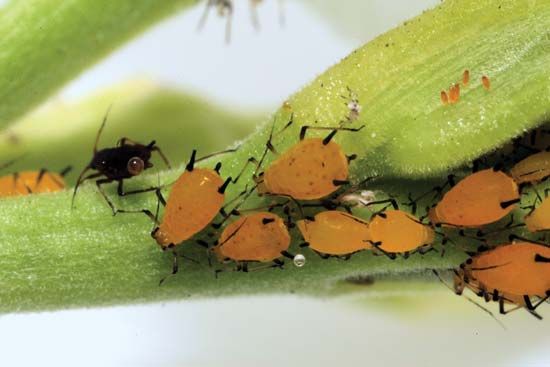
Mealybugs, aphids, and scale insects are all members of the order Homoptera, a group of more than 32,000 species of sap-sucking insects. Within this order, they are further classified under the suborder Sternorrhyncha, which is distinguished by the position of the beak (mouthparts) and the structure of the antennae.1111213
Their relationship is defined by several shared characteristics and ecological traits:
- Feeding Habits: All three groups are specialized plant feeders that use piercing-sucking mouthparts to extract plant sap to extract plant sap.111213
- Taxonomic Grouping: Mealybugs belong to the family Pseudococcidae, while aphids are in the family Aphididae and scale insects comprise multiple families, such as Diaspididae (armoured scales) and Coccidae (soft scales).1112
- Morphological Adaptations: Many members of these groups exhibit significant sexual dimorphism. For example, female scale insects and mealybugs often lack wings and may appear vastly different from their winged male counterparts.14
- Ecological Associations: Because they all feed on plant fluids, they are often targeted by the same natural predators, such as ladybird beetles and various parasitic wasps, which help regulate their populations in nature.15
Sources
- mealybug — Encyclopædia Britannica
- mealybug — Merriam-Webster
- Sooty mold — Encyclopædia Britannica
- sooty mold — Merriam-Webster
- citrus mealybug — Merriam-Webster
- Biological control — Encyclopædia Britannica
- ladybug — Encyclopædia Britannica
- ichneumon wasp — Encyclopædia Britannica
- Coleoptera - As predators — Encyclopædia Britannica
- neuropteran - Ecology — Encyclopædia Britannica
- homopteran - Annotated classification — Encyclopædia Britannica
- list of homopterans — Encyclopædia Britannica
- homopteran - Distinguishing taxonomic features — Encyclopædia Britannica
- homopteran - Associations with other insects — Encyclopædia Britannica
- homopteran - Reproduction and growth — Encyclopædia Britannica
- heteropteran - Distinguishing taxonomic features — Encyclopædia Britannica
Published on · 3 min read