Melon Cactus
The melon cactus (genus Melocactus) refers to a group of approximately 30 species of cacti native to the West Indies, Central America, and tropical South…
What is melon cactus?
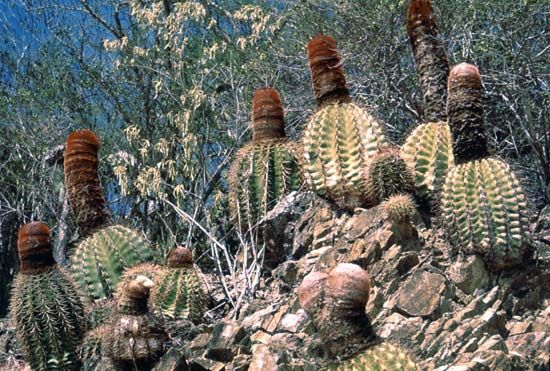
The melon cactus (genus Melocactus) refers to a group of approximately 30 species of cacti native to the West Indies, Central America, and tropical South America.1
These plants are characterized by their ribbed, ball-shaped to cylindrical bodies. Their most distinctive feature is the cephalium—a reddish, woolly mass that forms like a cap atop the plant once it reaches maturity. Carmine to pink flowers emerge through this cap, followed by waxy, edible fruits that are typically pink or red. Due to their unique appearance, they are often cultivated as novelties. One notable Caribbean species, Melocactus intortus, can grow up to 100 cm tall and 30 cm wide.12
What is a cephalium and why does it grow on the cactus?
A cephalium is a specialized, woolly structure that develops at the apex of certain cacti, such as the melon cactus. It typically appears as a dense, often reddish or white mass that forms like a cap once the plant reaches maturity.41
The cephalium serves as the reproductive center for the plant. Its primary function is to facilitate the growth of flowers and fruits. Because the plant stops producing new vegetative growth in the area where the cephalium forms, the flowers push up through this woolly cap to become visible. The resulting waxy, edible fruits are also partially embedded within this structure, protecting them as they develop.1
How do cacti adapt to survive in tropical environments?
Cacti have developed several specialized adaptations to survive in diverse environments, including tropical regions. While most cacti are associated with arid climates, some species have evolved to thrive in tropical settings, often as epiphytes that grow on other plants rather than in the soil.15
Key adaptations include:
- Photosynthetic Stems: In most species, leaves are absent or modified into spines to minimize water loss. The stem has taken over the role of photosynthesis and serves as the primary organ for food and water storage.16
- Crassulacean Acid Metabolism (CAM): Many cacti utilize a specialized photosynthetic pathway called crassulacean acid metabolism. By keeping their stomata closed during the hot day and opening them only at night, they significantly reduce water loss through transpiration.76
- Specialized Growth Habits: Tropical cacti, such as Epiphyllum and Rhipsalis, often grow as epiphytes. These plants rely on host trees for physical support to reach better light in the dense forest canopy, absorbing moisture and nutrients from rain and debris rather than soil.15
- Root Systems: Cacti typically possess shallow, fibrous root systems that allow them to efficiently absorb superficial moisture.1
What are some other unique types of cacti found in the Americas?
The Americas are home to a vast array of unique cacti, ranging from massive desert giants to small, specialized succulents. Here are some notable examples:
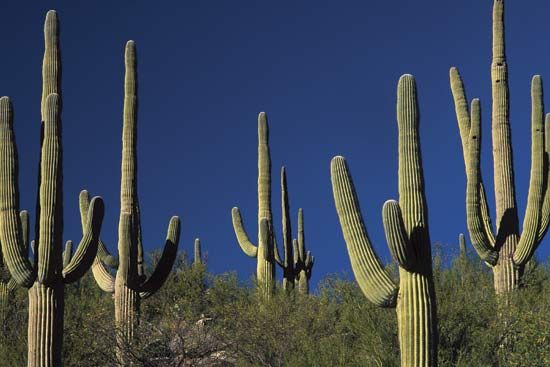
- Saguaro (Carnegiea gigantea): Native to the Sonoran Desert, this iconic, ribbed, and columnar cactus can reach heights of nearly 15 meters (50 feet). It serves as a vital ecological resource, providing nesting sites for birds and nectar for pollinators like bats and insects.12
- Barrel Cactus: This group includes genera such as Ferocactus and Echinocactus. These plants are generally globose or barrel-shaped and are well-known for their prominent ribs and stiff, sometimes hooked, spines.6
- Living-rock Cactus (Ariocarpus): These low-growing, rosette-shaped cacti are native to Texas and Mexico. They are unique for their lack of spines and their ability to store water in a thickened taproot, allowing them to survive in limestone-rich soils.13
- Peyote (Lophophora williamsii): A small, buttonlike cactus known for its hallucinogenic properties, which have been utilized in ceremonial contexts since pre-Columbian times.14
- Old-man Cactus (Cephalocereus senilis): Named for the long, white, hair-like spines that cover its stem, giving it the appearance of an elderly person.15
- Prickly Pear (Opuntia): Widely cultivated for food, these cacti are characterized by their flattened, succulent stems known as pads (nopales), which are edible along with their fruits.1416
Sources
- melon cactus — Encyclopædia Britannica
- melon cactus — Merriam-Webster
- Melocactus — Merriam-Webster
- Cephalocereus — Merriam-Webster
- Plant - Specific variations in photosynthesis — Encyclopædia Britannica
- cactus — Encyclopædia Britannica
- Did you know? — Merriam-Webster
- Angiosperm - Root systems — Encyclopædia Britannica
- Tropical rainforest - General structure of the rainforest — Encyclopædia Britannica
- Succulent — Encyclopædia Britannica
- Root — Encyclopædia Britannica
- saguaro — Encyclopædia Britannica
- list of plants in the family Cactaceae — Encyclopædia Britannica
- barrel cactus — Encyclopædia Britannica
- Caryophyllales - Cactaceae — Encyclopædia Britannica
- living-rock cactus — Encyclopædia Britannica
Published on · 3 min read