Mongolian Plateau
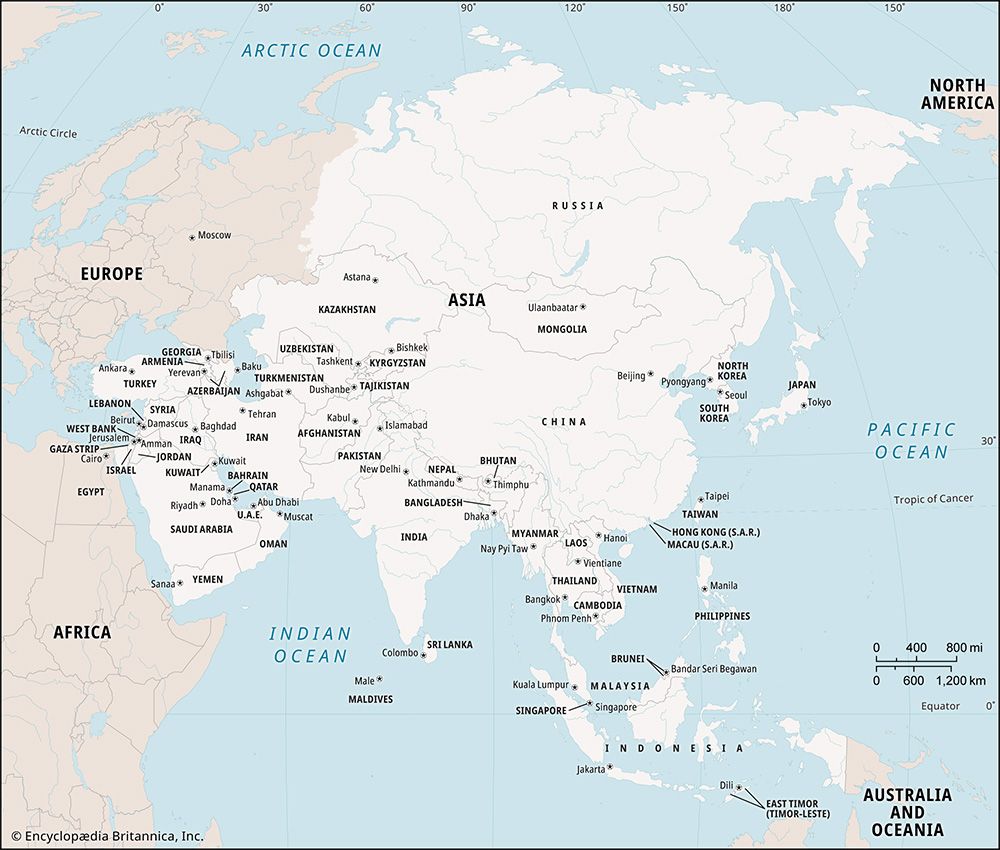
The Mongolian Plateau is an extensive highland region located in east-central Asia. It covers approximately 1,000,000 square miles (2,600,000 square km) and…
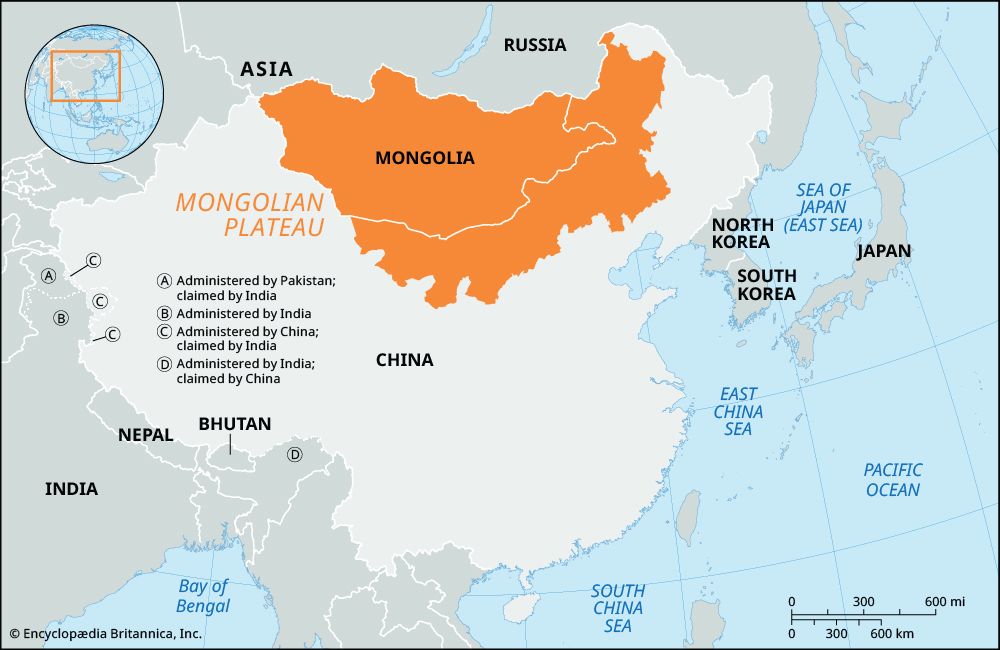
Where is the Mongolian Plateau located, and what countries does it cover?
The Mongolian Plateau is an extensive highland region located in east-central Asia. It covers approximately 1,000,000 square miles (2,600,000 square km) and is divided between two primary political entities:
- Mongolia: The northern portion, often referred to as Outer Mongolia, constitutes an independent state.1
- China: The southern portion is encompassed by the Inner Mongolia Autonomous Region1.
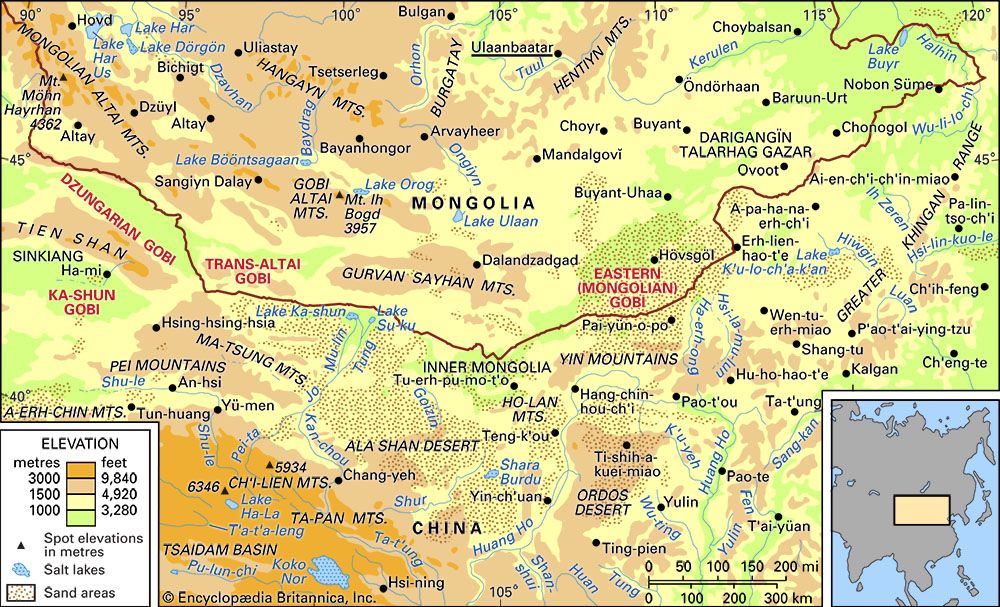
Geographically, the plateau is defined by the Gobi desert, which separates these two regions. It is bordered by several mountain ranges, including the Altai Mountains to the northwest, the Hentiyn Mountains to the north, and the Greater Khingan Range to the east. The landscape is characterized by high tablelands, dry short-grass steppe, and a harsh continental climate.12
What are the major geographical features of the Mongolian Plateau?
The Mongolian Plateau is a vast, high-altitude region in Central Asia characterized by several distinct geographical features:
Topography and Elevation
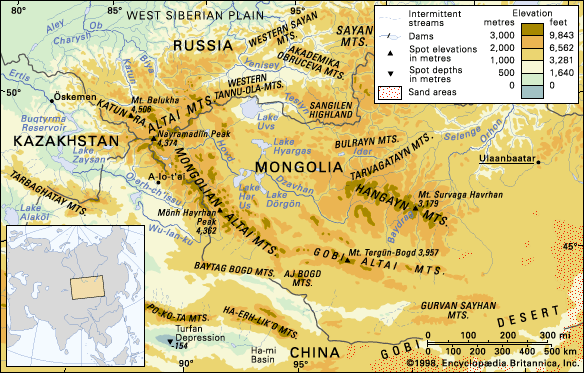
The plateau is a high tableland, often described as a large interior drainage basin, with elevations typically ranging from 3,000 to 5,000 feet (915 to 1,525 meters) above sea level. Its highest point is Mönh Hayrhan Peak, reaching 14,311 feet (4,362 meters) in the Altai Mountains.1
Surrounding Ranges
The region is defined by a series of bordering mountain ranges:
- Northwest: Altai, Tannu-Ola, and Sayan mountains.1
- North: Hentiyn Mountains.1
- East: Greater Khingan Range.1
- South: Nan Mountains.1
Landscape and Climate
The plateau includes the Gobi desert and expansive areas of dry short-grass steppe. It experiences a harsh, dry continental climate with minimal annual rainfall—averaging about 8 inches (200 mm)—and extreme seasonal temperature fluctuations.1
Drainage
The plateau is drained by several significant rivers, including the Dzavhan, Selenga, and Kerulen. While some northern rivers flow toward the Arctic or Pacific, much of the interior consists of basins where streams terminate in salt lakes or disappear into the desert sands.13
What are the main rivers and water systems in the Mongolian Plateau?
The Mongolian Plateau is defined by a complex drainage system that reflects its position on a continental divide. Rivers in the north and northeast flow toward the Arctic Ocean and the Pacific, while the western and southern regions are characterized by interior drainage basins where water terminates in salt lakes or evaporates into the desert sands.4
Major River Systems
- Selenga (Selenge) River: As Mongolia’s principal river, it drains the northwest-central region before flowing into Russia and eventually into Lake Baikal.34
- Orkhon River: The longest river lying entirely within Mongolia, it flows northward to join the Selenga. Its basin is historically significant as a cradle of settled life.45
- Kherlen (Kerulen) River: Originating in the Khentii Mountains, it flows eastward across eastern Mongolia into Lake Hulun in China.4
- Western Rivers: The Khovd (Hovd) and Zavkhan (Dzavhan) rivers are vital to the Great Lakes region, fed by glaciers and mountain runoff.4
Lakes and Basins
The plateau contains numerous lakes, ranging from the freshwater Lake Khövsgöl to various saline basins in the west, such as Lake Uvs and Lake Khyargas.4
How has the Mongolian Plateau influenced the history and culture of Mongolia and Inner Mongolia?
The Mongolian Plateau has served as a foundational stage for the history and culture of the Mongol people, acting as both a cradle for nomadic civilization and a strategic corridor for migration and trade across Central Asia.18
Nomadic Foundations
The plateau’s environment—characterized by dry short-grass steppe and a harsh continental climate—shaped a culture centered on nomadism. Traditionally, this lifestyle involved the seasonal movement of livestock, which were considered private property, while land was held collectively. This social structure fostered a society where every man was both a herdsman and a soldier, organized into clan-based units that could rapidly mobilize for defense or conquest.1910
Historical Impact and Empire
The plateau was the birthplace of the Mongol empire, unified by Genghis Khan in the 13th century. This era, known as the Pax Mongolica, transformed the region from a collection of tribal confederations into the center of the largest contiguous land empire in history. The plateau’s location at the eastern end of a great migration corridor facilitated unprecedented cultural exchange, spreading technologies like papermaking and gunpowder across Eurasia.811
Political Division and Cultural Contact
Politically, the plateau is divided into the independent state of Mongolia (Outer Mongolia) and the Inner Mongolia Autonomous Region of China. Inner Mongolia has historically served as a zone of contact and conflict between nomadic steppe dwellers and settled Han agriculturalists. This long-standing interaction, marked by the construction of defensive walls and shifting territorial control, has made the region a unique testing ground for integrating diverse cultures and political loyalties.1812
Sources
- Mongolian Plateau — Encyclopædia Britannica
- Mongolia - The plateau and desert belt — Encyclopædia Britannica
- Mongolia - Drainage — Encyclopædia Britannica
- Selenga River — Encyclopædia Britannica
- Altai Mountains - Drainage — Encyclopædia Britannica
- Mongolia - The northern intermontane basins — Encyclopædia Britannica
- Takla Makan Desert - Drainage — Encyclopædia Britannica
- Pax Mongolica — Encyclopædia Britannica
- history of Mongolia - Ethnography and early tribal history of Mongolia — Encyclopædia Britannica
- Inner Mongolia - History of Inner Mongolia — Encyclopædia Britannica
- Mongolia - Ethnography and early tribal history — Encyclopædia Britannica
- Altai Mountains - People and economy — Encyclopædia Britannica
- history of Mongolia — Encyclopædia Britannica
Published on · 4 min read