Mount Marcy
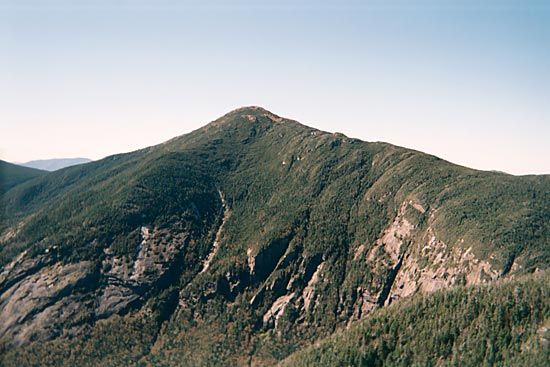
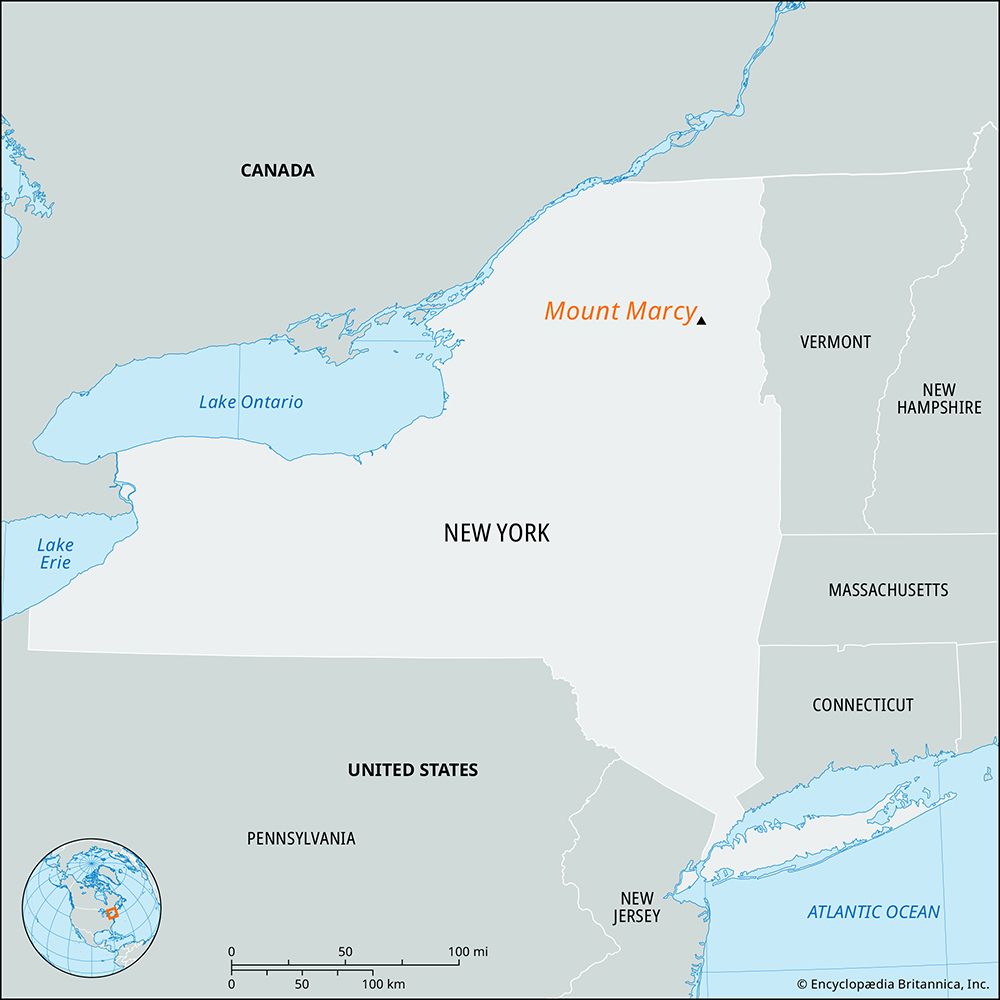
Mount Marcy is the highest peak in the Adirondack Mountains and the state of New York, reaching an elevation of 5,344 feet (1,629 metres) above sea level.
What is Mount Marcy?
Mount Marcy is the highest peak in the Adirondack Mountains and the state of New York, reaching an elevation of 5,344 feet (1,629 metres) above sea level.1
Located in Essex county, approximately 12 miles south-southeast of Lake Placid, the mountain is the source of the Hudson River’s main headstream, the Opalescent River, which begins at Lake Tear of the Clouds. The peak was named after William L. Marcy, a former governor of New York who commissioned a geological survey of the region, and it was first ascended in 1837. Today, it serves as a popular destination for hiking Today, it serves as a popular destination for hiking.1
What are the Adirondack Mountains?
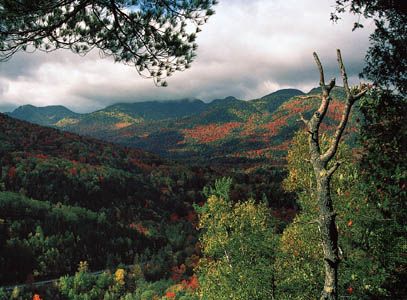
The Adirondack Mountains are a circular, domelike mountain range in northeastern New York state, extending from the St. Lawrence River valley and Lake Champlain south to the Mohawk River valley. Although often associated with the Appalachian Mountain system, they are geologically related to the Canadian Shield and were formed approximately one billion years ago.2
The region covers over 9,100 square miles and features hundreds of peaks, including Mount Marcy, the state’s highest point at 5,344 feet. The landscape is defined by glacial activity, which created numerous gorges, waterfalls, and roughly 2,300 lakes and ponds. Much of the area is protected within Adirondack Park, the largest state or national park in the U.S. outside of Alaska. The region is known for its spruce, hemlock, and pine forests, as well as wildlife such as white-tailed deer and black bear.23
How does Lake Tear of the Clouds connect to the Hudson River?
Lake Tear of the Clouds serves as the source of the Hudson River’s main headstream, the Opalescent River. Located on Mount Marcy in the Adirondack Mountains, this small postglacial lake feeds the Opalescent River, which then flows into the Hudson River, marking the beginning of the river’s approximately 315-mile course toward the Atlantic Ocean.14
Who was William L. Marcy?
William L. Marcy (1786–1857) was a prominent American politician who served as a U.S. senator, governor of New York, secretary of war, and secretary of state. A key member of the “Albany Regency,” he is famously remembered for the phrase, “To the victor belong the spoils of the enemy,” which cemented his reputation as a champion of the spoils system.
During his tenure as secretary of state under President Franklin Pierce, he successfully negotiated the Gadsden Treaty and resolved the Black Warrior case, preventing a potential conflict with Spain. As governor of New York, he initiated a geological survey of the Adirondack Mountains, which led to the naming of Mount Marcy—the state’s highest peak—in his honor.61
Sources
- Mount Marcy — Encyclopædia Britannica
- Adirondack Mountains — Encyclopædia Britannica
- New York - Plant and animal life — Encyclopædia Britannica
- Hudson River — Encyclopædia Britannica
- New York - Relief — Encyclopædia Britannica
- William L. Marcy — Encyclopædia Britannica
Published on · 2 min read