Oat Grass
Oat grass, or the Avena sativa plant, is primarily cultivated for its edible starchy grains rather than as a leafy green vegetable for human consumption.…
What are the nutritional benefits of oat grass for humans and animals?
Oat grass, or the Avena sativa plant, is primarily cultivated for its edible starchy grains rather than as a leafy green vegetable for human consumption. While the grains themselves are a well-known source of nutrition, the plant’s role in both human and animal diets differs significantly.
Nutritional Value of Oat Grains
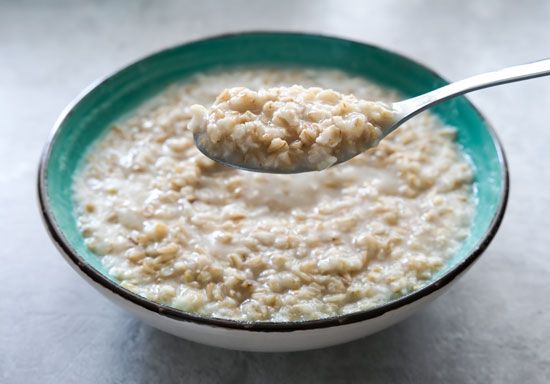
For humans, processed oat grains—such as rolled oats—are a nutritious food source. They are high in carbohydrates and contain approximately 13 percent protein and 7.5 percent fat. Additionally, they provide essential nutrients including calcium, iron, vitamin B1, and niacin.1
Use as Animal Feed
The plant is widely utilized in agriculture as animal feed. It is considered chemically well-balanced and is particularly suitable for feeding horses and sheep. Beyond the grain, the plant provides excellent grazing, hay, and silage, while the straw is commonly used for both feed and bedding.21
How has oat grass been used traditionally in different cultures around the world?
The history of oats (Avena sativa) spans over 30,000 years, with evidence suggesting that early humans ground wild oats into a porridgelike substance. While ancient Greeks and Romans were aware that the grain was edible, it was historically relegated to animal feed or consumption by the peasantry.1
The Romans introduced the crop to Britain, where it thrived in the cool, wet climate. By 1500, oats had become a staple cereal in England, Ireland, Scotland, and Wales3. In Scotland, the grain became deeply integrated into the national cuisine, featuring prominently in dishes such as haggis and oatcakes, typically prepared as a thick porridge.1
In America, oats were primarily used as livestock feed until the turn of the 20th century. The rise of local mills and the marketing efforts of companies like the Quaker Oats Company helped rebrand the grain as a popular breakfast food. More recently, global culinary influences—such as Swiss muesli—have inspired modern preparations like overnight oats.1
What are the different species of oat grass, and how do they vary?
It is important to clarify that “oat grass” is a term often used to describe two distinct groups of plants. While true oats (Avena sativa) are cereal crops, the name “oat grass” specifically refers to perennial grasses in the genera Arrhenatherum and Danthonia.4
True Oats (Avena genus)
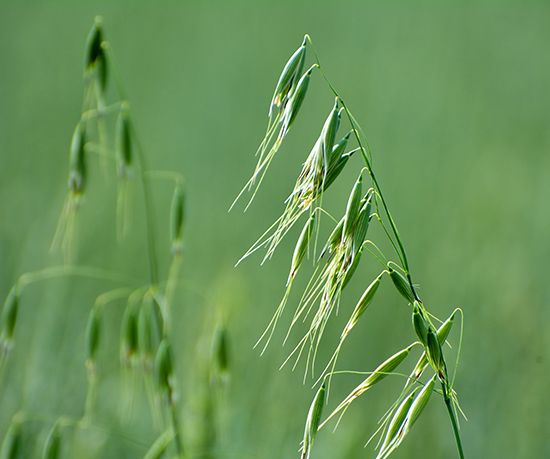
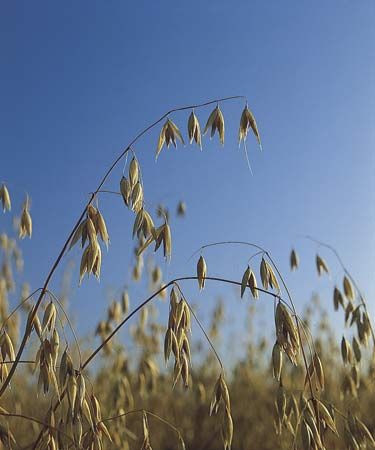
The genus Avena consists of annual grasses grown primarily for their edible starchy grains.35
- Common Oat (A. sativa): The primary domesticated cereal crop, widely cultivated in temperate regions for human consumption and livestock feed.35
- Red Oats: A variety more tolerant of heat, typically grown in warmer climates.5
- Other Species: Includes A. sterilis and A. strigosa, which are also utilized in various agricultural contexts.1
- Wild Oat (A. fatua): A well-known wild species often considered a weed in agricultural fields.3
Oat Grass (Arrhenatherum and Danthonia genera)
These perennial grasses are named for their resemblance to true oats but are generally used as forage rather than for grain.4
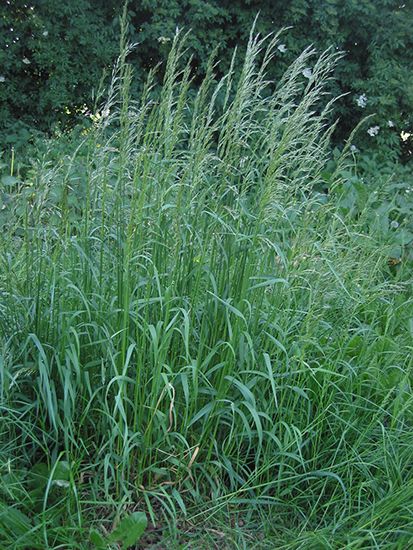
- Genus Arrhenatherum: Includes about six or seven species of tall grasses native to Eurasia. Tall oat grass (A. elatius) is a common pasture grass that can also act as a weed. A variety known as Onion couch (A. elatius variety bulbosum) is distinguished by its bulblike basal stems and is considered a noxious weed.4
- Genus Danthonia: Comprises over 100 species, often called heathgrass or wallaby grasses. These are vital forage grasses in the Southern Hemisphere. Poverty oat grass (D. spicata) is a mat-forming species adapted to dry, poor soils in North America.4
In which regions or climates does oat grass typically grow?
Oat grass species are distributed across various global regions, primarily thriving in temperate climates. Their growth patterns depend on the specific genus:
- Genus Arrhenatherum: These grasses are native to the temperate regions of Europe and Asia. Tall oat grass (A. elatius) has been introduced to many countries worldwide, where it often grows wild in pastures and as a weed.5
- Genus Danthonia: Most of the more than 100 species in this genus are native to the temperate regions of the Southern Hemisphere, serving as important forage grasses in Australia, New Zealand, and South AmericaZealand), and South America. Additionally, species such as poverty oat grass (D. spicata) are found in North America, where they are adapted to growing on dry, poor soil.54
In contrast, true oats (Avena), which are annual grasses native to Eurasia and Africa, are cultivated as cereal crops in temperate climates globally.7
Sources
Published on · 3 min read