Okavango River
The Okavango River basin, particularly within the Okavango Swamp and the Moremi Wildlife Reserve, supports a diverse array of flora and fauna adapted to its…
What are some of the notable plant and animal species found in the Okavango River basin?
The Okavango River basin, particularly within the Okavango Swamp and the Moremi Wildlife Reserve, supports a diverse array of flora and fauna adapted to its unique wetland environment.
Vegetation
The landscape transitions from woodland and dry savanna to dense aquatic growth. Key plant species include:
- Aquatic plants: Dense clumps of papyrus reeds are characteristic of the river and floodplain channels.1
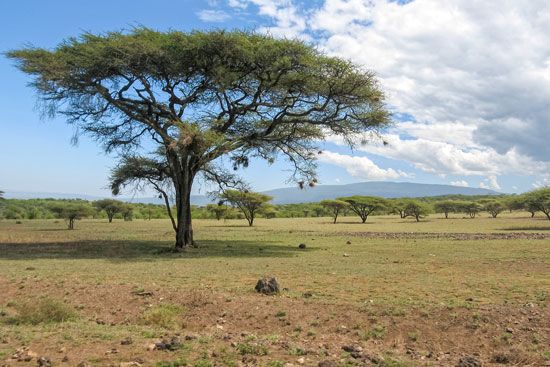
- Woodland and savanna: Higher areas of the delta feature patches of woodland, while surrounding regions are dominated by acacia trees and mopane (African ironwood) savanna woodland.12
Wildlife
The basin is home to a rich variety of animals, including:
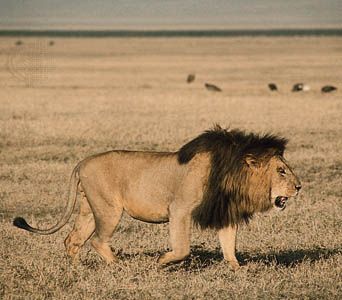
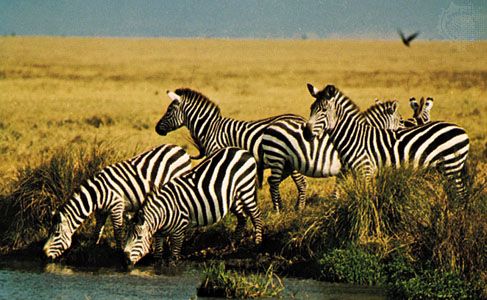
- Mammals: Large species such as lions, cheetahs, buffalo, wildebeests, hippopotamuses, zebras, and wild dogs.1
- Birds: Prolific birdlife includes storks, ibis, herons, egrets, cranes, weaver birds, ducks, geese, and quail.1
- Fish: Notable varieties include bream (tilapia), pike, barbels (catfish), and the tiger fish.12
- Reptiles: The area is also inhabited by crocodiles.1
Where is the Okavango River located in Africa, and what countries does it flow through?
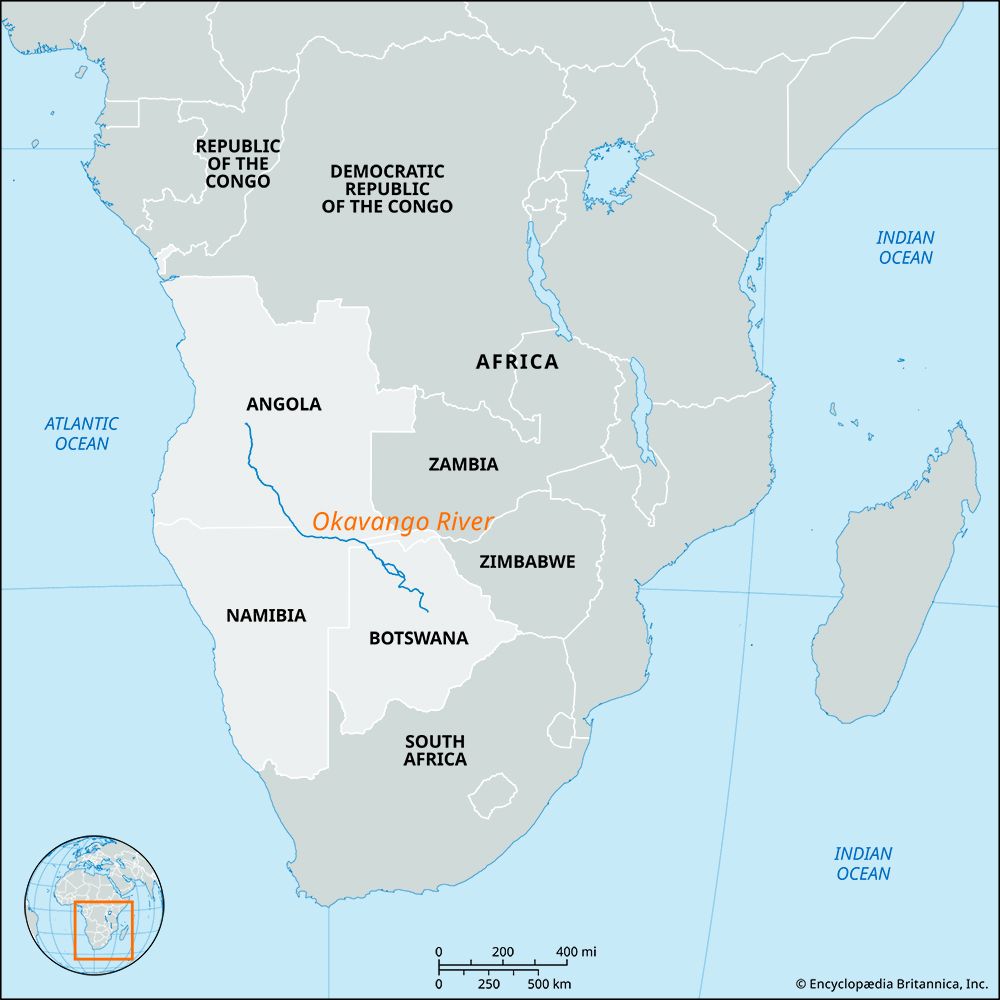
The Okavango River is the fourth-longest river system in southern Africa, flowing approximately 1,000 miles (1,600 km) in a generally southeastward direction.1
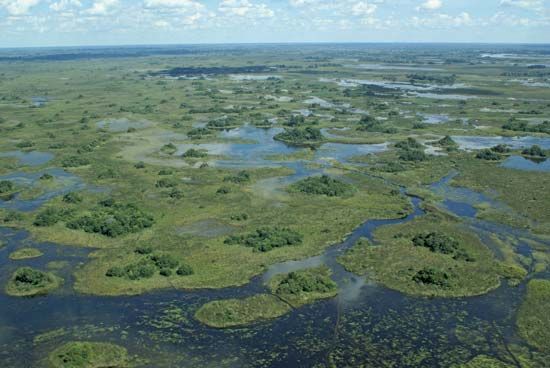
The river originates on the Bié Plateau in central Angola, where it is known as the Kubango. As it flows southeast, it forms a portion of the border between Angola and Namibia. The river then crosses Namibia’s Caprivi Strip before entering Botswana, where it terminates in an immense inland delta known as the Okavango Swamp.1
What role does the Okavango River play in the water cycle of the Kalahari Desert?
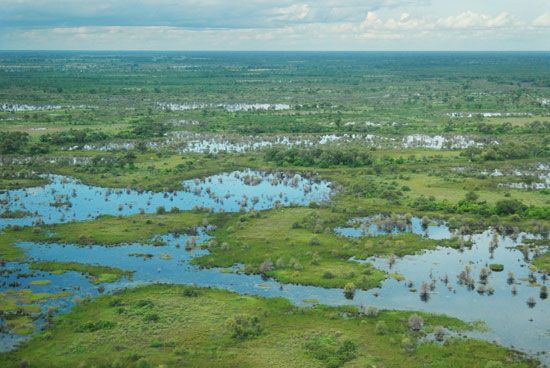
The Okavango River plays a vital, paradoxical role in the Kalahari Desert, providing a massive influx of water to a region that is otherwise characterized by extreme aridity and a lack of surface drainage.5
While most of the Kalahari experiences no surface drainage—with rainfall either evaporating or disappearing into deep sand—the northern region benefits from the Okavango’s perennial flow. Originating in the highlands of Angola, the river carries runoff from heavy summer rains into northern Botswana, where it forms an expansive inland delta.52
The river acts as a critical water source for this arid environment, though its impact is largely contained within the delta wetlands, where most of the water evaporates. During exceptionally wet seasons, the system overflows, feeding Lake Ngami and flowing eastward via the Boteti River toward the Makgadikgadi Pans. Consequently, the Okavango serves as a life-sustaining anomaly, creating a lush, water-rich ecosystem in the heart of a desert that is chronically short of water.25
What is the source of the Okavango River, and how long is its course?
The Okavango River originates in central Angola on the Bié Plateau, just south of Vila Nova, at an elevation of 5,840 feet (1,780 meters). In this upper reach, it is known as the Kubango.1
The river flows for approximately 1,000 miles (1,600 km) in a generally southeastward direction before terminating in an immense inland delta in northern Botswana known as the Okavango Swamp.1
Sources
- Okavango River — Encyclopædia Britannica
- Botswana - Drainage — Encyclopædia Britannica
- Botswana - Plant and animal life — Encyclopædia Britannica
- Kavango — Encyclopædia Britannica
- Kalahari Desert - Drainage — Encyclopædia Britannica
- Kwando River — Encyclopædia Britannica
Published on · 2 min read