Palmerston Atoll
Palmerston Atoll is a coral formation located in the southern Cook Islands, a self-governing state in free association with New Zealand in the South Pacific…
What is Palmerston Atoll?
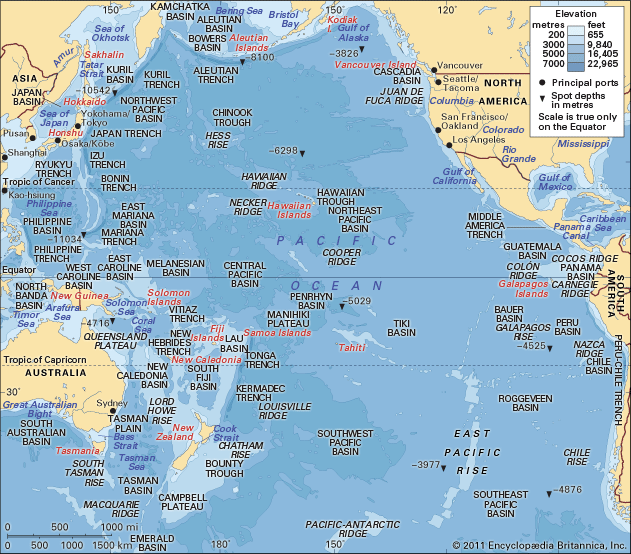
Palmerston Atoll is a coral formation located in the southern Cook Islands, a self-governing state in free association with New Zealand in the South Pacific Ocean. The atoll consists of six small islets surrounding a 7-mile-wide lagoon that lacks a clear passage to the open sea.1
The island’s unique history began when William Marsters settled there in 1862 with his wives from Penrhyn Atoll. Today, the inhabitants are his descendants, who share governance of the island through a council representing their three constituencies. The population maintains a distinct culture and speaks a unique dialect blending English and Penrhynese, a form of Maori. The economy relies on the export of copra, while the local diet is centered on staples such as breadfruit, taro, and fish.1
How are coral atolls formed?
Coral atolls are primarily formed through a process of gradual subsidence, a theory first proposed by Charles Darwin in 1842. According to this model, coral reefs initially develop as fringing reefs around a volcanic island. As the island slowly subsides—often due to the ocean floor spreading away from oceanic ridges as described by plate-tectonic theory—the reef continues to grow upward to remain in shallow, sunlit waters.23
As the island sinks, a lagoon forms between the reef and the shoreline, creating a barrier-reef stage. Eventually, the volcanic peak disappears entirely beneath the surface, leaving only the ring-shaped reef structure at sea level2.3
While subsidence is a primary driver, fluctuations in sea level—particularly those caused by the melting of ice sheets during the Pleistocene Epoch—also play a significant role in the upward growth of reefs. Additionally, some annular reefs may form through the erosion of uplifted limestone platforms, which later submerge, allowing coral growth to resume along the rim.2
Who was Captain James Cook and what were his voyages?
James Cook (1728–1779) was a renowned British naval captain, navigator, and explorer who fundamentally transformed the world map through his extensive voyages in the Pacific Ocean and beyond.45
The Three Voyages
Cook conducted three major expeditions that set new standards for scientific exploration, cartography, and the health of crews at sea:67
- First Voyage (1768–1771): Commanding the HMS Endeavour, Cook was tasked with observing the transit of Venus in Tahiti and searching for the hypothetical southern continent. He circumnavigated New Zealand and charted the eastern coast of Australia, successfully navigating the Great Barrier Reef.67
- Second Voyage (1772–1775): Aboard the Resolution and Adventure, Cook performed the first west-east circumnavigation in high latitudes. He proved that a temperate southern continent did not exist, while charting lands such as Tonga, Easter Island, and New Caledonia.67
- Third Voyage (1776–1779): Seeking a Northwest Passage, Cook explored the North Pacific. He located the Hawaiian Islands, where he was killed in 1779 during a conflict with local inhabitants.67
Cook is celebrated for his humane treatment of indigenous peoples and his pioneering efforts to prevent scurvy by maintaining strict dietary and hygiene standards for his sailors.67
What is the history of the Cook Islands?
The history of the Cook Islands began with Polynesian settlers, primarily from French Polynesia, who were the sole inhabitants until the 19th century. While Spanish explorers visited in the late 16th and early 17th centuries, James Cook was the first European to call at most of the southern islands between 1773 and 1777.89
In 1821, missionaries from the London Missionary Society arrived, leading to widespread conversion to Christianity and influencing local governance. Fearing French expansion, local chiefs petitioned the United Kingdom for protection, resulting in a British protectorate in 1888. This established the first unified government across the islands.8
In 1901, the islands were annexed by New Zealand at the request of local chiefs. Following decades of evolving political representation, the Cook Islands achieved self-government in 1965 while maintaining a relationship of free association with New Zealand. Since then, the nation has focused on economic development, particularly tourism, and has become an active member of the Pacific Islands Forum and other international organizations.8
Sources
- Palmerston Atoll — Encyclopædia Britannica
- coral reef - Origin and development of reefs — Encyclopædia Britannica
- atoll — Encyclopædia Britannica
- James Cook: Top Questions — Encyclopædia Britannica
- James Cook — Encyclopædia Britannica
- Pacific Islands - The 18th century — Encyclopædia Britannica
- James Cook - Voyages and discoveries — Encyclopædia Britannica
- Cook Islands - History of the Cook Islands — Encyclopædia Britannica
- flag of Cook Islands — Encyclopædia Britannica
- Aitutaki Atoll — Encyclopædia Britannica
Published on · 3 min read