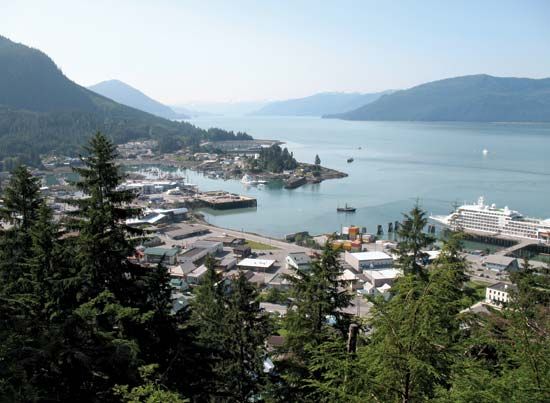
Prince of Wales Island
There are two distinct locations known as Prince of Wales Island:
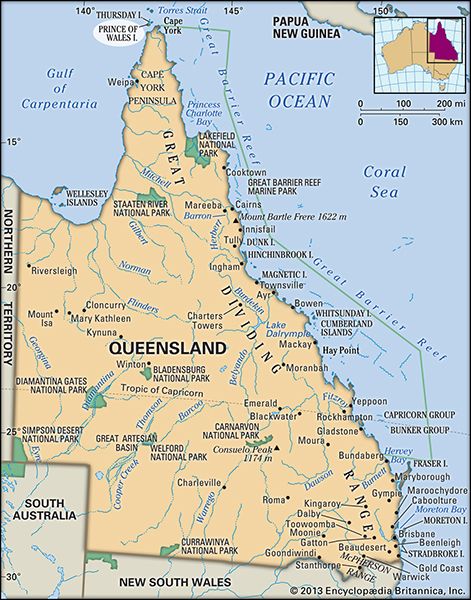
What is Prince of Wales Island?
There are two distinct locations known as Prince of Wales Island:
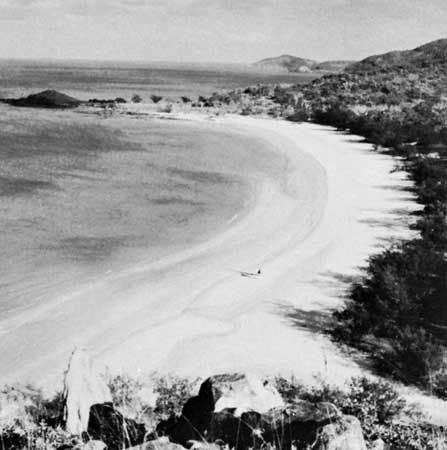
- Nunavut, Canada: Located in the Canadian Arctic Archipelago, this island is situated between Victoria Island and Somerset Island. It covers an area of approximately 12,872 square miles and was discovered in 1851 by Francis McClintock during his search for Sir John Franklin’s lost expedition.12
- Alaska, United States: This is the largest island in the Alexander Archipelago of southeastern Alaska.2
How does the climate differ between the Alaskan and Canadian islands?
The climates of Prince of Wales Island in Nunavut, Canada, and Prince of Wales Island in Alaska, USA, differ significantly due to their distinct geographical settings and the influence of ocean currents.
Prince of Wales Island, Nunavut (Canadian Arctic)
This island is situated within the Canadian Arctic Archipelago and experiences a polar continental climate.1
- Temperature: Winters are intensely cold, with mean temperatures often ranging from −30 to −20 °F (−34 to −29 °C). Summers are short and cool, with mean temperatures rarely exceeding 40–45 °F (4–7 °C).1
- Precipitation: It is characterized by low annual precipitation, often classified as a polar desert, with much of the moisture falling as light winter snow.1
- Influences: The climate is only slightly moderated by the sea in winter because the surrounding waters are covered by thick, unbroken sea ice.1
Prince of Wales Island, Alaska (Alexander Archipelago)
Located in southeastern Alaska, this island falls within a maritime climatic zone influenced by the relatively warm waters of the Alaska Current and the Kuroshio (Japan Current).23
- Temperature: This region experiences relatively small temperature variations compared to continental zones, with winter temperatures typically remaining much milder, often between 14 and 32 °F (−10 and 0 °C).3
- Precipitation: It is one of the wettest regions in Alaska, with annual precipitation in the Alexander Archipelago often reaching 200 to 300 inches (5,100 to 7,600 mm).3
- Influences: The climate is defined by high cloudiness, frequent precipitation, and the moderating effects of the Pacific Ocean.23
Who was Sir John Franklin and why was his expedition famous?
Sir John Franklin (1786–1847) was a distinguished English rear admiral and explorer who had a long career in the Royal Navy before leading his final, ill-fated mission to the Arctic.7
The Franklin Expedition
In 1845, Franklin led a British expedition aboard the HMS Erebus and HMS Terror to locate the Northwest Passage and collect magnetic data. Despite the ships being state-of-the-art for the time, the mission became one of the greatest disasters in polar exploration history.8910
Why the Expedition is Famous
- Total Loss: All 129 officers and crew members perished under mysterious circumstances after their ships became trapped in ice off King William Island.89
- Mysterious Demise: Extensive search efforts, spurred by Franklin’s wife, Lady Jane Franklin, eventually revealed that the crew suffered from starvation, scurvy, and lead poisoning, with evidence suggesting some resorted to cannibalism.89
- Modern Discovery: The wrecks of the Erebus and Terror were not located until 2014 and 2016, respectively, finally solving the long-standing mystery of their final resting places.897
What is the Alexander Archipelago in Alaska known for?
The Alexander Archipelago is a group of approximately 1,100 islands located off the coast of southeastern Alaska. These islands are essentially the peaks of a submerged section of the Coast Ranges and are known for several significant features:
- Geography and Protected Areas: The islands are largely contained within the Tongass National Forest. The region includes Glacier Bay National Park and Preserve, which is part of a World Heritage site that represents the largest internationally protected area in the world.11
- Cultural Heritage: The archipelago is the ancestral home of the Tlingit and Haida peoples, who are particularly renowned for their totem poles.11
- Economy and Transport: The local economy is primarily supported by fishing, lumbering, mining, and fur collecting. The islands are separated from the mainland by deep channels that serve as part of the Inside Passage, a picturesque route for the Alaska Marine Highway system.11
Sources
- Prince of Wales Island — Encyclopædia Britannica
- Prince of Wales Island — Merriam-Webster
- Alaska - Climate of Alaska — Encyclopædia Britannica
- North America - The Arctic zone — Encyclopædia Britannica
- Arctic - Climate of the Arctic — Encyclopædia Britannica
- Alaskan mountains - Climate of the Alaskan mountains — Encyclopædia Britannica
- Franklin expedition: Top Questions — Encyclopædia Britannica
- Franklin expedition — Encyclopædia Britannica
- Sir John Franklin — Encyclopædia Britannica
- Sir John Richardson on Sir John Franklin — Encyclopædia Britannica
- Alexander Archipelago — Encyclopædia Britannica
- Alexander Archipelago — Merriam-Webster
Published on · 3 min read