Remora
A remora is any of eight species of marine fishes belonging to the family Echeneidae. These elongated, dark-colored fish are found in tropical and…
What is remora?
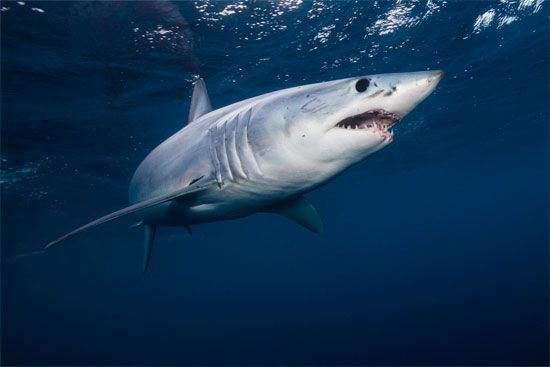
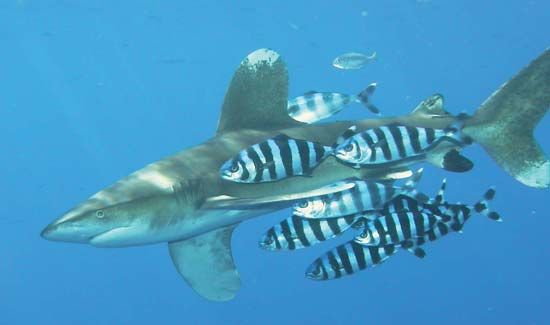
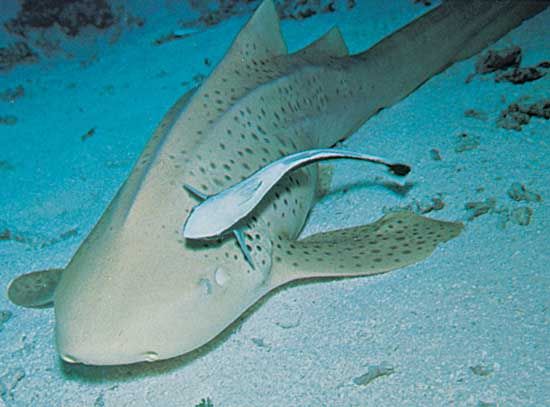
A remora is any of eight species of marine fishes belonging to the family Echeneidae. These elongated, dark-colored fish are found in tropical and subtropical oceans and are famous for attaching themselves to sharks, other large marine animals, and even ships.1
They adhere to their hosts using a flat, oval-shaped sucking disk located on the top of their heads, which is a modified portion of their dorsal fin. Remoras typically feed on the scraps of their hosts’ meals or act as cleaners by consuming external parasites. While they are often viewed as “unwanted guests” that hitch a free ride, they do not harm their hosts. The name “remora” comes from the Latin word for “delay,” stemming from an ancient superstition that these fish could slow down ships.12
What is the difference between commensalism and mutualism in nature?
In biology, the primary difference between commensalism and mutualism lies in how the participating species are affected by their interaction.
- Commensalism: This is a relationship where one species benefits—obtaining food, shelter, or locomotion—while the other species remains unaffected, neither harmed nor helped. For example, remoras attach to sharks to feed on leftovers, gaining a free ride without significantly impacting the shark.3
- Mutualism: This is a relationship where both species involved derive a benefit. These associations are often essential for survival. Examples include mycorrhizal fungi that help plants absorb nutrients, or gut microorganisms that allow animals to digest and metabolize food. In some cases, known as obligative symbiosis, the relationship becomes so intimate that neither organism can survive without the other.34
While commensalism involves a “one-sided” benefit, mutualism is a cooperative interaction that supports the health and development of both partners.34
How do other marine animals like cleaner wrasses help their hosts?
Cleaner wrasses (genus Labroides) provide a vital service to larger marine animals by removing parasites and dead tissue from their bodies. This interaction is a classic example of mutualism, as both parties benefit: the wrasse gains a reliable food source, while the host fish remains clean and healthy.789
These wrasses establish “cleaning stations” on coral reefs, where they are recognized by larger carnivorous fish such as groupers, eels, jacks, and snappers. When a host approaches, it often enters a trance-like state, opening its mouth and gills to allow the wrasse to enter safely and forage for parasites. During this process, the host suppresses its predatory instincts, ensuring the cleaner fish can work without being harmed.87
While this relationship is generally beneficial, it is so well-regarded that some species, such as the sabre-toothed blenny, have evolved to mimic the appearance of the cleaner wrasse to approach other fish and bite off pieces of their fins.8
What are some other examples of symbiotic relationships in the ocean?
The ocean is home to a wide variety of symbiotic relationships, where different species interact in ways that often provide mutual benefits for survival.
Mutualistic Relationships
- Coral and Zooxanthellae: Reef-forming corals maintain a vital mutualistic symbiosis with zooxanthellae, which are unicellular algae. The algae live within the coral tissues, performing photosynthesis to provide nutrients and aid in the formation of the coral skeleton, while the coral provides the algae with a protected environment and metabolic byproducts like carbon dioxide and nitrogen.1011
- Clownfish and Sea Anemones: This well-known partnership involves the common clown fish living among the stinging tentacles of sea anemones. The anemone provides the fish with protection from predators, while the fish cleans parasites from the anemone and drives away butterfly fishes that might otherwise consume the anemone’s tentacles.1210
- Hermit Crabs and Anemones: Some hermit crabs carry sea anemones on their shells or claws. The anemone benefits from the mobility and potential food scraps provided by the crab, while the anemone protects the crab from predators like octopuses.10
- Gobies and Burrowing Animals: The blind goby relies entirely on the burrows created by ghost shrimp for shelter. Other species of gobies share similar living arrangements with burrowing worms, pea crabs, and snapping shrimps.8
Sources
- remora — Encyclopædia Britannica
- Did you know? — Merriam-Webster
- commensalism — Encyclopædia Britannica
- community ecology - The pervasiveness of mutualism — Encyclopædia Britannica
- bivalve - Associations — Encyclopædia Britannica
- nutrition - Syntrophism — Encyclopædia Britannica
- cleaner wrasse — Merriam-Webster
- perciform - Interspecific relationships — Encyclopædia Britannica
- cleaner fish — Merriam-Webster
- common clown fish — Encyclopædia Britannica
- cnidarian - Associations — Encyclopædia Britannica
- coral reef - Biological factors — Encyclopædia Britannica
Published on · 3 min read