Gulf of Papua
The Gulf of Papua is an inlet of the Coral Sea located in the southwestern Pacific Ocean, indenting the southeastern coast of the island of New Guinea.
What is Gulf of Papua?
The Gulf of Papua is an inlet of the Coral Sea located in the southwestern Pacific Ocean, indenting the southeastern coast of the island of New Guinea.12
Measuring approximately 225 miles (360 km) wide, the gulf extends 150 km (95 miles) into the south-central region of the island. It serves as the drainage point for several major rivers, including the Fly, Bamu, Turama, Kikori, Purari, Lakekamu, and Vanapa. The Purari River, for instance, empties into the gulf through a vast, swampy delta.13
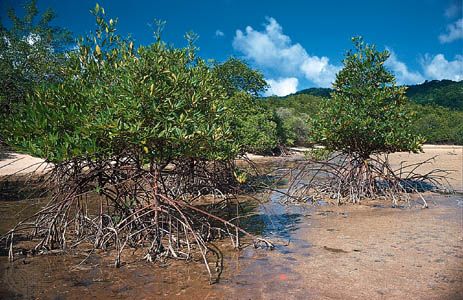
Water depths in the gulf reach a maximum of about 650 feet (200 meters) at its outer edge. Beyond its geographical significance, the area is notable for its offshore natural-gas deposits. The coastal regions surrounding the gulf are often characterized by mangrove swamps and deltaic environments.14
What is the significance of the Fly River in this region?
The Fly River is a vital waterway in Papua New Guinea, serving as a major drainage system for the island and a key transportation artery. Flowing over 700 miles from the Victor Emanuel Range to the Gulf of Papua, it is navigable for approximately 530 miles, facilitating inland access.5
The river’s significance is defined by several factors:
- Economic Importance: The town of Kiunga, located 490 miles inland, functions as a critical port for shipping copper and gold extracted from the Star Mountains.5
- Geological Impact: The river transports millions of tons of sediment, which has historically built up the vast plains bordering the Torres Strait.5
- Environmental and Political Context: Mining activities in the upper course have led to environmental degradation, which has become a significant source of political tension in the region.5
How do the swampy deltas of the Gulf of Papua support local wildlife?
The swampy deltas of the Gulf of Papua provide a critical habitat for a diverse array of wildlife by offering specialized environmental niches. These areas are characterized by extensive mangrove forests and brackish waters, which serve as essential breeding and feeding grounds.64
The significance of these ecosystems for local wildlife includes:
- Habitat Diversity: The mangrove canopy provides shelter for various animals that remain unaffected by the surrounding seawater, while the complex root systems offer protection and nursery areas for numerous fish and shellfish species.61
- Faunal Richness: The region supports a unique mix of species typical of the Australian faunal region. Notable inhabitants include crocodiles, various reptiles, and water rats. The area is also part of a broader landscape that hosts marsupials, such as tree kangaroos and cuscuses, as well as diverse birdlife like cassowaries and birds-of-paradise.41
- Ecological Interdependence: Animal diversity in these swamps is closely linked to plant diversity. The presence of specific vegetation, such as sago and nipa palms, dictates the distribution and survival of the local fauna.64
What are the environmental impacts of natural gas extraction in the gulf?
The provided search results do not contain information regarding the specific environmental impacts of natural gas extraction in the Gulf of Papua. While the text notes that large-scale liquefied natural gas projects have been developed in Papua New Guinea since 2009, it does not detail the ecological consequences of these operations.8
The available information does, however, highlight that serious environmental damage from mine tailings has been a persistent issue in other resource extraction projects within the country, which has occasionally led to significant social and political conflict.8
Sources
- Gulf of Papua — Encyclopædia Britannica
- Purari River — Encyclopædia Britannica
- Papua, Gulf of — Merriam-Webster
- Papua New Guinea - Plant and animal life — Encyclopædia Britannica
- Fly River — Encyclopædia Britannica
- Swamp — Encyclopædia Britannica
- Papua - Geography — Encyclopædia Britannica
- Papua New Guinea - Resources and power — Encyclopædia Britannica
Published on · 3 min read