Rose of Jericho
The term "rose of Jericho" refers to two distinct, unrelated plants that share the ability to survive extreme desiccation. Their geographical distributions…
What is the geographical distribution of the rose of Jericho?
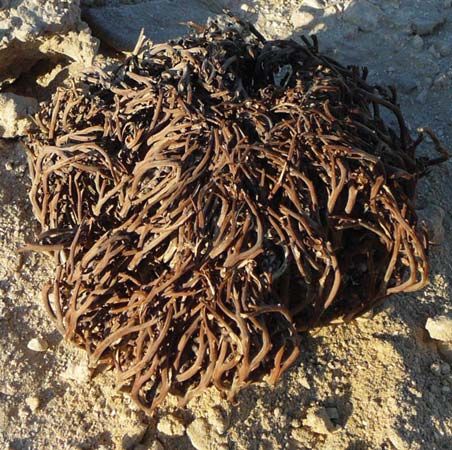
The term “rose of Jericho” refers to two distinct, unrelated plants that share the ability to survive extreme desiccation. Their geographical distributions are as follows:1
- True Rose of Jericho (Anastatica hierochuntica): This member of the Brassicaceae family is native to regions spanning from northern Africa through western Asia to Iran.12
- False Rose of Jericho (Selaginella lepidophylla): Also known as the resurrection fern, this species is native to the Chihuahuan Desert, which encompasses parts of the United States and Mexico.1
While both plants exhibit similar behaviors—curling into a ball during dry periods and expanding when exposed to moisture—they belong to different botanical families and occupy different continents.1
How can one grow and care for a rose of Jericho as a houseplant?
To care for a “rose of Jericho” as a houseplant, it is important to first identify which species you have, as their needs differ based on their biology.
Care for the False Rose of Jericho (Selaginella lepidophylla)
Often sold as a curiosity, this resurrection fern is popular because it can revive even if its roots have been disrupted.
- Hydration: Place the dried, curled ball in a shallow dish of water. It will gradually unfurl and turn green.
- Maintenance: Do not leave it submerged indefinitely, as this can lead to decay. It is best to allow the plant to dry out and enter dormancy periodically, mimicking its natural desert cycle.
- Environment: Keep it in a spot with indirect light.
Care for the True Rose of Jericho (Anastatica hierochuntica)
This plant is an annual herb from the Brassicaceae family.
- Growth: If you possess a rooted specimen, it requires soil and consistent moisture to grow into a green plant up to 30 cm wide.
- Dormancy: If the plant is in its dried, ball-like state, it can be moistened to open its branches and seedpods. Note that as an annual, its life cycle is limited compared to the resilient, spore-producing Selaginella.
What is the rose of Jericho and why is it called a ‘resurrection plant’?
The rose of Jericho refers to two distinct, unrelated plant species that share a remarkable survival strategy: the ability to withstand extreme desiccation.1
- True Rose of Jericho (Anastatica hierochuntica): A member of the Brassicaceae family native to regions from northern Africa to Iran, this annual herb curls its branches and seedpods into a ball during the dry season.12
- False Rose of Jericho (Selaginella lepidophylla): Also known as the resurrection plant, this member of the spike moss family is native to the Chihuahuan Desert.13
These plants are called “resurrection plants” because of their unique physiological response to moisture. During periods of drought, they enter a state of dormancy, curling into a tight, dried ball to protect their structures. When exposed to water, they “resurrect” by unfurling and, in the case of the false rose of Jericho, turning green and resuming metabolic activity even if their roots have been disrupted. While the true rose of Jericho requires its roots to be intact to fully thrive and flower, both species demonstrate an extraordinary capacity to endure harsh, arid environments.1
How does the rose of Jericho adapt to survive in harsh desert environments?
The rose of Jericho adapts to harsh desert environments through a specialized survival strategy known as desiccation tolerance, which allows both the true and false varieties to endure prolonged drought.1
- Dormancy and Protection: During the dry season, both species enter a state of dormancy. They curl their branches and structures inward to form a tight, protective ball, which minimizes water loss and shields the plant’s core.1
- Dispersal: In this dried, ball-like state, the plants can be uprooted by the wind and blown across the landscape like a tumbleweed, allowing them to disperse across arid terrain.1
- Rapid Revival: When moisture becomes available, the plants “resurrect” by unfurling their branches. The true rose of Jericho (Anastatica hierochuntica) uses this moisture to spread and produce flowers if its roots remain intact, while the false rose of Jericho (Selaginella lepidophylla) can revive and resume metabolic activity even if its roots have been completely disrupted.1
This ability to cycle between a dormant, wind-blown state and an active, growing state allows these plants to thrive in environments where water is scarce and unpredictable.1
Sources
- rose of Jericho — Encyclopædia Britannica
- rose of Jericho — Merriam-Webster
- resurrection plant — Merriam-Webster
Published on · 4 min read